Table of Contents
- 1What Is Erythrodermic Psoriasis?
- 2Early Stage Erythrodermic Psoriasis
- 3What Causes Erythrodermic Psoriasis?
- 4What Are the Symptoms of Erythrodermic Psoriasis?
- 5How Is Erythrodermic Psoriasis Diagnosed?
- 6What Are the Clinical Features of Erythrodermic Psoriasis?
- 7How Is Erythrodermic Psoriasis Treated?
- 8How to Prevent Erythrodermic Psoriasis?
- 9When to Call a Healthcare Provider?
- 10What Are the Complications of Erythrodermic Psoriasis?
- 11Why Is Erythrodermic Psoriasis Dangerous?
- 12Conclusion
- 13Key Takeaways
What Is Erythrodermic Psoriasis?
Early-stage mild erythrodermic psoriasis is a rare yet dangerous type. It causes a red rash over most of the body. Psoriasis is a chronic skin condition that occurs when the body produces new skin cells faster than they die off. In this condition, the hands become red, scaly, and itchy. As a result, cells pile up on the skin surface.
Erythrodermic psoriasis is uncommon. It is much more serious than its other subtypes. The rash can be dangerous and appear like a severe burn. It increases the risk of infections, heart failure, chills, and dehydration. It also leads to other major health problems. It demands immediate medical care.
Early Stage Erythrodermic Psoriasis
Erythrodermic psoriasis is a severe and life-threatening form of psoriasis in its early stages. It usually presents as broad skin redness and scaling. Prompt medical attention is required.
What Causes Erythrodermic Psoriasis?
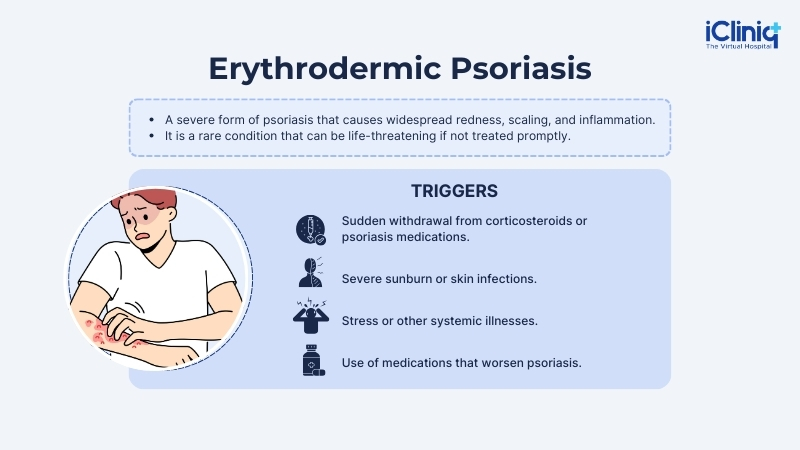
The erythrodermic type occurs in about three percent of people with psoriasis. People with unstable plaque psoriasis are at risk. Suddenly stopping psoriasis treatments like steroids can cause erythrodermic psoriasis. Other triggers include:
-
Illness or infection.
-
Drug reaction.
-
Severe sunburn.
-
Stress.
-
Substance use disorder.
-
Alcoholism.
-
Human immunodeficiency virus (HIV).
-
Overusing medications, such as topical steroids or retinoids (a vitamin A-related drug).
What Are the Symptoms of Erythrodermic Psoriasis?
-
Acute Rash:
Erythrodermic psoriasis can develop suddenly (within a few days). Plaques mainly extend from a preexisting rash. Full development can occur gradually over a few months.
-
Redness:
One may develop redness and inflammation on a large part of the body. This is similar to a severe burn or sunburn. The rash can itch and cause a burning sensation.
-
Skin Peeling:
Peeling skin may come off in large sheets. Some people can even lose fingernails and toenails.
-
Chills and Fever:
People with this condition develop chills or fever, along with joint pain. Also have a rapid heartbeat, swollen ankles, and other serious health issues. Their feet are swollen due to fluid retention.
Erythrodermic psoriasis symptoms can develop gradually or suddenly. Treatments can manage the condition. They can put it into remission. It means no rash or symptoms. However, flare-ups can happen in later stages.
How Is Erythrodermic Psoriasis Diagnosed?
A physician often diagnoses erythrodermic psoriasis based on a history of psoriasis and physical examination. The provider also checks for signs of psoriasis, such as plaques, joint pain, and psoriatic nail disease. The provider can order a skin biopsy. A biopsy is a procedure in which a small piece of the skin is removed and checked in the laboratory for signs of psoriasis.
What Are the Clinical Features of Erythrodermic Psoriasis?
Generalized inflammatory erythema involves more than 75 percent of the skin surface and is characteristic of erythrodermic psoriasis, which often presents with exfoliation, pustules, or scaling.
Patients' symptoms include chills, fever, shortness of breath, myalgia (muscle pain), and exhaustion; for severe cases due to metabolic abnormalities, potentially fatal complications may arise.
Erythrodermic psoriasis can also be associated with nail psoriasis, joint involvement, or other less common manifestations, such as bullous pemphigoid. They are large, fluid-filled blisters on the skin.
How Is Erythrodermic Psoriasis Treated?
If a person has symptoms of erythrodermic psoriasis, seek medical intervention early.
There is no cure for erythrodermic psoriasis, but treatments can reduce and prevent symptoms. Certain flare-ups require urgent medical attention.
The skin doctor prescribes the following drugs for the treatment of erythrodermic psoriasis:
-
Topical ointments like steroids or retinoids.
-
Non-allergic moisturizers and cool compresses.
-
Nonsteroidal anti-inflammatory drugs (NSAIDs).
-
Disease-modifying anti-rheumatic drugs (DMARDs).
-
Immunosuppressants like Cyclosporine or Methotrexate. These medicines are powerful but can have many side effects. So, speak to a physician first to find out if they are suitable.
Be sure to inform the provider of any medical conditions or current medications you take.
-
Oral retinoids.
-
Biologic therapies.
-
Antibiotics to help prevent infection.
-
Pain medications.
Specific plaque psoriasis treatments can worsen erythrodermic psoriasis. So, one should not use the following without consulting a healthcare provider:
-
Oral corticosteroids.
-
Coal tar products.
-
Phototherapy or light therapy.
How to Prevent Erythrodermic Psoriasis?
Maintaining plaque psoriasis under control with treatments is the most effective way to prevent erythrodermic psoriasis. If someone develops erythrodermic psoriasis, they can take the following steps to avoid a flare-up:
-
Limit alcohol.
-
Be careful with anything that can irritate the skin.
-
Protect skin against sun damage.
-
Find healthy ways to manage stress.
-
Seek help to quit smoking.
-
Never abruptly stop taking psoriasis medication.
-
See a healthcare provider regularly.
-
Protect and treat wounds to prevent infection.
-
Use phototherapy devices carefully to avoid burns.
Although erythrodermic psoriasis is a chronic condition without a current cure, it can be well controlled with appropriate treatment.
People with erythrodermic psoriasis should follow the healthcare provider's treatment and skincare suggestions to prevent flare-ups. Proper disease management reduces the risk of severe complications and even death.
When to Call a Healthcare Provider?
Call a healthcare provider for quick management if one experiences a flare-up or has signs of:
-
Excessive peeling of the skin.
-
Severely itchy or painful skin.
-
Infection, including fever or chills.
-
Dehydration.
What Are the Complications of Erythrodermic Psoriasis?
Erythrodermic psoriasis can cause severe itching or skin pain. The rash can also affect the body's ability to sweat and regulate body temperature. As a result, people may develop hypothermia (low body temperature).
It can also affect electrolyte levels and cause dehydration. Some people can also develop a fever, chills, and edema (fluid retention) in their feet and ankles.
In this condition, the life expectancy is impacted. The condition is life-threatening in around 10 to 65 percent of all cases. Most deaths are associated with infections like pneumonia and Staphylococcal septicemia.
Why Is Erythrodermic Psoriasis Dangerous?
Erythrodermic psoriasis is dangerous because it has the potential to be fatal, and it is risky. Over 90 percent of the body is affected. High rates of disease and mortality result from this. Heart failure, low body temperature, and fluid loss are among the complications.
As a result, you ought to visit a doctor immediately. It may prevent your body from battling illness. You might have to remain in the hospital. Managing this illness is challenging. The redness and burning can make day-to-day living exhausting. It's acceptable to feel anxious or stressed. You are not by yourself.
Many people find solace in therapy and familial support. Talk openly with your physician about your emotions. With proper care, you can lessen flare-ups and restore confidence in your skin.
Conclusion
Erythrodermic psoriasis is rare among all psoriasis subtypes. It can cover the entire body with an itchy, scaly rash. Living with such a chronic skin condition can be challenging.
During a flare-up, people can become self-conscious about their appearance. Steroids or other medications, severe sunburn, or another type of psoriasis may trigger the condition.
Call a physician when a flare-up occurs. Getting the rash under control can lower the risk of serious, potentially life-threatening complications of psoriasis.
Consulting a skincare specialist can provide you with individualized guidance and treatment options.
Key Takeaways
-
Mostly, the body is covered in redness, scaling, and inflammation due to erythrodermic psoriasis, an uncommon and severe kind of psoriasis. About one to two percent of people with psoriasis have this illness. It can be fatal if treatment is not received.
-
It frequently happens when plaque psoriasis gets out of control. It occurs as a response to certain drugs or illnesses. To maintain body temperature, avoid infections, and manage inflammation, prompt medical attention is essential.
-
It is critical to get medical attention right away if you have widespread skin redness, irritation, or peeling that spreads quickly.