Table of Contents
- 1What Is the Link Between Psoriatic Arthritis and Kidney Disease?
- 2What Is Psoriasis-Induced Kidney Disease?
- 3What Are the Causes of Psoriasis-Induced Kidney Disease?
- 4What Are the Risk Factors for Psoriasis-Induced Kidney Disease?
- 5What Are the Symptoms of Psoriatic Arthritis and Kidney Disease?
- 6What Are the Possible Complications of Psoriasis-Induced Kidney Disease?
- 7When to Get Help for Psoriasis-Induced Kidney Disease?
- 8How Is Psoriasis-Induced Kidney Disease Diagnosed?
- 9How Is Psoriasis-Induced Kidney Disease Treated?
- 10How to Prevent Psoriasis-Induced Kidney Disease?
- 11Conclusion
- 12Key Takeaways
What Is the Link Between Psoriatic Arthritis and Kidney Disease?
A relationship between PsA (psoriatic arthritis) and kidney disease seems to exist based on inflammation, diabetes, hypertension, and medication toxicity. Here is a breakdown of the connection:
1. Systemic Inflammation and Immune Dysregulation:
-
Patients have chronic inflammatory disease, which manifests in joints and skin, and has a systemic character in PsA. This inflammation can either be direct or cause harm to the kidneys in its indirect form.
-
PsA also increases cytokines TNF (tumor necrotizing factor) alpha, IL (interleukin)-17, and IL-23, which are known to be causative agents of kidney injury.
-
Chronic inflammation, a condition that often causes damage to the glomeruli and increased proteinuria, may lead to chronic kidney disease.
2. Medications and Kidney Risk:
Some of the therapies associated with PsA can affect the kidneys in patients who have other risk factors, hence highlighting a connection between psoriasis and arthritis.
-
Non-Steroidal Anti-Inflammatory Drugs (NSAIDs):
They are often prescribed to relieve pain and reduce inflammation, but give rise to nephrotoxic effects if used for a long period.
-
Cyclosporine:
Used sometimes in PsA, but has been shown to cause renal side effects.
-
Biologics:
TNF inhibitors and, to a lesser extent, IL-17 inhibitors are considered organ-restricted to the kidney and are generally safe in most patients with chronic kidney disease (CKD).
-
Methotrexate:
It reduces immune system activity and eases both psoriasis and autoimmune disease cell growth. Because the kidneys remove Methotrexate from the body, it can build up when kidney function is weakened, leading to harmful effects.
The drug harms the kidneys most often through its direct toxic effects or when crystals build up at high medication levels.
3. Role of Psoriasis Itself:
Besides arthritis, psoriasis has been linked to an increased risk of CKD. Moderate and severe skin disease indicate a higher risk of developing kidney disease.
What Is Psoriasis-Induced Kidney Disease?
Psoriasis is a chronic skin disorder characterized by redness, scaling, and inflammation. It is common to all individuals worldwide and can range from mild to severe. Although psoriasis primarily affects the skin, it can also impact other body systems.
Individuals with psoriasis experience persistent body inflammation. Due to this reason, they have increased chances of getting other health-related issues, which include diabetes, obesity, high blood pressure, heart disease, bowel disorders, depression, and kidney disease.
Individuals with severe psoriasis are at a higher risk of developing kidney disease, particularly when large areas of the skin are affected. Certain medications used to manage psoriasis may harm the kidneys, such as pain-relieving medications (NSAIDs) and potent immunosuppressant medications.
What Are the Causes of Psoriasis-Induced Kidney Disease?
Psoriasis patients develop kidney disease normally due to other ailments that are prevalent in psoriasis patients. These cause an additional burden to the kidneys.
Common causes include:
-
Inflammation of psoriasis, which destroys blood vessels and kidneys.
-
Heart and blood vessel disease is closely associated with kidney issues.
-
Obesity.
-
Diabetes.
-
Kidney filters are injured by autoimmune reactions.
-
High cholesterol.
-
The use of some psoriasis drugs may damage the kidneys in the long run.
What Are the Risk Factors for Psoriasis-Induced Kidney Disease?
The risk factors of psoriasis-induced kidney disease are:
-
Common infections include sore throats and skin infections.
-
Cold, dry weather can increase psoriasis.
-
Cuts, burns, insect bites, or sunburn of the skin.
-
Smoking or secondhand smoke.
-
Alcohol intake.
-
Some of the medicines include lithium, blood pressure medications, and antimalarial drugs.
-
Without consulting a doctor, abruptly discontinuing steroid drugs.
-
A family history of psoriasis increases susceptibility to the severe form of the disease.
What Are the Symptoms of Psoriatic Arthritis and Kidney Disease?
Some of the important symptoms of psoriatic arthritis are listed below-
1. Joint-Related Symptoms (PsA):
-
Joint Pain and Swelling:
Inflammation causes joint pain and swelling, which are typically associated with arthritis conditions. Painful joints exhibit inflexible movement and appear red, often feeling stiff.
-
Morning Stiffness:
Inability to move the joints when rising from bed or after a long period of inactivity.
-
Dactylitis:
Bulging in the fingers or toes, like the shape of a sausage.
-
Reduced Mobility:
The stiffness of the joints in use is also restricted in the case of arthritis.
-
Enthesitis:
Inflammation with pain at the juncture of tendons and ligaments, like the heel and elbow.
2. Kidney-Related Symptoms:
-
Swelling (Edema):
Edema may involve the lower limbs, face, and hands.
-
Changes in Urination:
Foamy urine suggests that protein is being lost in the urine. Blood in the urine.
-
Fatigue:
Anemia or toxins accumulate, which makes the patient extremely fatigued.
-
Itching:
Chronic, severe itching due to uremic toxins.
-
Nausea and vomiting:
They occur when toxins are present in the blood at high levels.
-
High Blood Pressure:
Sometimes a cause, and more often a sign, of kidney disease.
3. Systemic Symptoms:
-
Chronic Fatigue:
Exacerbated by inflammation from PsA and kidney dysfunction.
-
Shortness of Breath:
Due to congestion or anemia.
-
Muscle Cramps:
This may be caused by an electrolyte imbalance.
-
Epilepsy:
Secondary epilepsy is provoked by excessive potassium levels or low calcium.
-
Mental Fog or Confusion:
The low level of kidney function hinders the elimination of toxins.
-
Eye Problems:
Redness, pain, or inflammation (uveitis) associated with PsA may be accompanied by swelling around the eyes, which can be a sign of kidney disease.
4. Possible Overlapping Features:
-
Inflammation:
Inflammation plays a significant role in both PsA and kidney disease, exacerbating the symptoms of these conditions.
What Are the Possible Complications of Psoriasis-Induced Kidney Disease?
Chronic kidney disease can affect almost any body part. Possible complications are:
-
Fluid retention can cause swelling in the arms or legs, high blood pressure, or pulmonary edema (a condition characterized by fluid retention in the lungs).
-
A rapid increase in potassium levels in the blood (hyperkalemia) can affect the heart and be life-threatening.
-
Anemia.
-
Heart disease.
-
Weakened bones and increased risk of fractures.
-
Decreased libido, erectile dysfunction, or decreased fertility.
-
Central nervous system damage can cause difficulty concentrating, personality changes, or seizures.
-
Pericarditis (inflammation of the pericardium - membrane surrounding the heart).
-
Irreversible kidney damage (end-stage renal disease) eventually necessitates dialysis or a kidney transplant for survival.
When to Get Help for Psoriasis-Induced Kidney Disease?
If signs or symptoms of kidney disease are noticed, it is essential to inform the doctor. Early detection can prevent kidney disease from progressing into kidney failure. In addition, urine and blood tests may be performed during a doctor's visit to monitor blood pressure and kidney function, particularly for individuals with conditions that increase the risk of kidney disease.
How Is Psoriasis-Induced Kidney Disease Diagnosed?
Blood and urine tests are done to diagnose kidney disease. The following parameters are checked in these tests:
-
Serum Creatinine Levels:
A creatinine test determines the level of waste removal from the blood by the kidneys. Creatinine is a chemical compound left over from energy-producing processes in muscles. Healthy kidneys filter creatinine from the blood, and it is excreted from the body as a waste product in the urine.
-
Measurement of Blood Urea Nitrogen (BUN):
The BUN test measures the amount of urea nitrogen in blood samples. Urea nitrogen is a waste product filtered from the blood by the kidneys.
-
Creatinine Clearance:
Creatinine clearance is usually determined from measurements of creatinine in 24-hour urine samples and serum samples taken over the same period.
-
Glomerular Filtration Rate (GFR):
The kidneys have small filters called glomeruli. These filters help remove waste and excess water from the blood. The GFR test estimates the amount of blood that passes through these filters in one minute.
How Is Psoriasis-Induced Kidney Disease Treated?
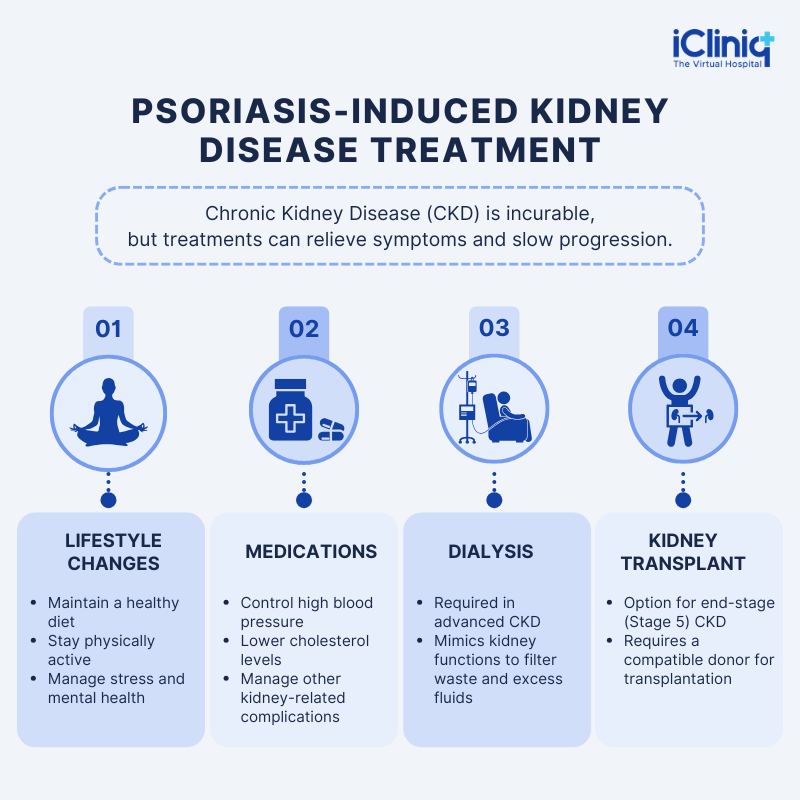
Chronic kidney disease is incurable, but treatment can relieve symptoms and prevent them from worsening. However, treatment depends on the stage of chronic kidney disease.
The main treatments are:
-
Lifestyle Changes:
Helps keep a healthy state of mind and body.
-
Medications:
To control kidney-related problems such as high blood pressure and cholesterol.
-
Dialysis:
Mimics some kidney functions that may be required in advanced-stage kidney disease.
-
Kidney Transplant:
This may also be required for advanced (stage 5) CKD.
How to Prevent Psoriasis-Induced Kidney Disease?
The prevention of psoriasis-induced kidney disease is done by keeping the following points in check:
-
Baseline renal function should be assessed, and the patient's renal function should be taken into consideration when prescribing new medications.
-
Dosage adjustments should be made based on the patient's underlying renal function.
-
Risk factors for nephrotoxicity must be corrected before treatment starts.
-
Concomitant nephrotoxic drugs (drugs that can potentially damage the kidneys) should be avoided.
-
Drink at least eight glasses of water a day before and during your procedure.
-
Effective non-nephrotoxic agents should be used whenever possible.
Conclusion
Individuals with severe forms of psoriasis are at an increased risk of developing kidney disease. The increased prevalence of renal injury in psoriasis may be attributed to vascular injury resulting from inflammation and other comorbidities. Some drugs used to treat psoriasis are nephrotoxic with long-term use. Patients with moderate to severe psoriasis or psoriatic arthritis should be routinely monitored for renal function by measuring the glomerular filtration rate. If you experience symptoms such as psoriasis, swelling, fatigue, foamy urine, or elevated blood pressure, consult a kidney specialist to monitor your kidney health.
Key Takeaways
-
This article explores the relationship between kidney disease and psoriasis, highlighting the impact of chronic inflammation on kidney function.
-
Psoriasis is a systemic inflammatory disease that can increase the risk of comorbidities, including hypertension, dyslipidemia, and diabetes.
-
It has been demonstrated that moderate to severe psoriasis patients are more likely to develop chronic kidney disease (CKD), particularly in cases where they have had long-term psoriasis or when their condition is complicated by metabolic factors such as obesity or hypertension.