Table of Contents
Introduction
The landscape of weight loss drugs is evolving with exciting advancements in research and development. From promising new oral medications to innovative approaches mimicking exercise, these developments aim to enhance efficacy, safety, and patient outcomes. This article explores the future prospects, current research, and challenges facing weight loss medications, highlighting their potential impact on managing obesity effectively.
What Are the Future Prospects of Weight Loss Drugs?
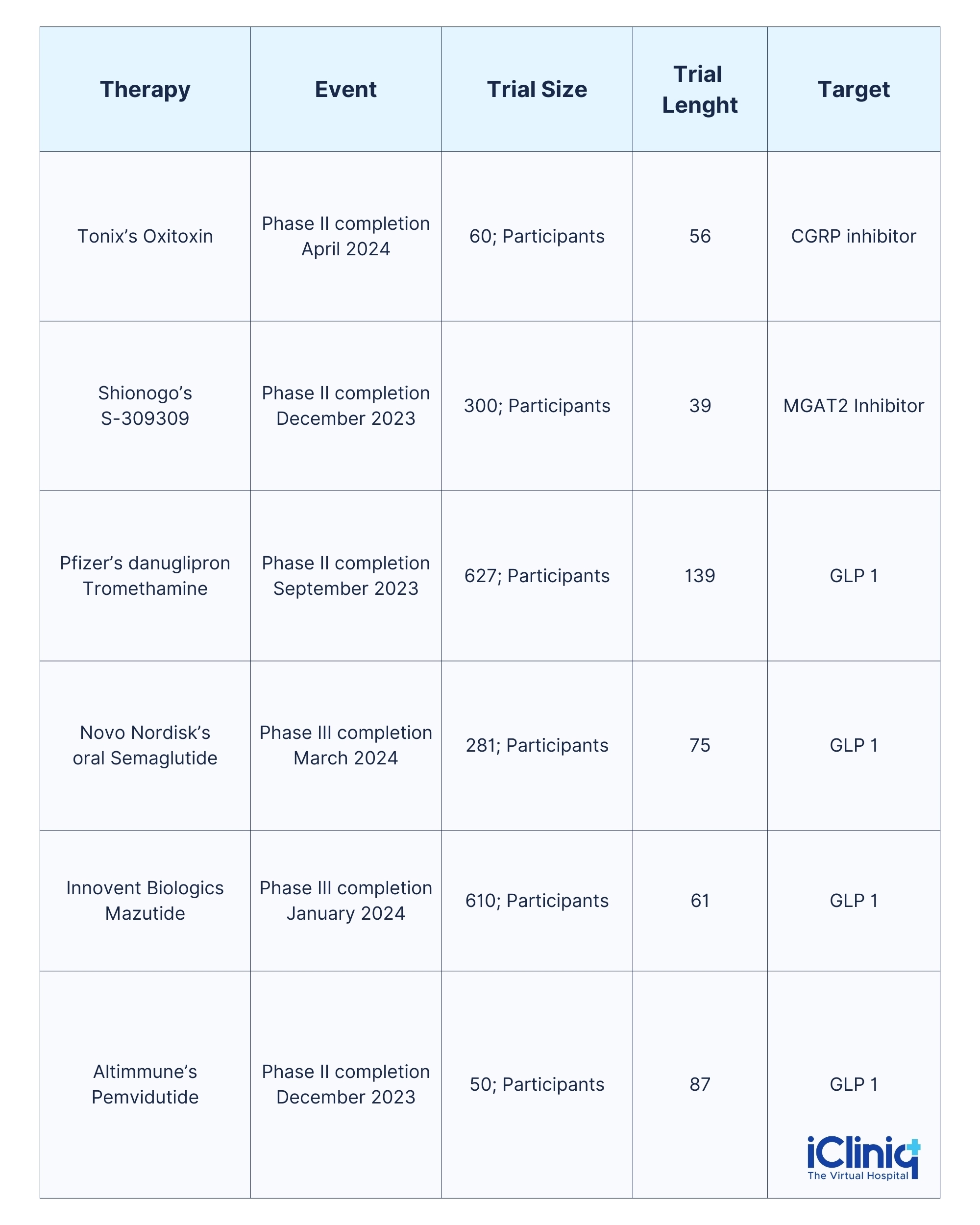
During the June 2023 American Diabetes Association (ADA) convention, Novo Nordisk and Eli Lilly presented updated information on two promising oral weight loss drugs, Semaglutide and Orforglipron, respectively. With efficacy readings surpassing 15 percent, the market for these drugs is rapidly growing. As trials are initiated globally, the potential to treat a broader range of people and meet increasing demand is promising.
Advancements and Research Areas
-
Route of Administration: Most weight loss drugs developed so far are subcutaneous (injected under the skin). More trials are underway to find better routes of administration to improve ease and comfort. Research on oral drugs is in its final stages. Many weight loss drugs currently used were initially developed for managing type 2 diabetes, making dual or triple agonists an appreciated development in this field.
-
Site of Action: Multiple pharmaceutical companies are developing drugs that influence more than one hormone acting on the brain to cause weight loss. Ongoing animal studies show promising results. For instance, Tirzepatide, a drug combining the actions of GLP-1 and gastric inhibitory polypeptide (GIP), has shown faster weight loss by stimulating insulin secretion (similar to GLP-1) around mealtime, aiding weight management.
-
Muscle Mass: A study on Bimagrumab, an antibody that blocks activin type II receptors and promotes skeletal muscle growth, showed effectiveness in weight loss by reducing adipose tissue while increasing lean mass in obese people with type 2 diabetes. Further research could lead to the development of novel drugs that promote weight loss without sacrificing lean muscle mass.
10 Potential Barriers to Developing Weight-Loss Drugs
- Long Development Time: One major reason many drugs fail to reach the market is the long duration required to develop a drug with no or minimal adverse effects.
How to address: Streamlining the drug development process through advanced technologies such as artificial intelligence and machine learning can help identify potential compounds faster. Accelerating regulatory review processes and fostering closer collaboration between researchers, pharmaceutical companies, and regulatory agencies can also reduce development time.
2. The Complexity of the Condition: Developing drugs specifically for obesity is challenging due to the condition's complexity. Maintaining muscle mass during weight loss is another hurdle. More research is needed to modify these drugs to prevent adverse effects.
How to address: Properly studying and classifying individuals can help minimize adverse effects due to the condition's complexity. Though time-consuming, this yields better and more accurate results.
3. Type of Individuals Using the Drugs: The effectiveness of weight loss drugs can vary based on body type. While positive results have been seen in obese mice, the effects on individuals with normal weight remain uncertain.
How to address: Proper candidate analysis before trials and studying various body features before prescribing medication can help prevent errors or shortcomings.
4. Return of Lost Weight: Studies show that people regain two-thirds of lost weight within a year after stopping treatment. Developing a permanent cure for obesity remains a challenge.
How to address: More research is needed to develop drugs that offer long-term or permanent results with minimal side effects.
5. Cost: Weight loss drugs are expensive due to the extensive research behind them, which can deter long-term use. The high cost of clinical trials can also hinder further research.
How to address: Increased sponsorships and partnerships with wellness-focused companies can help reduce trial expenses. Encouraging pharmaceutical companies to avoid overpricing can make these drugs more accessible.
6. Heterogeneity of Patient Cohorts: Obesity's complex nature results in trial cohorts with varied causes and co-existing conditions.
How to address: Grouping participants based on similar causes and conditions can provide more accurate results. Proper candidate analysis before grouping is essential for clarity and consistency.
7. Neuroendocrine Factors: Endocrine factors and brain regions like the hypothalamus play a critical role in food intake and metabolism. Different individuals' bodies react differently, leading to variable results.
How to address: Grouping participants based on signs like delayed weight loss, increased hunger, and fatigue can help manage this complexity.
8. Changes in Pharmacology from Animals to Humans: Differences in body weight, metabolism of glucose and lipids, and other factors can result in different drug reactions in humans and animals.
How to address: This challenge is inevitable. Predicting possible outcomes and taking measures to mitigate them can help.
9. Safety Concerns: Safety is a major concern, with the risk of toxicity being inevitable to some extent. Small doses may have little effect on some individuals while negatively impacting others.
How to address: A thorough understanding of a drug's action in the body can help prevent adverse effects. Proper documentation of conditions causing adverse effects can help avoid repetition.
10. Patient Compliance: Successful drug research requires patient compliance. Failure to adhere to prescriptions can lead to improper results and additional adverse effects.
How to address: Educating patients about the importance of compliance and the possible drawbacks of non-adherence can improve compliance rates.
Why Drugs Over Diet?
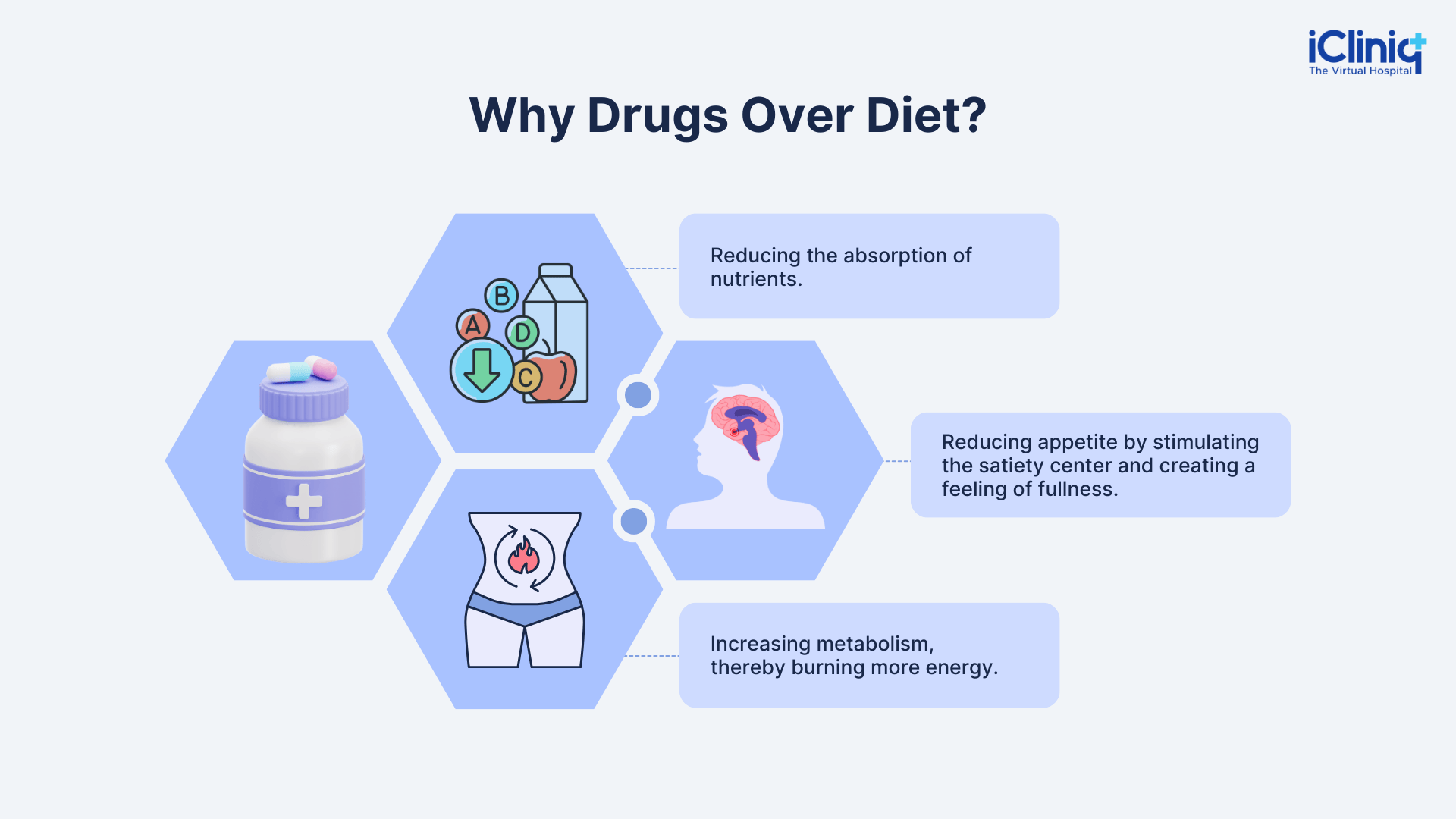
Weight loss medications might be recommended in cases where the risks of obesity outweigh the potential side effects of the medications. These medications work through various mechanisms:
-
Reducing appetite by stimulating the satiety center and creating a feeling of fullness.
-
Reducing the absorption of nutrients.
-
Increasing metabolism, thereby burning more energy.
When these medications are combined with lifestyle and diet modifications under the guidance of a healthcare professional, weight loss can become significantly easier. Long-term prescription drugs for weight loss, used for more than 12 weeks, can lead to significant weight loss compared to lifestyle changes alone. Studies show these medications can help individuals lose weight 3 to 12 percent faster and manage comorbidities more effectively.
What Research Is Being Done on This?
Initial Attempts: Early approaches to managing obesity included non-pharmacological methods such as behavioral therapy, a balanced calorie-deficit diet, and 30 to 50 minutes of daily physical activity. Cognitive behavioral therapy was also employed to overcome emotional and psychological barriers to weight management. Alternative approaches like acupuncture, vitamin D, and N-3 fatty acid supplements were also explored. The pharmacological approach involved targeting enzymes and hormones linked to obesity's pathophysiology, such as lipase, glucagon-like peptide 1 (GLP-1), leptin, and MC4R (a gene coding for leptin-related enzymes).
Later Advancements: Recent advancements include a study by a University of Florida professor of pharmacy and colleagues, who discovered a new drug that mimics exercise in mice. This compound convinces the muscles that they are exercising more than they actually are, leading to weight loss. This "exercise mimetic" drug not only increased metabolism but also boosted the mice's endurance, allowing them to run twice as fast. Although still in the early stages, this drug shows potential for managing obesity, diabetes, and age-related muscle loss.
Another promising drug, SLU-PP-332, is under development. It boosts metabolism without altering food intake, mimicking exercise, or affecting appetite. This drug increases the body's natural metabolism, causing it to expend energy as if running a marathon, resulting in faster fat metabolism and weight loss. Studies in mice showed that fat metabolism is similar to fasting or exercising, leading to weight loss.
Research by Washington University in St. Louis and St. Louis University focuses on a drug that activates energy expenditure pathways. This involves targeting estrogen-related receptors (ERRs), proteins that are more active during exercise. A drug named SLU-PP-332 was designed to activate ERRs, showing promising results in mice. Mice given this drug ran 70 percent longer than those without it. In obese mice, the drug reduced weight gain by 10 percent and increased weight loss by 12 percent without altering their food intake or exercise levels. The drug also strengthened heart muscles in mice with weak hearts, though this aspect requires further research. So far, the drug has shown no adverse effects. The next phase involves modifying it into an edible tablet and testing it on animals before human trials.
Conclusion:
The future of weight loss drugs is promising, with ongoing advancements in drug administration, effectiveness, and safety. Despite challenges, innovative research offers hope for more effective and accessible treatments. As these drugs evolve, they could transform obesity management and significantly improve health outcomes.