- 1How Do Weight Loss Drugs Work, and What Are the Different Weight Loss Drugs Available?
- 2Who Is Considered the Best Candidate for Weight Loss Medications?
- 3Are Weight Loss Medications Suitable for Everyone, Including Children and Teenagers?
- 4How Much Weight Can One Lose With Weight Loss Drugs?
- 5How Long Should Someone Try Dieting and Exercise Before Considering Weight Loss Medications or Surgery?
- 6What Are the Potential Short- and Long-Term Side Effects of Weight Loss Medications?
- 7Do Individuals Need to Take Weight Loss Medications for the Rest of Their Lives?
- 8How Do Lifestyle Changes Complement the Use of Weight Loss Medications?
- 9How Do Weight Loss Medications Impact Other Health Conditions?
- 10What Role Do Weight Loss Drugs Play in Improving Fertility for Individuals with Obesity?
Introduction
Weight loss medicines are a novel tool to combat obesity. Exploring the landscape of weight loss medicines can be confusing, so it is crucial to have accurate and trustworthy information. This FAQ addresses common queries concerning weight loss drugs, including what to expect and how they help combat fertility issues.
How Do Weight Loss Drugs Work, and What Are the Different Weight Loss Drugs Available?
Weight loss medications can help people lose weight through various methods. Some of the most commonly prescribed medications include Orlistat, which blocks fat absorption in the intestines, and Phentermine, an appetite suppressant that affects the central nervous system. GLP-1 receptor agonists like Liraglutide and Semaglutide mimic hormones in the body that regulate appetite and food intake, leading to decreased hunger and increased satiety. Naltrexone-bupropion combines an opioid antagonist with an antidepressant to influence brain pathways involved in hunger and cravings. Another option, Lorcaserin, works by activating serotonin receptors in the brain to help control appetite.
Who Is Considered the Best Candidate for Weight Loss Medications?
Several factors should be considered comprehensively before initiating weight loss medications. People who have not been able to achieve the required health and weight goals even after six months of making healthy lifestyle changes (like diet and exercise) can start with weight loss medicines. Check the body mass index (BMI); a BMI of 30 or higher falls into the clinically obese category, making one a candidate for medication. For those with a BMI in the overweight range (25-29.9) who have a weight-related health condition like prediabetes, high blood pressure, or high cholesterol, medication might be appropriate.
Are Weight Loss Medications Suitable for Everyone, Including Children and Teenagers?
Most of the US FDA-approved weight loss drugs are indicated only for adults. Drugs like Orlistat and Liraglutide are suggested for children aged 12 and older. Additionally, Setmelanotide is approved for children as young as six who have rare genetic disorders that can cause obesity secondary to the genetic disorder. These medications are prescribed under strict medical supervision, and their use in younger populations is based only on specific conditions and needs.
How Much Weight Can One Lose With Weight Loss Drugs?
The amount of weight one can lose with weight loss drugs varies significantly from person to person based on their lifestyle and comorbidities. When using these medications, patients typically lose 5-15% of their body weight. For instance, a 200-pound person may shed 10 to 20 pounds with the proper care. It is important to understand that the primary goal is not necessarily to achieve a specific number on the scale. Even a modest weight loss of 5% can positively impact overall health, such as improving blood pressure and reducing the risk of diabetes. Therefore, focusing on overall health improvements rather than just the scale can be a more realistic and beneficial approach.
How Long Should Someone Try Dieting and Exercise Before Considering Weight Loss Medications or Surgery?
Generally, individuals who want optimal weight loss will be advised to try dieting and exercising for at least six months before starting weight loss medicines. This period allows ample time to evaluate the effectiveness of lifestyle changes and establish a solid foundation for weight management. Clinical trials and studies have shown that people can reduce about two to five percent of their weight by making minor lifestyle changes like food restrictions and physical activity. Weight loss medicines can be very advantageous for people who aim to decrease their weight by 10 to 15 percent. People who have other medical conditions and who require more than 20 percent of weight loss are indicated for surgery. However, the latest studies have shown that achieving 20-25 percent weight loss with FDA-approved medications is feasible.
What Are the Potential Short- and Long-Term Side Effects of Weight Loss Medications?
Drugs used to lose weight may have adverse consequences, just like any medication. The short-term side effects could be nausea, vomiting, constipation, dry mouth, sleeplessness, headache, fatigue, or lightheadedness. Although they are uncommon, long-term severe adverse effects can include elevated blood pressure, palpitations, liver damage, nutritional deficiencies, metabolic changes, anxiety, the risk of dependence, or mood swings. Dietary adjustments, such as incorporating supplements or an all-inclusive balanced diet, can help address nutrient deficiencies that some medications might cause. If side effects are significant after taking these weight loss drugs, medication adjustments, including dose changes or switching to alternative drugs, become mandatory to improve tolerance.
Do Individuals Need to Take Weight Loss Medications for the Rest of Their Lives?
Individuals generally do not need to take weight-loss medications for the rest of their lives, but the duration of use can vary based on individual goals and responses. For some, weight-loss medications are prescribed as a long-term strategy to maintain weight loss and prevent weight gain. Also, weight-loss drugs will be reassessed once every three to six months to determine an individual’s body responses and adaptation to weight-loss drugs, based on which the duration will be decided. If medication is stopped, especially without implementing effective lifestyle changes, there is a risk of regaining weight. This is because medications often help manage appetite or absorption, and without their aid, individuals might return to previous eating habits or struggle with weight control. So, the key to curbing weight gain and maintaining an optimal weight is to develop habits that help keep the lost weight.
How Do Lifestyle Changes Complement the Use of Weight Loss Medications?
Lifestyle changes play a vital role in successful weight loss and complement medication by promoting overall health. A nutrient-rich diet supports metabolism and physical activity, with high-fiber foods aiding digestion and preventing gastrointestinal issues from medications. Regular exercise boosts metabolism, burns calories, improves cardiovascular health, and enhances insulin sensitivity, which benefits those with obesity, high cholesterol, or diabetes. Additionally, maintaining good mental health is vital, as it supports perseverance and resilience throughout the weight loss journey. Integrating stress management techniques like mindfulness and therapy can further enhance weight management efforts and ensure long-term success.
How Do Weight Loss Medications Impact Other Health Conditions?
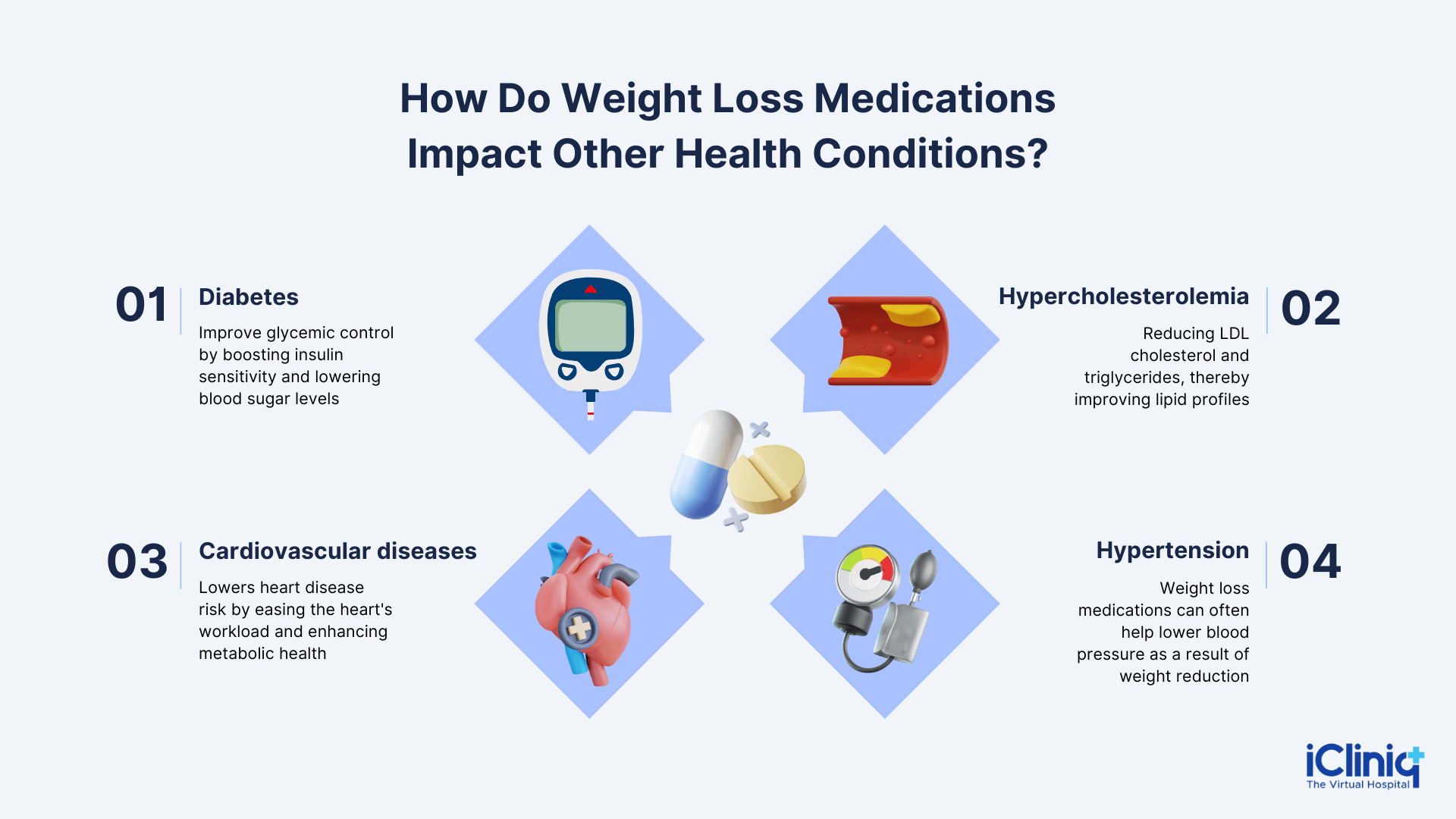
For individuals with type 2 diabetes, weight-loss medications like GLP-1 receptor agonists not only help reduce weight but also improve glycemic control by boosting insulin sensitivity and lowering blood sugar levels. These medications also benefit those with hypercholesterolemia by reducing LDL cholesterol and triglycerides, thereby improving lipid profiles. Additionally, weight loss generally lowers heart disease risk by easing the heart's workload and enhancing metabolic health. However, stimulant-based weight-loss drugs can cause cardiovascular side effects, such as increased heart rate or blood pressure, requiring careful monitoring in those with existing heart conditions.
What Role Do Weight Loss Drugs Play in Improving Fertility for Individuals with Obesity?
Weight loss drugs can significantly impact individuals with obesity who want to get pregnant, as obesity negatively affects reproductive health. Adipose tissue, which acts as an endocrine organ, secretes adipokines that influence metabolic and reproductive disorders. Excess adipose tissue can exacerbate conditions like PCOS, anovulation, hypothalamic hypogonadism, insulin resistance, and type 2 diabetes, all of which can impair fertility. Weight loss medications, including lipase inhibitors, appetite suppressants, and metabolism boosters, can help reduce weight and improve reproductive outcomes and fertility in both men and women.
Conclusion:
An individual aiming to lose weight and have a healthy life should focus on a holistic approach that includes diet pills, physical activity, and unhealthy food restrictions. Such individuals should analyze the mechanisms of weight loss drugs and recognize the impact these drugs have on systemic health. Embracing a comprehensive approach in the weight loss journey tackles excess weight and serves as a game changer in leading a life with enhanced health and vitality.