Table of Contents
Introduction
Living with a rare genetic condition can feel scary and overwhelming. Especially when it shows up on your skin, something the whole world can see.
Netherton syndrome is one such condition. It doesn’t just affect the skin, but can also impact hair and even how the immune system works. Although it is considered a rare skin disorder, learning more about it can make the journey feel a little less confusing and lonely.
In this guide, we’ll explain Netherton syndrome in simple terms, what causes it, how it shows up, and what treatments can help. Whether you are living with it yourself, supporting a loved one, or just looking for trusted information, this article is here to give you clear and supportive insights into this complex condition.
What Is Netherton Syndrome?
Netherton syndrome is a rare condition that someone is born with. It mainly affects the skin, but it can also impact hair and the immune system. It falls under a group of disorders called ichthyoses, which are known for causing dry or scaly skin.
Doctors first recognized this condition in 1958, and over time, they have learned more about how it shows up and how families can manage it.
Why Is It Challenging?
This condition doesn’t just affect the surface of the skin. Because the skin barrier is weaker, people may face:
-
Losing too much water through the skin.
-
Difficulty keeping body temperature stable.
-
A higher chance of infections or allergic flare-ups.
It affects boys and girls equally and is usually present from birth. The severity can change over time - sometimes improving, sometimes flaring up.
Daily Life with Netherton Syndrome
Living with this condition can bring daily challenges, such as:
-
Caring for the skin with gentle products and regular moisturizing.
-
Managing temperature to avoid overheating or dehydration.
-
Controlling allergies by spotting triggers early and getting treatment.
Although it can be tough, many people with Netherton syndrome lead fulfilling lives. With proper care and medical support, symptoms can be managed, and families can find routines that make day-to-day life easier.
What Are the Symptoms of Netherton Syndrome?
Netherton syndrome usually shows up right from birth. The symptoms can vary a lot, but they mostly affect the skin, hair, and immune system.
Skin Symptoms
-
At birth, many newborns have a shiny, tight covering on their skin (called collodion baby), which later peels off.
-
As they grow, the skin becomes red, scaly, and irritated, often resembling fish scales.
-
Itching: Constant itching is very common and can make daily life uncomfortable.
-
Infections: Because the skin barrier is weak, infections can happen more easily.
Hair Symptoms
-
The hair is fragile and breaks easily.
-
Doctors call this bamboo hair because, under a microscope, the hair looks like bamboo stalks.
-
This often leads to short, sparse hair, even if it looks normal at first glance.
Immune System Symptoms
-
Many children develop multiple allergies - to foods, dust, or other environmental triggers.
-
Asthma-like breathing problems can occur.
-
Because the skin doesn’t protect well, bacterial, viral, and fungal infections are more common.
Other Possible Symptoms
-
Babies may struggle to gain weight (failure to thrive) since their bodies lose more energy and water through the skin.
-
Trouble regulating body temperature (feeling too hot or too cold easily).
-
Some children may have mild developmental delays, but their intelligence is usually normal.
Variation in Severity
-
Not everyone with Netherton syndrome has the same symptoms.
-
For some, the condition is milder and manageable with good care.
-
For others, symptoms are more severe and need regular medical support.
What Causes Netherton Syndrome?
Netherton syndrome is caused by changes (mutations) in a gene called SPINK5. This gene normally makes a protein called LEKTI (Lympho-epithelial Kazal-type inhibitor), which helps keep the skin’s natural barrier strong and balanced.
When the SPINK5 gene doesn’t work properly, the body can’t make enough working LEKTI protein. Without it, certain skin enzymes become too active and start breaking down important proteins in the skin and hair. This leads to:
-
A weak skin barrier.
-
Fragile, easily broken hair.
-
Higher risk of allergies and infections.
How Is It Inherited?
-
Netherton syndrome follows an autosomal recessive pattern.
-
A child needs to inherit one faulty gene from each parent to have the condition.
-
Parents who carry just one faulty gene (carriers) usually have no symptoms themselves.
-
Each time two carriers have a child, there’s:
-
25% chance the child will have Netherton syndrome.
-
50% chance the child will be a carrier.
-
25% chance the child will have no mutation at all.
-
Why Is It Present from Birth?
Netherton syndrome is present from birth because the condition comes from the genetic code itself; babies are born with it. It isn’t something you “catch” or develop later in life due to the environment - it’s part of the instructions that build the skin and hair.
Different Gene Mutations
Scientists have found over 100 different mutations in the SPINK5 gene that can cause Netherton syndrome. Some mutations completely block LEKTI production, while others allow the body to make small amounts. This is one reason why symptoms can look very different from person to person.
Research Insights
The SPINK5 pathway is also linked to other skin problems. By studying Netherton syndrome, researchers are learning more about how the skin barrier works. This knowledge may open doors to new treatment options in the future.
How Is Netherton Syndrome Diagnosed?
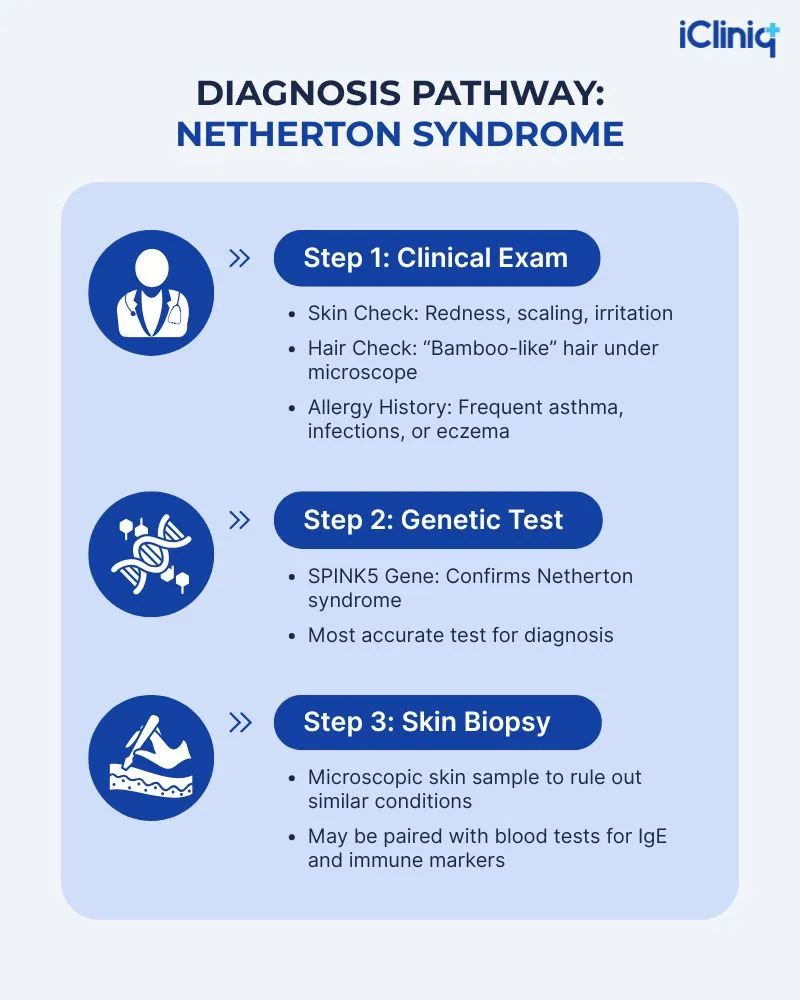
Finding out if someone has Netherton syndrome can take time because the symptoms often overlap with other skin problems. Doctors usually need to look at several clues before making a clear diagnosis.
What Doctors Look At?
-
Skin Check: A dermatologist will carefully examine the skin for redness, scaling, and irritation.
-
Hair Check: A strand of hair is looked at under a microscope. If it shows a special ‘bamboo-like’ pattern, that’s a big sign of Netherton syndrome.
-
Allergies and Infections: Doctors also consider if the person has frequent allergies, asthma, or repeated infections.
Tests That May Be Done
-
Skin Biopsy: A small piece of skin may be tested to rule out other similar conditions.
-
Genetic Testing: This is the most accurate way to confirm the diagnosis. It checks for changes in the SPINK5 gene that cause the condition.
-
Blood and Allergy Tests: These may be done to measure allergy levels (IgE) and check the immune system's function.
Why Is It Important?
Getting the right diagnosis early helps:
-
Start proper skin care and treatment sooner.
-
Give families answers about the genetic cause.
-
Plan better long-term care with doctors who know the condition well.
How Is Netherton Syndrome Treated?
At the moment, there isn’t a cure for Netherton syndrome. Treatment is all about making the skin stronger, keeping infections away, and helping children grow and feel comfortable. Most families work with more than one specialist - often a dermatologist, an allergy doctor, and sometimes a nutritionist.
-
Caring for the Skin: Moisturizing is the most important step. Simple, fragrance-free creams or ointments used several times a day help protect the skin and stop too much water loss. If the skin is very red or itchy, doctors may give mild medicated creams to calm it down.
-
Managing Allergies: Children with Netherton syndrome often have allergies to food or things in the environment. Avoiding triggers makes life easier, and allergy medicines like antihistamines can help with rashes and itching.
-
Preventing Infections: Because the skin barrier is weaker, infections happen more often. Parents may be advised to use gentle antiseptic washes or very dilute bleach baths. Any new signs of infection - like pus, fever, or spreading redness - need quick treatment.
-
Temperature Balance: Many babies and young children have trouble staying warm or cool. Light, soft clothing and keeping the room at a steady temperature can help them feel more comfortable.
-
Looking After Hair: Hair is fragile and breaks easily. It requires gentle handling, mild shampoos, and avoidance of harsh treatments or tight styles.
-
Nutrition and Growth: Some children burn more energy because of their skin problems and need extra calories. Doctors sometimes recommend supplements or special feeding plans to support healthy growth.
-
Future Hope: Research is underway on treatments that may fix the root problem, such as enzyme replacement or medicines that can restore the missing protein. These aren’t available yet, but they bring hope for better options in the future.
Conclusion
Netherton syndrome is uncommon and, in its early stages, can be debilitating. Although hair and the immune system are frequently affected as well, the skin is primarily affected. Although there is currently no cure, daily practices like moisturising the skin, avoiding triggers for allergies, and promptly treating infections can have a significant impact. Families frequently report that joining support groups helps them deal with life's challenges, and research is continuing in this direction. Many people can control their symptoms and lead active, satisfying lives with the right care.
iCliniq’s Key Takeaway
-
It can be very difficult to live with Netherton syndrome, particularly for families with small children. Over time, small daily actions like moisturizing the skin, keeping an eye out for allergies, and promptly treating infections can have a significant impact.
-
Many people learn to control their symptoms and live happy, fulfilling lives with the correct support and care.
- Experts on iCliniq can assist you in understanding the condition and developing a plan that works for you if you need advice. Consult a dermatologist if you experience any of these symptoms.

