Table of Contents
What Is Ear Eczema?
Ear eczema is eczema (atopic dermatitis) affecting the skin in, on, or around the ears, including the outer ear (pinna), the canal, behind the ears, the earlobes, the ear folds, and the area where the ears meet the face.
As with all other forms of eczema, it is a chronic inflammatory condition caused by impaired skin barrier function and hyperactive immune system activity. The ear skin is especially prone to the disease because it is very thin, hard to moisturize, and subjected to irritants from hair products, earrings, devices, and water.
Ear eczema is not contagious. It is not itself a fungal infection, though the weakened barrier it creates raises the risk of secondary bacterial or fungal infection.
Ear Eczema Types
-
The most common trigger of the condition is atopic dermatitis. This occurs in individuals with a prior or family history of eczema, asthma, or allergic rhinitis, leading to chronically dry, itchy skin. In the auricular region, it often impacts the intertragic region, the helical rim, and the ear canal.
-
Seborrheic dermatitis is triggered by an immune overreaction to Malassezia, a yeast naturally present on skin. It causes greasy, yellowish flaking rather than dry scaling. A hallmark feature is painful cracks or fissures behind the ear. People often also have dandruff on the scalp.
-
Contact dermatitis occurs when an allergen or irritant comes into contact with the skin in the ear region. Examples of allergens or irritants that can cause contact dermatitis in the ear include nickel earrings, hair color, shampoo, earbuds, hearing aids, and ear drops.
-
Asteatotic eczema is more common in people over 65 and results from extremely dry skin caused by low humidity, cold weather, or harsh soaps. It produces a distinctive cracked crazy-paving pattern and typically worsens in winter.
What Are the Symptoms of Ear Eczema?
-
Symptoms may differ according to the category or affected body part but are always characterized by:
-
Severe itching occurs as the most common and disturbing symptom. Dry, peeling, or flaky skin in the external ear or ear canal opening.
-
Redness (lighter skin) or darker, brownish discoloration (darker skin tones).
-
Crusting or weeping from inflamed patches.
-
Painful cracks or fissures behind the ear or in the ear fold.
-
Clear discharge from the canal (non-infected cases).
-
A feeling of fullness or blockage in the ear.
When a secondary infection develops, itching gives way to pain, discharge becomes cloudy or yellow, and the ear feels hot and swollen. According to the National Eczema Society, severe cases can cause temporary hearing loss due to swelling of the ear canal. Any sudden increase in pain, purulent discharge, or hearing change warrants same-day medical care.
What Causes Ear Eczema?
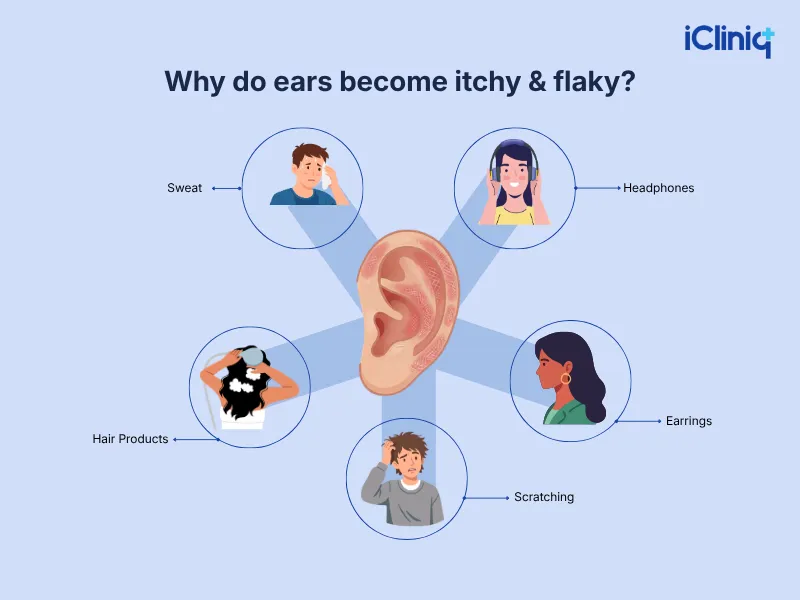
The cause of ear eczema is genetic sensitivity to barrier skin dysfunction and environmental exposure. The thin and hard-to-moisturize skin of the ear is particularly susceptible. Contributing causes are:
-
Genetic Predisposition: Filaggrin mutations weaken the skin barrier in 25-50% of patients with atopic dermatitis.
-
Atopic History: Having eczema, asthma, or allergic rhinitis substantially increases the risk.
-
Allergens: Nickel earrings, fragrance in hair products, preservatives in ear drops, and hearing aid materials.
-
Skin Barrier Damage: From frequent water exposure, cotton swab use, or repeated scratching.
-
Overgrowth of Yeast: Malassezia contributes to the aggravation of seborrheic dermatitis.
-
Objects: Earbuds and hearing aids retain moisture and have friction and contact effects.
-
Cold, Dry Weather: A primary driver of asteatotic eczema, particularly in older adults.
Treatment Options for Ear Eczema
Medical Treatments
-
The application of topical steroids is the most appropriate for this condition. For the external auditory canal and the skin behind the ear, applying low- to moderate-strength creams or ointments such as Hydrocortisone 1% and Betamethasone 0.1% twice daily during flare-up periods would be ideal.
-
Antifungals can also be administered to manage seborrheic dermatitis. These include Ketoconazole and Selenium Sulfide shampoos, which are applied to the external ear and hairline to control the overgrowth of Malassezia yeast.
-
Calcineurin Inhibitors (Tacrolimus, Pimecrolimus) are non-steroidal treatments for resistant cases and sensitive body parts. They decrease inflammation but do not affect skin thinning over the years.
-
Antibiotic Ear Drops (Like Ciprofloxacin and Dexamethasone) are used when there is a secondary bacterial infection. When there is a chance of contact dermatitis, patch tests should be done.
Home Remedies
-
Apply fragrance-free emollient or petroleum jelly to the outer ear and ear folds twice daily.
-
A few drops of mineral or olive oil can soften dry canal skin and crusting.
-
A cool compress on the outer ear for 10 to 15 minutes reduces acute itching.
-
Dry your ears after showering using a hair dryer that is not too hot, held at arm’s length.
Lifestyle Changes
-
Replace earrings made of nickel or cobalt with surgical stainless steel, titanium, or 18-carat gold.
-
Use unscented shampoo, conditioner, and hair products.
-
Take out and clean your hearing aids at night; ask your audiologist for hypoallergenic ear molds.
-
Limit headphone use, clean them often, and take breaks from them.
-
Do not stick anything in your ears. Swabs break down the skin layer and introduce bacteria.
How to Prevent Ear Eczema Flare-Ups:
-
Keep ears dry. Trapped moisture is one of the most consistent triggers. Dry thoroughly after showering or swimming. Fitted earplugs or a swimming cap helps during water sports.
-
Do not use known allergens. If patch tests and clinical observation indicate that a substance, such as nickel, hair dye, or another chemical, is responsible, do not use it.
-
Moisturize daily, even between flares. Applying a fragrance-free emollient to the outer ear and the skin behind the ear every day helps maintain the barrier and reduces how easily a flare is triggered.
-
Treat flares early. Applying a topical corticosteroid at the first sign of itch or flaking cuts the severity and duration of flares and prevents progression to secondary infection.
When to See a Doctor?
See a general practitioner or dermatologist if:
-
Ear eczema is not improving after one to two weeks of home care.
-
Pain, purulent discharge, or significant canal swelling develops.
-
Honey Crusting Is Seen (Bacterial Infection)
-
A patch test will reveal your culprit if you suspect an allergen.
-
Ear hearing issues or tinnitus onset.
-
Frequent flares even under treatment occur.
See a doctor on the same day if you have ear pain, discolored ear fluid, or fever. These symptoms suggest otitis externa, which requires immediate antibiotic treatment.
Conclusion
Ear eczema is a long-term skin condition that can be managed. The fact that it affects thin layers of skin, the narrow passage, and frequent exposure to irritants make it more likely to crack, leading to secondary infections. A correct diagnosis is key to effective treatment. Consult a skin specialist if you are experiencing the symptoms of ear eczema mentioned above.
Key Takeaways
-
Eczema of the ears causes irritation, scaling, and drying of the skin in or near the ears, ear canal, or even earlobes.
-
There are several forms of ear eczema, namely atopic, seborrheic, contact, and asteatotic dermatitis, each with its own causes and treatment options.
-
Topical corticosteroids and emollients treat the outer ear; steroid ear drops are used for the canal.
-
Untreated ear eczema can lead to secondary bacterial infection (otitis externa) and, in severe cases, temporary hearing loss.
-
It is important to note that ear eczema is not contagious and not a fungal infection in and of itself.

