Table of Contents
- 1What Is Dyshidrotic Eczema?
- 2What Causes Dyshidrotic Eczema?
- 3What Triggers Dyshidrosis?
- 4How Is Dyshidrotic Eczema Diagnosed?
- 5Best Dyshidrotic Eczema Treatment Options
- 6Dyshidrotic Eczema Treatment for Severe Cases
- 7How to Prevent Dyshidrotic Eczema Flare-Ups?
- 8When Should You See a Doctor?
- 9Conclusion
- 10Key Takeaways
What Is Dyshidrotic Eczema?
Dyshidrotic eczema, also known as dyshidrosis or pompholyx, is a type of eczema characterized by small, deep blisters filled with fluid on the hands and feet. These blisters usually show up on the palms, sides of the fingers, between the toes, and on the soles. These blisters are usually 1 to 2 mm wide, about the size of a pinhead, and often look like tapioca. They tend to group together, causing strong itching or a burning sensation. As they dry, the skin can become scaly, cracked, and sore.
Dyshidrotic eczema makes up 5 to 20% of all hand eczema cases. It is a long-term condition that comes and goes in cycles, with each flare usually lasting several weeks.
What Causes Dyshidrotic Eczema?
The exact cause of dyshidrotic eczema is still unclear. Experts think both genetics and the environment play a role. It often runs in families, so having a parent or sibling with eczema raises your risk. It is well known that certain triggers can trigger or worsen flare-ups by affecting the skin’s immune system and barrier function. Dyshidrotic eczema is more common in people between 20 and 40 years old and happens a bit more often in women than men.
Known contributing factors include:
-
A personal or family history of atopic eczema, allergic rhinitis, or asthma.
-
Overactive immune response to environmental triggers.
-
Fungal skin infections (such as athlete's foot), which can trigger a remote reaction on the hands.
-
Hyperhidrosis (excessive sweating) of the palms and soles.
-
Frequent exposure to water, detergents, or chemical irritants.
Common Symptoms of Dyshidrotic Eczema
Symptoms often appear quickly, sometimes just hours after contact with a trigger, and usually come in waves. The most common signs are:
-
Small, firm, fluid-filled blisters (vesicles) on the palms, fingers, or soles.
-
Intense itching or a burning sensation, often before blisters appear.
-
Redness and inflammation around blistered areas.
-
Peeling, scaling, or cracking skin as blisters dry out.
-
Pain or tenderness, particularly in the feet.
-
Excessive sweating in affected areas.
-
Thickened or hardened skin in areas of repeated flaring (lichenification).
In severe cases, small blisters can coalesce into large, painful blisters that spread across the backs of the hands and feet. If you notice weeping, yellow crusts, warmth, or fever, this could mean a bacterial infection, and you should get medical help right away.
What Triggers Dyshidrosis?
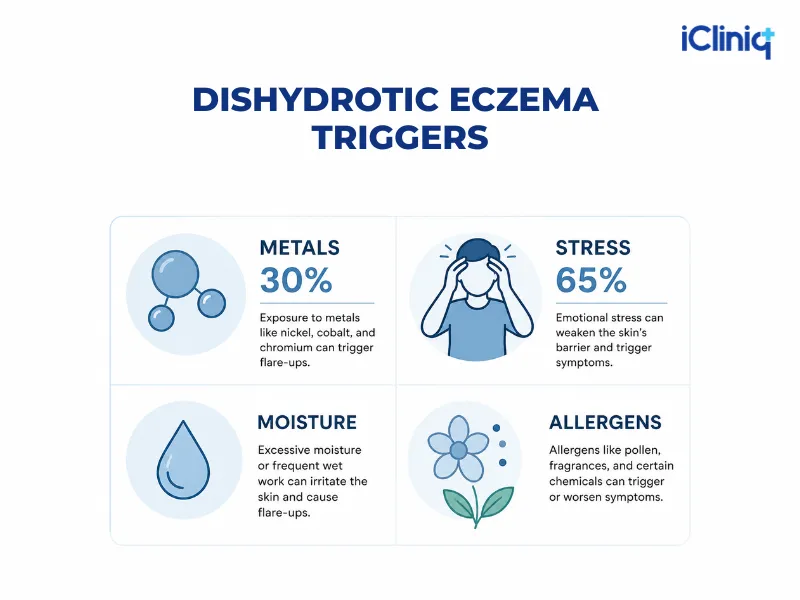
Triggers vary between individuals. The most commonly reported include the following:
|
Trigger Category |
Examples |
|
Metal sensitivity |
Nickel (jewelry, belt buckles, food), cobalt (food, tools) |
|
Allergens/irritants |
Fragranced products, detergents, cement, latex gloves |
|
Fungal infections |
Athlete's foot (tinea pedis) triggering hand flares |
|
Moisture and sweat |
Frequent handwashing, sweaty palms/feet, humid climates |
|
Stress |
Emotional or physical stress, a confirmed and very common trigger |
|
Seasonal changes |
Spring and summer tend to cause more flares; hay fever season overlaps |
|
Medications |
Aspirin, intravenous immunoglobulin (IVIG), oral contraceptives |
Keeping a diary of your triggers, flare-ups, diet, stress, and environmental exposures is a practical way to manage dyshidrotic eczema over the long term.
How Is Dyshidrotic Eczema Diagnosed?
Doctors usually diagnose dyshidrotic eczema by looking at the blisters and where they appear. There isn’t a single test for it. A dermatologist will check your skin and ask about your personal and family history, allergies, job, and any medicines you take.
Additional tests that may be ordered include:
-
Patch Testing: To identify contact allergens, particularly nickel and cobalt.
-
Skin Prick or Allergen Testing: If inhalant allergens (dust mites or pollen) are suspected.
-
Serum IgE levels are frequently elevated in atopic conditions.
-
A skin scraping or culture is performed to rule out fungal infection, such as tinea
-
A skin biopsy is rarely needed, but it can help rule out other conditions, such as psoriasis, tinea, or bullous pemphigoid that look similar to dyshidrotic eczema.
Oral challenge tests for nickel or cobalt are used when patch tests are negative, but metal sensitivity is suspected. A flare after consuming metal-containing foods confirms the sensitivity.
Best Dyshidrotic Eczema Treatment Options
Although there is no straightforward single cure for dyshidrotic eczema, several effective management options are available. Treatments range from soothing compresses to advanced therapies, so you can choose a plan that improves your skin and fits your daily routine.
-
Topical Corticosteroids: These are the cornerstone of first-line treatment. Because the skin on palms and soles is thick, potent (class I or II) topical steroids are typically required for adults, applied after soaks or cool compresses to improve absorption. A short treatment burst, generally 2 weeks, is standard. Moderately potent steroids are used for children.
-
Topical Calcineurin Inhibitors such as Tacrolimus and Pimecrolimus are another option instead of steroids for moderate cases. They help reduce inflammation and do not thin the skin, so they are often used for long-term or maintenance treatment.
-
Antihistamines: Particularly sedating ones may be prescribed short-term for severe nighttime itching. They do not treat the underlying inflammation but reduce the urge to scratch.
-
Antifungal Treatment: An important but often overlooked option. Research published by the American Academy of Dermatology found that approximately 33% of patients with hand dyshidrotic eczema resolved their flares only after treating a concurrent fungal infection on their feet. If athlete's foot is present, treating it should be part of the plan.
-
Antiperspirant Therapy: This prescription-strength antiperspirant applied to the palms or soles can reduce sweat-triggered flares in people with dyshidrosis who also have hyperhidrosis.
-
Oral Corticosteroids: Oral corticosteroids (example, Prednisolone) are a second-line option for acute, severe flare-ups. They are effective but reserved for short courses due to the risk of systemic side effects with prolonged use.
Dyshidrotic Eczema Treatment for Severe Cases
If topical treatments and home care do not work, stronger therapies are available.
-
Phototherapy: Bath-PUVA, in which hands or feet are soaked in a psoralen solution before UVA exposure, is the preferred phototherapy method for dyshidrotic eczema, per Medscape. Treatment runs 3 to 5 sessions per week for 12 to 16 weeks. Oral PUVA has been shown to improve or clear 81-86% of patients with hand and foot eczema.
-
Botulinum Toxin (Botox) Injections: They help lower sweat gland activity in the palms or soles, which can reduce flares caused by hyperhidrosis. Studies show that about 70% of patients get significant relief from itching and blistering.
-
Dupilumab (Dupixent): It is a biologic medicine that blocks the IL-4 and IL-13 pathways, which play a role in atopic inflammation. A 2020 study with 15 patients showed it works well for severe cases that do not respond to other treatments. Doctors usually prescribe it when other therapies have not helped.
-
Systemic Immunosuppressants: Cyclosporine, methotrexate, azathioprine, and mycophenolate mofetil are used only when the cases are severe and do not respond to other treatments. These medicines can have serious side effects and need careful monitoring.
-
Alitretinoin: An oral retinoid licensed in some countries for severe chronic hand eczema that hasn't responded to topical steroids or phototherapy.
-
Nickel Chelators: Medications such as disulfiram may be prescribed for confirmed nickel hypersensitivity when dietary nickel reduction alone isn't enough.
How to Prevent Dyshidrotic Eczema Flare-Ups?
To prevent flare-ups, it is important to find and avoid your personal triggers. These strategies are recommended by dermatologists:
-
Manage Metal Exposure: If you have confirmed nickel or cobalt sensitivity, a low-nickel or low-cobalt diet is clinically recommended. Limit high-nickel foods, chocolate, shellfish, oats, whole-grain flour, canned goods, beans, mushrooms, spinach, and tea. High-cobalt sources overlap significantly: chocolate, coffee, tea, liver, nuts, and whole-grain flour.
-
Keep Your Skin Healthy: By moisturizing your hands and feet every day, not just during flare-ups. Use a thick, fragrance-free moisturizer within 3 minutes of washing, while your skin is still slightly damp. Take off your rings before washing to avoid irritation from trapped soap.
-
Pick Gentle Products: Fragrance-free and dye-free cleansers instead of bar soaps. When doing laundry, add an extra rinse cycle to help remove any leftover detergent from clothes that come into contact with your skin.
-
Use Gloves Wisely: Wear 100% cotton gloves under rubber or latex gloves when working with water or chemicals. If your gloves get damp inside, change them right away, since too much moisture can make symptoms worse.
-
Keep Your Hands and Feet Dry: If you have foot dyshidrosis, wear moisture-wicking socks and breathable shoes. Change damp socks promptly and avoid footwear that retains heat.
-
Manage Stress: before it becomes a problem, since it often triggers flare-ups. The American Academy of Dermatology recommends biofeedback, cognitive-behavioral therapy (CBT), or seeing a mental health professional for stress-related symptoms. Regular exercise, enough sleep, and mindfulness meditation can also help.
-
Treat Fungal Infections Fast: Athlete's foot and similar infections are well-documented triggers of hand dyshidrosis, even when the hands show no fungal involvement. Treat promptly with an antifungal.
-
Try to Avoid Extreme Temperatures: Heat can make you sweat, while cold can dry out and crack your skin. Wear gloves when it’s cold and avoid places that are too hot.
When Should You See a Doctor?
See a GP or dermatologist if:
-
If blisters are severe, widespread, or do not improve after 2 to 4 weeks of home care, please seek medical attention.
-
If you notice signs of bacterial infection, such as weeping, yellow or green crusting, increasing redness, warmth, swelling, or fever, consult a healthcare professional.
-
Blisters on your feet are making it difficult to walk or stand.
-
Blisters on your hands are preventing you from working or performing daily tasks.
-
You suspect a contact allergy and want patch testing.
-
You are considering an elimination diet for nickel or cobalt sensitivity (to be done under medical supervision).
-
Your symptoms are significantly affecting your sleep, work, or mental health.
Seek urgent medical care if you develop signs of a widespread skin infection or if the affected area becomes rapidly more painful, red, and swollen.
Conclusion
Dyshidrotic eczema is a long-lasting condition that can return from time to time, but with the right treatment plan, it can be managed well. Most people with mild to moderate symptoms get better by using topical steroids, keeping their skin moisturized, applying cool compresses, and avoiding triggers of flare-ups. If symptoms are more severe or keep recurring, treatments such as phototherapy, biologic medicines, Botox injections, or other medications may help.
The most important long-term step is to find your personal triggers, such as metal allergies, sweating, stress, and fungal infections, and to build a daily skin care routine that avoids them. Working with a skin specialist to make a plan that fits you gives the best results.
Key Takeaways
-
Dyshidrotic eczema (pompholyx) causes small, intensely itchy, fluid-filled blisters on the palms, fingers, and soles of the feet. It affects 5 to 20% of all hand eczema cases.
-
Knowing and avoiding your personal triggers, especially nickel, cobalt, sweat, and stress, is the most effective long-term prevention strategy.
-
There is no cure for dyshidrotic eczema, but most people can keep it under control with the right treatment plan.

