Table of Contents
- 1What Is Air Pollution and How Does It Affect Skin?
- 2What Is the Science Behind Pollution-Induced Skin Aging?
- 3What Are the Key Signs of Pollution-Induced Skin Aging?
- 4How Air Pollution Interacts With UV Rays
- 5Who Is at Higher Risk of Premature Skin Aging?
- 6What Are the Treatment Options and Skin Protection Strategies?
- 7Recommended Skin-Care Routines by Dermatologists
- 8Conclusion
- 9Key Takeaways
What Is Air Pollution and How Does It Affect Skin?
Air pollution refers to toxic gases and particles. Air pollutants may deposit on the skin surface and cause harm by penetrating the skin. Common air pollutants include particulate matter from vehicular and industrial emissions, ozone (O₃) produced by sunlight-driven chemical reactions, nitrogen dioxide (NO₂) from burning fuel sources, and polycyclic aromatic hydrocarbons (PAHs) found in smoke and vehicular emissions.
Air pollution within houses may also contribute to skin problems. Cooking smoke, cigarette smoke, dust, and volatile organic compounds (VOCs) released into the environment by paints, detergents, and air fresheners may cause skin irritation and premature aging.
What Is the Science Behind Pollution-Induced Skin Aging?
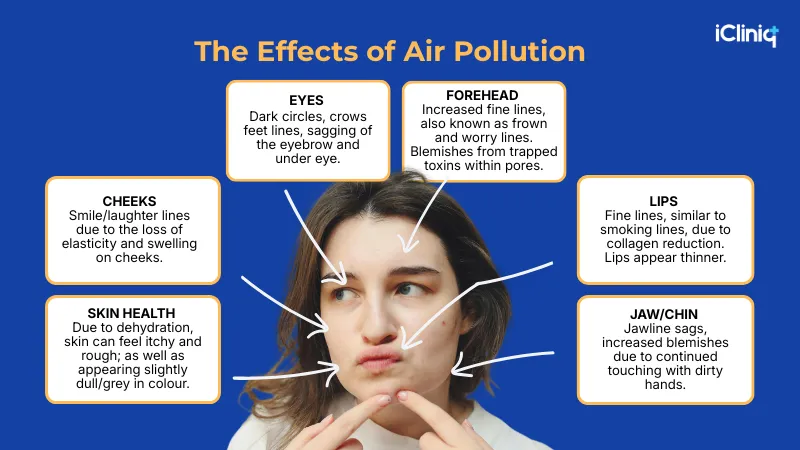
Air pollution contains harmful particles and gases that can settle on the skin’s surface and enter through hair follicles and the skin’s natural protective barrier, known as the lipid barrier. Once these pollutants penetrate the skin, they trigger the production of unstable molecules called free radicals. They can damage normal skin cells, degrade collagen and elastin, and impair the skin's capacity to heal. Over time, this effect leads to skin dehydration, poor appearance, the formation of wrinkles, pigmentation, discoloration, and other problems. In addition, pollution may cause inflammation and make the skin more prone to irritation. The major causes of skin damage include:
-
Oxidative Stress: The toxins create reactive oxygen species (ROS), overpowering the body’s natural antioxidants.
-
Collagen Degradation: ROS induces the production of matrix metalloproteinases (MMPs), enzymes that break down collagen and elastin.
-
Moisture Barrier Disruption: Pollutants impair the body’s natural levels of filaggrin and ceramides, leading to disruption of the moisture barrier.
-
Inflammation: Activation of the aryl hydrocarbon receptor (AhR) pathway may contribute to chronic low-grade skin inflammation.
What Are the Key Signs of Pollution-Induced Skin Aging?
The effects of daily pollution build up gradually. Common signs include:
-
Fine lines and wrinkles around the eyes and forehead.
-
Hyperpigmentation and dark spots on the cheeks and upper lip.
-
Loss of elasticity.
-
Loss of skin firmness.
-
Dull skin.
-
Uneven skin tone.
-
Dehydrated skin.
-
Rough texture.
-
Increased sensitivity.
-
Skin redness.
Long-Term Effects on Skin Health
Ongoing exposure does more than add wrinkles. Research links chronic pollution to:
-
Atopic dermatitis (eczema) flare-ups.
-
Acne and worsening breakouts.
-
Psoriasis aggravation.
-
Pollution may increase skin cancer risk when combined with chronic UV exposure.
-
Persistent inflammation and dullness.
How Air Pollution Interacts With UV Rays
-
Sunlight and air pollution together can damage the skin more than either one alone.
-
Ultraviolet (UV) rays activate pollutants present on the skin, increasing the formation of harmful free radicals.
-
This process speeds up photoaging, leading to wrinkles, dark spots, uneven skin tone, and loss of skin elasticity.
-
Daily sun protection is important, even on cloudy, polluted, or smoggy days.
-
Using a broad-spectrum sunscreen can help reduce pollution- and UV-related skin damage.
-
If signs of premature aging continue despite following a good skincare routine, consulting a dermatologist online can help identify suitable treatments and skincare options.
Who Is at Higher Risk of Premature Skin Aging?
-
Certain groups experience faster skin aging from pollution:
-
People living in urban or industrial cities.
-
Outdoor workers such as traffic police and construction workers.
-
Individuals with sensitive or compromised skin barriers.
-
People who are more prone to melasma.
-
Children and older adults, whose skin is thinner.
What Are the Treatment Options and Skin Protection Strategies?
-
Protecting the skin from pollution works best with a multi-layered skincare routine.
-
Dermatologists recommend using products that both remove pollutants and strengthen the skin’s natural protective barrier.
-
Gentle cleansers help wash away dirt, toxins, oil, and fine particulates that accumulate on the skin throughout the day.
-
Antioxidants such as vitamin C and vitamin E help neutralize harmful free radicals caused by pollution, reducing skin damage and premature aging.
-
Moisturizers help maintain the skin barrier, retain moisture, and reduce dryness and irritation.
-
Using sunscreen daily is crucial, as pollution and sunlight combined can accelerate premature skin aging.
-
There are other dermatological treatments that can help improve skin pigmentation, dryness, dull skin appearance, and fine lines resulting from prolonged exposure to pollution.
Recommended Skin-Care Routines by Dermatologists
-
Use a mild, non-stripping cleansing agent twice a day. Perform double cleansing at night after exposure to pollution or smoke.
-
Use an antioxidant serum with Vitamin C, Vitamin E, or Niacinamide every morning.
-
Choose products that repair your barrier, like ceramides, hyaluronic acid, or Panthenol.
-
Wear a broad-spectrum sunscreen that contains SPF 30 or more on a daily basis.
-
Perform exfoliation once a week using a chemical exfoliant to unclog the pores.
-
If there is significant skin damage, dermatologists can prescribe treatments such as retinoids, chemical peels, microneedling, and lasers to help restore collagen and reduce pigmentation.
Conclusion
One of the biggest reasons for early skin aging that people tend to overlook is air pollution. It usually works alongside ultraviolet radiation to degrade collagen and rob your skin of its natural glow. The skin cannot be kept away from pollutants every day; however, there are ways you can protect it. Cleansing, antioxidants, barrier protection, and sunblock form an effective routine that can help you combat early signs of aging. If wrinkles, pigmentation, or dullness is bothering you, speaking with a dermatologist online can help you build a targeted plan.
Key Takeaways
-
Air pollution produces free radicals that harm the skin, leading to wrinkles, dullness, and premature aging.
-
The small particles in air pollution include PM2.5, ozone, and polycyclic aromatic hydrocarbons (PAHs). These can affect the skin barrier function.
-
Exposure to both pollution and ultraviolet (UV) rays can intensify photoaging, pigmentation, and uneven skin tone.
-
Cleansing, using moisturizing agents, and applying sunscreen may also prevent pollution-induced skin damage.
-
Pollutants inside the house, such as smoke, dust particles, and other household chemicals, may also adversely affect the skin.