Table of Contents
- 1What Causes a Sore Throat After Oral Sex?
- 2What Are the STI Risks in the Throat?
- 3How to Spot an STI vs a Common Sore Throat?
- 4What Are the Diagnoses and Testing for Oral STIs?
- 5What Are the Oral STIs Treatment Options?
- 6How Can You Practice Safe Oral Sex to Prevent STIs?
- 7When to See a Doctor?
- 8Conclusion
- 9Key Takeaway From iCliniq
What Causes a Sore Throat After Oral Sex?
There are numerous reasons why you may experience a sore throat after having oral sex if you did not previously have one. For example,
-
It may be due to the transmission of sexually transmitted infections (STIs) like gonorrhea, chlamydia, syphilis, or herpes from your partner.
-
You can get a sore throat if your partner has strep throat or the regular cold.
-
Kissing, nuzzling, and making prolonged intimate contact can all lead to a sore throat.
-
Sometimes, prolonged contact can cause irritation and dryness in your throat, causing sore throats.
-
Excessive friction or rough oral sex can irritate your throat, leading to a sore throat.
-
You may also get a sore throat due to allergic reactions to condoms, lubricants, or other products.
What Are the STI Risks in the Throat?
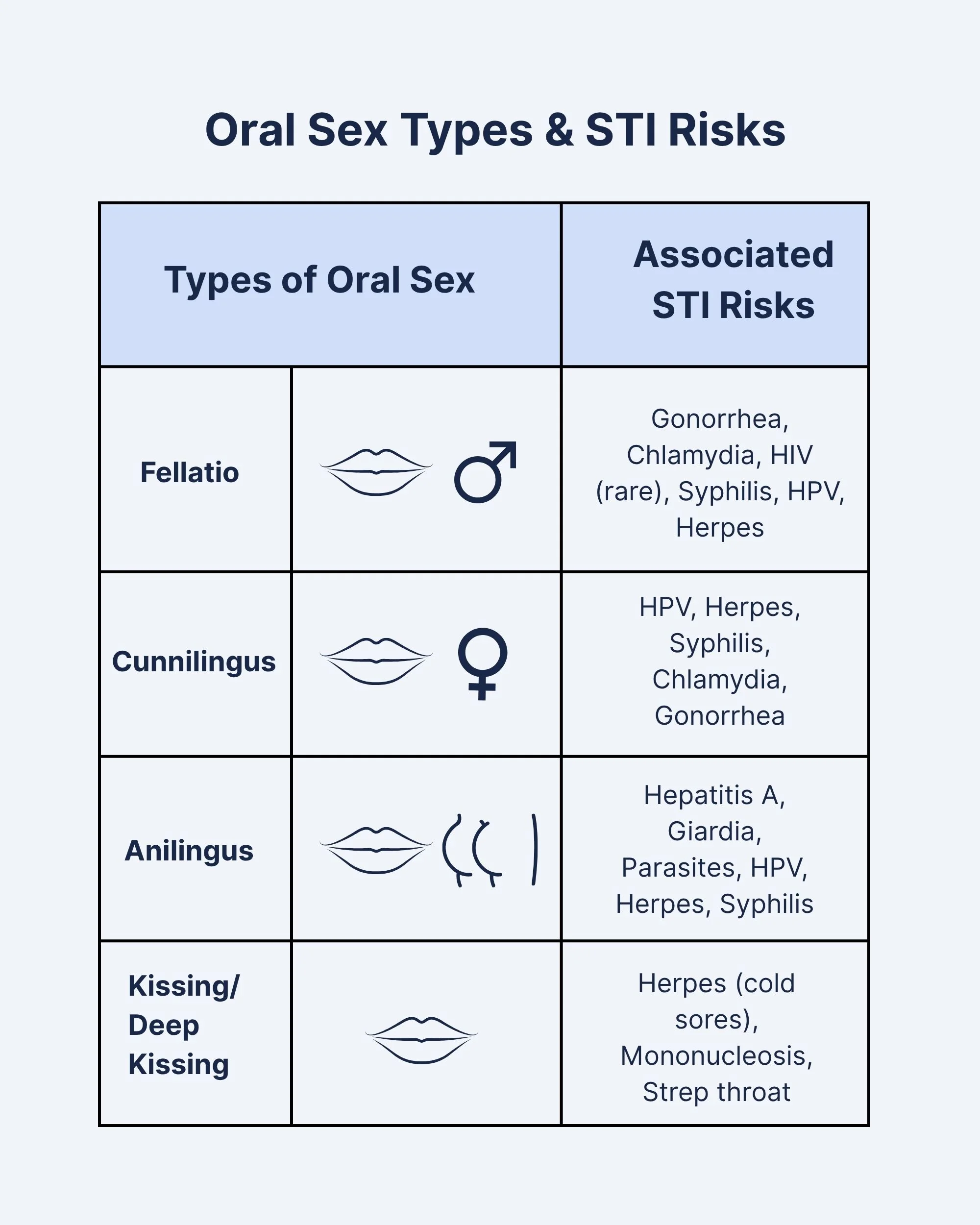
Any sexual act in which the mouth, lips, or tongue comes into contact with the anus or genital areas is referred to as oral sex. Several sexually transmitted infections can spread through oral sex and infect your throat. These STIs can infect you without causing any noticeable symptoms.
STIs that are linked after oral sex include -
1. Gonorrhea
-
Gonorrhea is a common sexually transmitted infection caused by the bacterium Neisseria gonorrhoea.
-
It affects the throat, rectum, genitals, and urinary tract.
-
A sore throat is one of the symptoms that usually manifests one week following exposure.
2. Chlamydia
-
The Chlamydia trachomatis cause chlamydia. It is most common in young people.
-
Chlamydia symptoms depend on the area affected. It affects the throat, rectum, penis, and vagina.
-
A large number of individuals infected with this STI do not have any symptoms. However, a few may experience symptoms like a sore throat, difficulty swallowing, and tonsillitis.
3. Herpes Simplex Virus
-
Herpes simplex virus (HSV) causes herpes. HSV-1 causes oral herpes, and HSV-2 causes genital herpes.
-
Herpes frequently causes very minor or no symptoms.
-
The primary symptoms could include sores around the mouth, genital area, or rectum, followed by fever, body aches, and enlarged glands.
4. Syphilis
-
The bacterium Treponema pallidum causes syphilis..
-
Compared to other STIs, it is less frequent.
-
Syphilis affects the lips, mouth, genitalia, anus, and rectum.
-
Symptoms depend on the stages of syphilis. It includes four stages, namely primary, secondary, latent, and tertiary syphilis.
5. HPV, or Human Papillomavirus
-
HPV produces warts.
-
There are more than 200 types of HPV. Out of which 40 types that affect the mouth, throat, anus, or genitalia can be spread during intercourse.
-
HPV is frequently an infection with no symptoms.
-
Symptoms may include bumps or lumps in the genitalia, itching, and warts.
6. HIV (Human Immunodeficiency Virus)
-
HIV is primarily spread through anal and vaginal intercourse.
-
According to the CDC (Centers for Disease Control and Prevention), there is minimal risk of spreading or getting HIV through oral intercourse.
-
The symptoms of HIV vary based on the stage.
-
In the acute stage, the virus can first induce symptoms similar to the flu.
-
In the chronic stage, individuals will not experience any symptoms.
-
In the symptomatic stage, HIV progresses to AIDS (acquired immunodeficiency syndrome).

How to Spot an STI vs a Common Sore Throat?
Sore throats from STIs may persist for a long time, be resistant to standard treatment, and be associated with other possible STI symptoms. Common sore throats and other symptoms like fever, cough, and runny nose occur, and usually resolve within a week with standard treatments and rest.
In addition, STIs causing sore throat may also present with other symptoms like -
-
White spots or redness at the back of the throat.
-
Enlarged neck lymph nodes.
-
Blisters or mouth ulcers.
-
Pain while swallowing without any additional cold symptoms.
It is essential to get tested if you believe you may have contracted a sexually transmitted infection (STI), particularly if you have had oral intercourse with someone who has one or if standard treatments fail to alleviate your sore throat.
What Are the Diagnoses and Testing for Oral STIs?
Suppose your symptoms and the sexual history indicate that you might have an STD (sexually transmitted disease). In that case, your doctor will perform a physical examination and suggest specific tests to diagnose the condition.
Laboratory tests include the following -
-
Blood Tests: Blood tests identify HIV or the body's reaction. Syphilis is also diagnosed with blood tests. Nontreponemal tests are used for screening, while treponemal tests are used to confirm the infection. If sores are present, dark field microscopy can identify the bacteria.
-
Urine Analysis: Urine tests help to diagnose certain STDs like gonorrhea and chlamydia.
-
Fluid Sample: If you have open sores in your genital region, a fluid sample will be collected and sent to the laboratory to diagnose the STD.
What Are the Oral STIs Treatment Options?
The treatment options for oral STIs are as follows -
-
Gonorrhea: Throat gonorrhea treatment includes the use of antibiotics. However, because of bacteria that are resistant to antibiotics, repeated infections are rather common. In most situations, Ceftriaxone is the recommended medication. Usually, it is given intramuscularly (into the muscle).
-
Chlamydia: The treatment includes prescription medications. Usually, Doxycycline at a dose of 100 milligrams for seven days is prescribed. If you are allergic to this medication or are pregnant, other alternatives have to be considered.
-
Syphilis: Syphilis is mainly treated using Penicillin, but other antibiotics can also be used.
-
Herpes: Herpes is not a curable disease, but it can be managed symptomatically using pain relievers, antivirals, and home remedies.
-
HPV: Many HPV infections resolve spontaneously. At the moment, there is no cure for HPV. Management techniques include symptom relief and keeping an eye out for any problems.
-
HIV: HIV is treated using antiretroviral therapy (ART). These medicines inhibit the replication of the virus by blocking a phase of the virus’s life cycle.
How Can You Practice Safe Oral Sex to Prevent STIs?
You can lower your risk of contracting STIs by using some preventive methods, like,
-
Using condoms.
-
Using rubber dams.
-
Avoid oral sex if you have any sores in your mouth.
-
Maintain proper oral hygiene.
-
Get STI screening at regular intervals in case of multiple partners.
When to See a Doctor?
You have to consult or see a doctor if you experience any of the STI-related throat symptoms, like -
-
Sore throat that persists for more than a week.
-
Swollen lymph nodes in the neck.
-
If your partner has recently been diagnosed with an STI.
-
Sores or unusual patches in the mouth.
Sometimes, you may have an asymptomatic oral STI where you will not experience the symptoms mentioned above. In such cases, it is difficult to know whether you have an STI, and it also increases the risk of transmission to others.
Additionally, you will need a sexologist consultation if you experience any of the following -
-
Vaginal bleeding.
-
Rashes in the genital area.
-
Unusual vaginal discharge.
-
Unusual anal or penile discharge.
-
Pain in the abdominal or pelvic region.
-
Burning or itching in the genitalia.
Conclusion
Sore throats after oral sex can be due to sexually transmitted infections, irritation in the throat, or dryness due to prolonged contact. Regular throat STI testing is essential if you are sexually active with more than one partners. Prevention of STI transmission is possible by using condoms and avoiding sex with multiple partners. Get expert sexologist advice online if you or your loved one experiences symptoms related to an STI after unprotected sex.
Key Takeaway From iCliniq
-
Sore throats from sexually transmitted infections can be confirmed only by testing.
-
Sexually transmitted infections are nothing to be ashamed of; it is essential to be aware of them by screening to take care of your health and to protect others.
-
Talk to our sexologists online at iCliniq if you are uncertain about your symptoms and STI screening. They will guide you on the right track to diagnose and treat the condition promptly to prevent complications.