Table of Contents
- 1What Is Bronchitis and How Does It Differ From Pneumonia?
- 2How Can You Tell the Difference Between Bronchitis and Pneumonia?
- 3Pneumonia Warning Signs You Should Never Ignore
- 4What Are the Causes of Bronchitis and Pneumonia?
- 5How Bronchitis Leads to Pneumonia:
- 6What Are the Warning Signs That Bronchitis Is Turning Into Pneumonia?
- 7What Environmental and Lifestyle Factors Speed Up This Progression?
- 8How Age Can Affect Your Risk of Getting Pneumonia?
- 9When Should You See a Doctor?
- 10How Do Doctors Diagnose Pneumonia?
- 11What Are the Treatment Options for Pneumonia?
- 12How Can You Prevent Bronchitis From Progressing to Pneumonia?
- 13Note from iCliniq
What Is Bronchitis and How Does It Differ From Pneumonia?
Bronchitis targets the larger airways, like the main branches of a tree, while pneumonia goes deeper, affecting the small, vital air sacs where oxygen enters your blood.
Bronchitis is inflammation of your bronchial tubes - those airways that carry air in and out of your lungs. Most cases are viral, though irritants like smoke or pollution can trigger it too.
Pneumonia is different. The infection moves deeper into your lungs' air sacs, called alveoli. These tiny sacs fill with fluid or pus, making it hard to breathe properly.
The danger is that if bronchitis isn’t treated, the infection can travel deeper into your lungs’ air sacs, which is how pneumonia starts.
How Can You Tell the Difference Between Bronchitis and Pneumonia?
Both conditions share similar symptoms at first, which is why they're so easy to confuse. But there are key differences you should watch for.
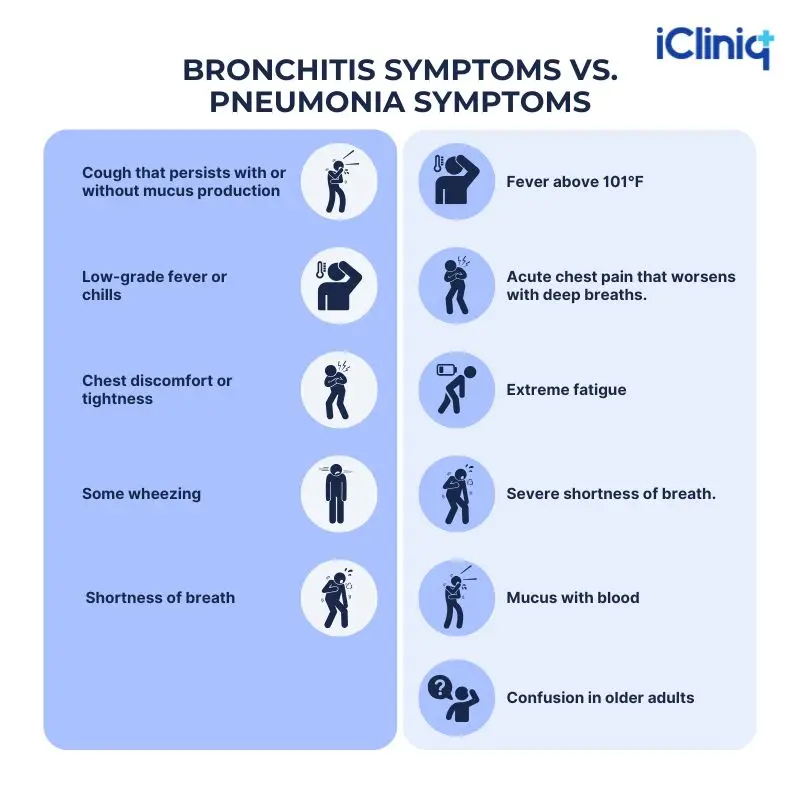
Common bronchitis symptoms:
-
Persistent cough with or without mucus.
-
Low-grade fever or mild chills.
-
Chest tightness or discomfort.
-
Mild wheezing or shortness of breath.
-
Fatigue that's manageable.
Pneumonia Warning Signs You Should Never Ignore
Sometimes pneumonia starts like a regular cold, but certain symptoms signal it’s serious:
-
A high fever that won’t go down, often over 101°F (38.3°C).
-
Sharp, stabbing chest pain that hurts more when you breathe deeply or cough.
-
Shortness of breath that makes even resting feel difficult.
-
Thick, discolored mucus, which may be yellow, green, or have streaks of blood.
-
Severe chills and shaking, making you feel unwell all over.
-
Feeling exhausted, so drained that getting out of bed is a struggle.
-
A feeling of confusion or disorientation, that too especially in older adults, must not be ignored. It can sometimes be a warning sign that something more serious is going on and needs medical attention.
And if you want to know the key difference between pneumonia and bronchitis, it mainly comes down to how severe the symptoms are. Bronchitis usually improves with rest and basic treatment over a few days. Pneumonia, on the other hand, causes more intense symptoms that don’t ease with rest and often get worse.
If you’ve been sick for about a week and things are getting worse instead of better, that’s your body’s way of signalling that something more serious may be going on.
What Are the Causes of Bronchitis and Pneumonia?
Let’s keep it simple. Bronchitis can happen because of:
-
Viruses: The main cause, responsible for about nine out of 10 cases.
-
Bacteria: Less common but can be more serious.
-
Irritants in the Air: Like cigarette smoke, pollution, dust, or chemical fumes.
-
A Weak Immune System: Makes it easier for infections to take hold.
How Bronchitis Leads to Pneumonia:
Can bronchitis lead to pneumonia? When bronchitis isn't treated properly, the infection doesn't just stay in your bronchial tubes. It can spread deeper into your lungs.
Think of bronchitis like a small leak in your home. If you don’t treat it, it can spread and cause bigger damage, just like untreated bronchitis can turn into pneumonia.
Several factors make this progression more likely:
-
Delaying medical treatment.
-
Weak immune system.
-
Chronic lung conditions like asthma or COPD (chronic obstructive pulmonary disease).
-
Smoking or secondhand smoke exposure.
-
Age (very young or elderly).
What Are the Warning Signs That Bronchitis Is Turning Into Pneumonia?
Your body sends signals when an infection is getting serious. Keep an eye out for these red flags:
-
A bronchitis cough usually improves in seven to ten days. If it is still there after two weeks or is getting worse, it is time to check in with a doctor.
-
A mild fever can happen with bronchitis, but if it climbs above 101°F and won’t come down, or you have chills, it’s a sign to get checked.
-
Shortness of breath is normal sometimes, but if you’re struggling to breathe while resting or can’t speak in full sentences, that’s serious.
-
Bronchitis may cause a dull chest ache, but sudden, sharp pain when you breathe deeply, or a cough could indicate pneumonia.
-
Noticeable changes in your mucus, like it turning thick green or yellow, or having streaks of blood, often point to a bacterial infection that needs attention.
-
Feeling unusually weak or so drained that getting out of bed is hard can also signal a more serious infection.
-
Sudden confusion or feeling disoriented, especially in older adults, can be a sign of advanced pneumonia and should be treated as an urgent warning.
What Environmental and Lifestyle Factors Speed Up This Progression?
Sometimes, it’s not just the germs, it’s your surroundings and daily habits that make infections worse.
You need to watch out for:
-
Air quality matters for your lungs. Smog, car exhaust, and factory fumes can irritate your airways, making it harder to breathe.
-
Smoking, or even being around secondhand smoke, can further damage your lungs and increase your risk of infections.
-
Workplace hazards like dust, chemicals, asbestos, or coal can irritate your lungs.
-
Things like mold, pet dander, dust, and dry winter air in your home. Because they may make your symptoms go worse.
-
Also, cold, dry weather can thicken your mucus, making it harder for you to clear and leaving you feeling even more congested.
Lifestyle habits may have the potential to increase your risk, which includes:
-
A diet that is full of fruits, vegetables, and proteins. It may support your body’s ability to fight infections, while regular physical activity helps keep your lungs clear and strong.
-
Too much alcohol, lack of sleep, or chronic stress can weaken your immune system.
-
Even dehydration makes mucus thicker, making it harder to breathe comfortably.
What you can do:
-
Keep indoor air clean with a humidifier in winter.
-
Avoid smoke and other irritants when possible.
-
Eat plenty of fruits and vegetables.
-
Drink enough water every day.
-
Make sure you get enough rest and find ways to manage stress, as both are important for keeping your body and lungs healthy.
How Age Can Affect Your Risk of Getting Pneumonia?
Both young children and older adults are more likely to face health risks, so age really does make a difference.
Why older adults are more at risk: As we get older, our immune system naturally weakens, making it harder to fight infections. Chronic conditions like diabetes or heart disease can add to the risk. Medications may also affect immunity, and a weaker cough reflex can make it tougher to clear mucus from the lungs.
In older adults, even subtle changes can be a red flag. Sudden confusion, extreme tiredness, or trouble breathing could mean a serious lung infection, and shouldn’t be ignored. They are:
-
Lower than normal body temperature instead of a fever.
-
Sudden confusion or mental changes.
-
Loss of appetite or decreased alertness.
-
Falls or sudden weakness.
Why young children are at risk:
-
Young children are more vulnerable because their immune systems are still developing, and they haven’t yet built up defenses against common infections.
-
Their airways are smaller, so even mild inflammation can cause significant breathing problems. They may struggle to communicate symptoms clearly.
Warning signs in children include:
-
Rapid breathing or working hard to breathe.
-
Bluish color around the lips or fingernails.
-
Unusual lethargy or difficulty waking.
-
Refusing to eat or drink.
-
Wheezing or grunting sounds.
Both age groups need close monitoring and shouldn't hesitate to seek medical care at the first sign of worsening symptoms.
When Should You See a Doctor?
Don’t wait around if your lungs are acting up. Getting help early can prevent serious problems.
Seek urgent medical care if you notice:
-
A fever over 101°F that lasts more than 3 days.
-
Sharp or worsening chest pain.
-
Trouble breathing or unusually fast breathing.
-
Coughing up blood or rust-colored mucus.
-
Bluish lips or fingernails.
-
Confusion or extreme drowsiness.
-
Symptoms that keep getting worse instead of improving after a week.
See your doctor soon if you have:
-
A cough that lasts more than three weeks.
-
Recurring bronchitis episodes.
-
Wheezing or whistling when you breathe.
-
Thick, colored mucus that doesn’t clear.
-
Fatigue that makes daily activities difficult.
If your symptoms are worsening or you’re unsure whether bronchitis is turning serious, consult a pulmonologist who can evaluate you and provide treatment before complications develop.
How Do Doctors Diagnose Pneumonia?
If you’re wondering how to confirm pneumonia, your doctor will use several tests to check your lungs and identify the infection.
-
Listening to Your Lungs: The doctor uses a stethoscope to hear crackling or bubbling sounds. They’ll also check your oxygen and other vital signs.
-
Chest X-Ray: This shows where the infection is and how serious it might be.
-
Blood Tests: These show if your body is fighting an infection and whether it’s bacterial or viral.
-
Sputum Test: Coughing up some mucus helps the lab figure out the exact germ, so you get the right medicine.
-
Oxygen Check: A small clip on your finger measures blood oxygen. Low oxygen can be dangerous.
-
CT Scan (Sometimes): If the X-ray isn’t clear, a CT (computed tomography) scan gives a detailed look.
What Are the Treatment Options for Pneumonia?
Treatment depends on the cause of your pneumonia and its severity.
Bacterial Pneumonia:
-
Your doctor will give you antibiotics to fight the infection.
-
Common ones include Azithromycin, Amoxicillin, or Fluoroquinolones.
-
Finish all your medicine, even if you start feeling better.
Viral Pneumonia:
-
Antibiotics don’t work here.
-
Focus on rest, drinking fluids, and reducing fever.
-
Sometimes antiviral medicine is needed.
-
Coughing helps clear your lungs, but short-term cough medicine can help you rest.
Fungal Pneumonia (Rare):
Treated with antifungal medicine, usually for people with weaker immune systems.
Care at Home:
-
Get plenty of sleep.
-
Drink water, broths, or warm tea.
-
Use a humidifier to help your breathing.
-
Take all medicines as prescribed.
When Hospital Care Is Needed:
-
Severe pneumonia may require IV antibiotics, oxygen, or ventilator support.
-
Doctors will closely monitor your vitals and fluids.
How Can You Prevent Bronchitis From Progressing to Pneumonia?
Preventing pneumonia is much easier than treating it later, and a few simple habits can make a big difference.
-
The first step is to take your symptoms seriously. A cough that won’t go away or any breathing difficulty shouldn’t be ignored. If things linger beyond a week or start getting worse, see a doctor promptly and follow their advice closely.
-
Your lungs are further protected by vaccinations. You can stay safer and breathe easier with the COVID-19 vaccine, your annual flu shot, and the pneumonia vaccine, particularly if you're older or have medical conditions.
-
If you’re dealing with a fever, chest discomfort, or feeling short of breath, it’s best not to ignore it. Getting checked early can make a huge difference. Starting treatment sooner, often with antibiotics, helps stop the infection from spreading and lowers the chance of serious problems.
-
If you smoke, try to cut back or quit altogether. Your lungs feel the benefits almost immediately, and even avoiding secondhand smoke helps more than most people realise.
-
Your body also recovers better when you take care of the basics. Eating fresh fruits and vegetables, adding some lean protein to your meals, staying active in a way that suits you, drinking enough water, and getting proper sleep all give your immune system a boost. Reducing alcohol and keeping stress in check also makes a noticeable difference over time.
-
Clean air at home matters too. Let fresh air in when you can, use a humidifier if the air feels too dry, and keep the humidity comfortable. And if you live with long-term conditions like asthma, COPD, diabetes, or heart disease, keeping them under control is especially important because they can increase your risk of pneumonia.
-
Most of all, don’t put off seeing a doctor if things aren’t getting better. Early care can stop the illness from progressing and help you bounce back sooner. Small daily habits, along with timely treatment, can do a lot to protect your lungs.
Conclusion
Catching pneumonia early really changes how quickly you bounce back. Certain symptoms deserve attention- a high fever, sharp chest pain, difficulty breathing, or feeling drained beyond the usual tiredness.
Your age, environment, and everyday habits all play a role in how likely you are to develop it. While bronchitis can sometimes settle with home care, pneumonia usually needs timely medical treatment.
The good news is that most people recover well when it’s caught early and treated properly. The key is to listen to your body and reach out for help if your symptoms start getting worse. Seeing a lung specialist early can make all the difference.
Your lungs work hard for you every day, so don’t take chances with them. Stay aware of warning signs, follow your doctor’s advice, and seek medical care promptly if things don’t feel right.
Key Takeaway
-
Bronchitis usually affects the airways leading to the lungs, whereas pneumonia goes deeper into the tiny air sacs. Most people recover from bronchitis at home, but it can progress, especially if it’s not treated. About one in 20 adults with bronchitis may develop pneumonia.
-
You may notice warning signs such as a high fever that won’t go away, sharp chest pain when breathing, trouble catching your breath even while resting, blood-streaked mucus, or feeling extremely tired. In older adults, confusion or disorientation can be an early signal.
-
If you notice your symptoms getting worse, or if a cough and cold feel like they’re turning into something more serious, don’t wait it out.

