Table of Contents
- 1How Does Multiple Sclerosis Cause Constipation?
- 2What Are the Causes of Constipation in MS?
- 3Are There Tests to Diagnose the Cause of Constipation With MS?
- 4What Are the Treatments for Constipation in Multiple Sclerosis?
- 5What Are Some Tips for Managing Constipation Related to MS Without Visiting a Doctor?
- 6Conclusion:
How Does Multiple Sclerosis Cause Constipation?
The most common MS stomach symptoms include constipation, stomach pain, difficulty in swallowing, and fecal incontinence. Among them, the most common is constipation, which is considered an early sign of MS. Those with constipation pass stool fewer than three times a week. According to studies conducted, it was found that MS is often accompanied by at least one gastrointestinal problem. In addition to other gastrointestinal issues, many people with MS also experience stomach pain after eating, which can include bloating or a feeling of fullness.
Multiple sclerosis causes constipation by disrupting the signaling system between the brain and the gastrointestinal system. This, in turn, slows bowel movements and impairs the ability to sense the need to empty the bowels due to nerve damage that controls bowel functions. This disruption causes the stool to remain in the colon for an extended period, making it harder to pass. Apart from this, MS also weakens the pelvic floor muscles, which control bowel movements, further contributing to the difficulty of passing stool. Furthermore, reduced physical activity because of fatigue from MS, medications used in managing MS, and dehydration can further contribute to constipation.
What Are the Causes of Constipation in MS?
Constipation is a common symptom of MS. The primary cause of constipation in MS is nerve damage in the central nervous system, resulting in disruptions to the signaling system between the brain and the digestive system.
This nerve damage causes:
-
Impairment in the colon’s ability to contract and move the stool efficiently.
-
Reduces the sensation of the need to defecate.
-
It causes the weakening of pelvic floor muscles, which helps with bowel movement.
-
It causes muscle stiffness, leading to the tightening of the muscles involved in bowel movements.
Furthermore, other symptoms of MS that can contribute to constipation include
-
MS-related fatigue can lead to reduced physical activity, which in turn can contribute to constipation.
-
A poor diet (insufficient fiber) or inadequate water intake can further exacerbate constipation.
-
Medications that are used in managing MS, such as antidepressants (Amitriptyline), pain medications, and anticholinergic medications (Oxybutynin and Tolterodine), can all further cause constipation.
-
Psychological factors like anxiety, stress, and depression (which are common in patients living with MS) can affect gut health and contribute to constipation.
Are There Tests to Diagnose the Cause of Constipation With MS?
Yes, many tests can be done to diagnose the cause of constipation with MS, but before that, a detailed clinical evaluation should be done on the diet, bowel habits, and the medicines being used. Mostly, the causes of constipation in MS are due to neurological dysfunction, medication side effects, dietary factors, and immobility. Identifying the underlying cause is crucial for effective management.
Tests include:
-
Anorectal manometry: This test assesses the function of the anal and rectal muscles.
-
Balloon expulsion test: This test helps evaluate a patient’s ability to expel an artificial stool from the rectum.
-
Imaging studies: Abdominal X-rays or MRI (magnetic resonance imaging) can help detect intestinal blockage or the presence of any structural problems.
-
Defecography: This is an imaging study that helps in assessing how well the rectum empties stool.
-
Colonic transit studies: This test helps measure the time it takes for food to move through the colon, using radiopaque markers and X-rays.
-
Evaluation of the pelvic floor: MS can be a contributing factor to the dysfunction of pelvic floor muscles; evaluation of these muscles can help in diagnosis.
What Are the Treatments for Constipation in Multiple Sclerosis?
The treatment of constipation in MS includes:
A. Lifestyle changes:
These include:
-
Increase in dietary fiber, such as fruits, vegetables, and whole grains.
-
Limiting foods that can cause constipation.
-
Staying hydrated.
-
Exercising regularly.
-
Establishing a routine to train the bowels.
B. Over-the-counter medications and supplements:
-
Fiber supplements: These are bulk-forming laxatives. These include psyllium and methylcellulose.
-
Stool softener: These laxatives, such as docusate, tend to add oil and water to stools.
-
Lubricants: These are mineral oils that are ingested through the mouth to make the stools slippery.
-
Osmotic laxatives: These help retain water in the intestines. These include polyethylene glycol and magnesium chloride.
-
Stimulant laxatives: These laxatives are bisacodyl and senna. These speed up the contractions of the intestines.
C. Prescription medications:
-
Lubiprostone: These medications help increase fluid secretion in the intestines.
-
Linaclotide: These help speed up intestinal motility. They also help in promoting fluid secretion.
-
Plecanatide: This drug increases contractions and fluid secretion in the intestines.
D. Others:
-
In some cases, digital stimulation may be recommended to trigger bowel movements. It is essential to consult a healthcare professional for safe techniques.
-
In case medications taken for managing MS are the contributing factor for constipation, they should be reviewed.
What Are Some Tips for Managing Constipation Related to MS Without Visiting a Doctor?
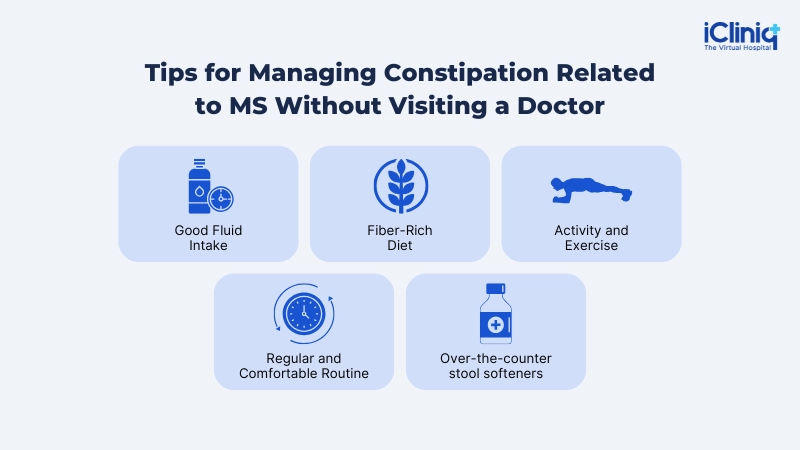
Some tips for managing constipation related to MS without visiting a doctor are:
-
Good fluid intake: Taking sufficient water (six to eight glasses) helps fight against constipation. A link exists between dehydration and constipation. Hence, regular water intake and the recommended amount help with constipation.
-
Fiber-rich diet: A fiber-rich diet helps with constipation. Examples of fiber-rich diets are fresh vegetables, fruits, legumes, nuts, and whole grains. The doctor may also recommend fiber supplements.
-
Activity and exercise: According to experts, inactivity is the leading cause of constipation. Physical exercise that involves the pelvic floor muscles (Kegels) can be beneficial. Apart from this, gentle exercises such as yoga, stretching, and walking can all help stimulate bowel movements. Seeking help from a physical therapist may be beneficial.
-
Regular and comfortable routine: Scheduling time for going to the bathroom helps with bowel movements. It helps to either train or refrain from having bowel movements.
-
Others: Over-the-counter stool softeners such as docusate sodium can be considered to make bowel movements easier. Additionally, fiber supplements can help manage constipation.
Conclusion:
MS and constipation are often linked, as MS disrupts the signaling system between the brain and digestive system, leading to slow bowel movements, loss of the ability to sense the need to empty the bowel, and weakening of the muscles involved. Therefore, constipation and stomach pain in MS issues are common. Constipation, if not adequately treated, may worsen the symptoms of MS. Though it feels embarrassing to discuss constipation, it needs to be addressed, and help should be sought from a healthcare professional.
Key Takeaways:
-
MS and digestive issues are frequently linked because this autoimmune condition that affects the brain and spinal cord can disrupt the signaling system between the GI (gastrointestinal tract) and the brain.
-
Studies have found that almost 50 percent of individuals with MS suffer from constipation, and 25 percent may experience recurrent bouts.
If you or someone you love has stomach issues because of MS, don’t worry! You can talk to our iCliniq medical gastroenterologist online to get a special plan made just for you.