Table of Contents
How Are Prostate Cancer and Genetics Linked?
Prostate cancer and genetics are closely related because genes play an important part in controlling the growth, division, and repair of body cells. However, when some genes change, the regulation of cell growth may not occur as expected, leading to abnormal cell growth and causing cancer.
People who have a strong family history of cancer often share similar gene changes. Because of this, genetics plays an important role in understanding who may develop prostate cancer and who may need early screening. Men with inherited gene mutations may develop cancer at a younger age, and the disease may grow faster. Doctors now use genetic information to identify high-risk people and to plan better treatment.
What Is the Role of Family History in Prostate Cancer
Family history is one of the most important signs of genetic risk. If a father, brother, or close relative has prostate cancer, the chances of developing the disease become higher. The risk increases even more if many family members have cancer or if cancer occurs at a young age.
Sometimes, prostate cancer may also be linked with other cancers in the family, such as breast, ovarian, or pancreatic cancer. This could mean that the family has inherited gene mutations. Understanding family history can help doctors determine when to start screening and whether genetic testing is needed. Men who have a strong family history are often encouraged to begin screening earlier than the usual age.
What Is Genetic Testing and Who Should Consider It?
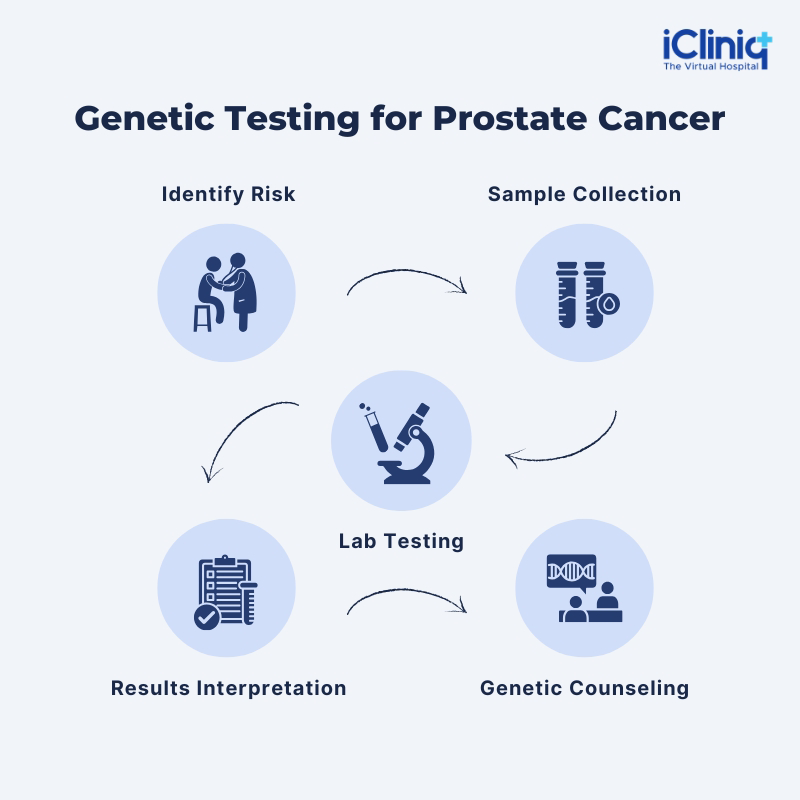
Genetic testing for prostate cancer helps identify inherited mutations that could raise the risk.
Genetic testing is normally performed using blood or saliva samples.
It is normally recommended for men who have a family history of prostate cancer and other related cancers.
It is also recommended if cancer occurs at a young age or if the cancer is aggressive.
The results help doctors determine the risk level. If a mutation is detected, the individual may require frequent screening and close monitoring.
Genetic testing can also help relatives determine their risk and take preventive measures early.
Early Screening in High-Risk Men
Men with genetic risk should not wait until symptoms occur. The screening test will ensure that cancer is detected at an early stage, where it is possible to receive proper treatment. There is a variety of screening tests, such as a blood test for prostate-specific antigen, a digital rectal exam, an MRI (magnetic resonance imaging) scan, and a biopsy. Frequent screening can help doctors detect early signs of cancer before it spreads. Early detection is the most effective way to lower the risk of death from prostate cancer, especially in men with a family history.
How Genetics Helps in Choosing Treatment?
The genetic component in prostate cancer is now used to choose the best treatment for prostate cancer. Some cancers respond better to certain medicines depending on gene changes. This is called personalized or targeted treatment. For example, men with BRCA mutations may benefit from special targeted drugs that attack cancer cells with damaged DNA.
Genetic testing of tumor cells also helps doctors understand how aggressive the cancer is. This allows doctors to decide whether surgery, radiation, hormone therapy, or targeted therapy will work best. Using genetics in treatment planning improves results and helps avoid unnecessary treatments.
What Is the Role of Genetic Counseling?
Genetic counseling is a significant process for those who have a strong family history of cancer.
In genetic counseling, a professional discusses the risk of inherited mutations and the requirement for testing.
Genetic counseling also helps patients understand the significance of test results. Some patients might feel concerned about their risk after being informed about genetic risk. Thus, appropriate guidance is required.
Knowledge of genetics helps individuals make effective health choices. Patients are more likely to follow screening and medical advice if they are aware of their risk.
Genetic Risk and Lifestyle and Environmental Factors: The Connection
Genetics increases the risk, but lifestyle also plays a role in prostate cancer. Unhealthy habits such as smoking, lack of exercise, obesity, and poor diet may increase the chance of cancer in people who already have a genetic risk. Eating fruits, vegetables, and healthy food may help protect the body. Regular exercise keeps the body strong and supports the immune system. Men with a family history should be more careful about their lifestyle. Healthy habits cannot remove genetic risk, but they may help reduce the chances of developing serious disease.
Future of Genetics in Prostate Cancer
New research is helping doctors better understand how genes affect prostate cancer. Scientists are studying new biomarkers and gene tests that can detect cancer earlier. Modern technology may help predict which cancer will grow fast and which will grow slowly. In the future, treatment may be fully personalized based on a person’s genes. This will help doctors give the right treatment at the right time. Genetic research is also helping develop new medicines that target cancer cells more accurately.
Conclusion
Genetics is critical in determining a person's risk for prostate cancer, impacting both diagnosis and treatment of the condition. Genetic studies have increased the accuracy of detecting individuals at high risk of developing the disease, thereby enhancing management practices. The use of genetics in medical practice has led to enhanced personalization of treatment practices. To know more, talk to our cancer specialist.
Key Takeaways:
Genetics could increase your risk of developing prostate cancer.
Men with a strong family history may benefit from earlier and more frequent screening.
Genetic counseling helps interpret test results and guide risk-based decisions.
Lifestyle choices and regular monitoring remain important even with genetic predisposition.
Personalized care plans can be developed based on an individual’s genetic profile.

