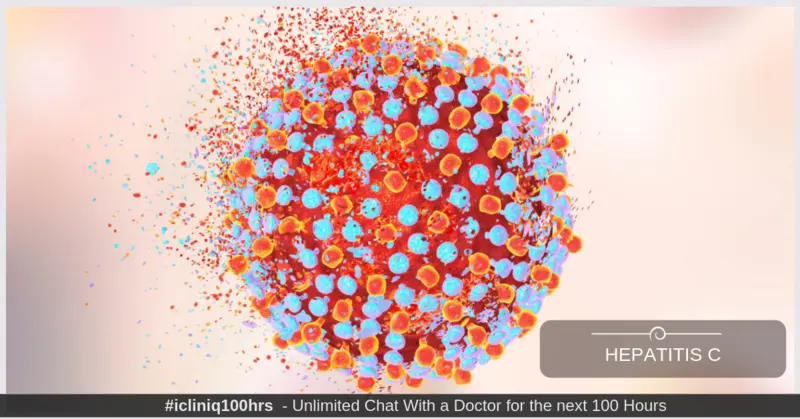
Hepatitis C - Common Questions Answered

Verified data

4 min read

Share
Facebook Telegram LinkedIn WhatsApp

Outline

Hepatitis C is an infection of the liver caused by the hepatitis C virus. Read this article to know more about hepatitis C.

Medically reviewed by Dr. Sneha Kannan
Published At April 20, 2019
Reviewed At October 10, 2024

Education:

Bachelor of Science

Professional Bio:

Dr. Davie Wong is a Venereologist specializing in General Medicine, Internal Medicine, and HIV/AIDS with 11 years of clinical experience. He obtained his Bachelor of Science and Doctor of Medicine degrees at the University of Manitoba, Canada. He then completed his Internal Medicine residency at the University of Manitoba before moving to Vancouver to complete his Infectious Diseases fellowship in British Columbia, Canada. He served as Chief Resident for the Infectious Disease Training Program from 2015 to 2016. He is certified as a Fellow of the Royal College of Physicians and Surgeons of Canada in Internal Medicine and Infectious Diseases. He is fully licensed by the College of Physicians and Surgeons of British Columbia. He holds active membership in the Doctors of British Columbia and the Canadian Medical Association and had prior membership in the Association of Medical Microbiology and Infectious Diseases Canada (AMMI) and the Infectious Diseases Society of America (IDSA). Dr. Wong is currently appointed as medical staff at Royal Columbian Hospital and Eagle Ridge Hospital. He works alongside other internal medicine specialists and subspecialists at Centrio Medical Specialists' multidisciplinary clinic. He provides consultations in hospital and office-based settings, manages patients in the community outpatient parenteral antibiotic therapy program, and participates in an interdisciplinary team to care for complex HIV and hepatitis C infection patients. He is an active member of the regional antimicrobial stewardship committee. He is a Clinical Assistant Professor in the Department of Medicine, Division of Infectious Diseases at the University of British Columbia, and provides training to medical students, residents, and fellows. He has published institutional guidelines on infectious diarrhea and peer-reviewed journal articles on Staphylococcus aureus bacteremia and infective endocarditis. As part of the antimicrobial stewardship committee, he reviews and provides feedback on local guidelines and policies.

This doctor is not available for online consultations on the platform anymore.

Education:

BDS

Professional Bio:

Dr. Sneha Kannan is a Dental Surgeon with 11 years of clinical experience in treating patients with various oral conditions. She graduated from SRM Dental College and Hospital, Chennai, in the year 2012 and then did courses in minor oral surgeries, dental emergencies, and rotary endodontics. She is the proprietor and Head Dental Surgeon of Crown Me White Dental Clinic, Coimbatore. In addition, Dr. Sneha is the Senior Medical Reviewer at iCliniq.

This doctor is not available for online consultations on the platform anymore.

Hepatitis C - Common Questions Answered
Table of Contents

Introduction

Hepatitis is an inflammation of the liver. The liver serves many functions in the body, including detoxification, digestion, protection against infection, protein and hormone production, and many more. Heavy alcohol use, certain medications, toxins, and infections can cause hepatitis. Persistent hepatitis can lead to scarring of the liver called cirrhosis. Cirrhosis (Long-term liver damage) occurs when the liver has been severely damaged. A cirrhotic liver does not function as well as a healthy liver. It can result in complications such as bleeding from the esophagus and stomach, yellowing of the skin (jaundice), and fluid accumulation in the abdomen.

What Is Hepatitis C?

Hepatitis C is an infection of the liver caused by the hepatitis C virus. Most patients will have little or no symptoms when they get infected. Often, patients can have hepatitis C for many years without knowing they have it. About 80 percent of patients who get hepatitis C do not clear the infection on their own. When infection persists for over six months, it is called chronic hepatitis C. Hepatitis C slowly damages the liver over decades, leading to cirrhosis and liver cancer. The virus exists worldwide.

How Do You Get Hepatitis C?

Infected blood is the leading cause of the spread of hepatitis C infection. It can spread due to contaminated blood through shared needles. Unsterilized medical instruments can also result in the spread of disease. In rare instances, it may spread from infected mothers to babies or through sexual contact.

What Are the Signs and Symptoms of Hepatitis C?

Hepatitis C is a silent infection that persists unidentifiable for a long time. However, the common signs and symptoms of the condition are:

  • Easy bleeding.

  • Easy bruising.

  • Poor appetite.

  • Fatigue.

  • Jaundice (yellowish discoloration of the skin and eyes).

  • Dark-colored urine.

  • Itchy skin.

  • Weight loss.

  • Swelling of the legs.

How Is Hepatitis C Diagnosed?

Hepatitis C can be diagnosed using blood tests. One blood test detects the presence of an antibody directed against the virus, and the second test measures the amount of virus in your blood. A liver ultrasound is usually done to assess for cirrhosis or signs of liver cancer. Often, a FibroScan (noninvasive ultrasound test) is also performed. This specialized machine measures the degree of fibrosis (scarring) in your liver.

How Is Hepatitis C Transmitted?

Most people do not know how they acquired hepatitis C. The virus is spread by contact with blood. Today, the most common way people get Hepatitis C is by sharing used needles, syringes, or any other equipment to inject drugs. Before widespread screening of blood donors in 1992, Hepatitis C was also spread through blood transfusions and organ transplants. Other methods of transmission are:

  • Getting body piercings or tattoos done with improperly sanitized equipment.

  • Sharing straws used for snorting cocaine.

  • Sharing toothbrushes, razors, or other things that could have blood on them.

  • Getting cut or pierced by a sharp object that has contaminated blood on it.

  • Having sex with an infected person.

Hepatitis C is not transmitted by kissing or hugging, sneezing or coughing, skin-to-skin contact that does not involve blood, and sharing food and utensils.

Who Should Get Tested for Hepatitis C?

  • Individuals born between 1945 and 1965.

  • Individuals who received or donated blood before 1992.

  • Individuals who use injection drugs.

  • HIV patients.

  • Men who have sex with men (MSM).

  • Individuals with a history of past or present use of chronic hemodialysis.

  • History of or present incarceration.

  • Individuals who reside in a high-prevalence country.

  • Individual born to a mother with hepatitis C.

  • Individuals exposed to blood from a person with hepatitis C.

How Can Hepatitis C Infection Be Prevented?

Unfortunately, there is currently no vaccine. Prevention of blood exposure is the primary strategy. Do not share used needles or syringes. Do not share personal hygiene items that may have come into contact with a person’s infected blood, such as razors, toothbrushes, nail clippers, or glucose monitors. Do not get tattoos or piercings from an unlicensed facility.

Preventing Further Liver Damage: If you have hepatitis C, avoiding other insults to your liver is essential. Avoid heavy alcohol consumption and get vaccinated for hepatitis A and B. Check with your healthcare provider before starting any new medications to ensure they are safe for your liver. Sometimes your doctor will also need to evaluate you for other liver diseases.

Is There a Cure for Hepatitis C?

Yes, the medications used to treat hepatitis C are highly effective, with up to a 100 percent cure rate with little to no side effects. Treatment is usually prescribed by a gastroenterologist (specialist in stomach disease), hepatologist (specialist in liver disease), infectious disease doctor, or another healthcare provider trained in hepatitis C management. A treatment course of 8 to12 weeks is usually sufficient to eradicate the hepatitis C virus. For some patients, a longer course of 16 or 24 weeks may be required to achieve a cure.

Can an Individual Get Re-Infected with Hepatitis C?

Yes, an individual can get hepatitis C again if exposed to infected blood. Being cured does not mean you cannot get the virus again. If you acquired hepatitis C from engaging in high-risk behaviors, it is essential to discontinue risky behaviors to avoid reinfection.

What Should a Pregnant Woman Do if She Has Hepatitis C?

Unfortunately, about 5 percent of pregnant women pass on the virus to their babies. Currently, hepatitis C treatment has not been studied in pregnancy, so it is unknown if the drugs are safe. Therefore, it is usually best to wait until the mother delivers before starting hepatitis C treatment. The baby will require serial blood tests to check if they have become infected.

If you are planning pregnancy, it is best to get treated for hepatitis C before you conceive.

Can a Mother Breastfeed if She Is Infected With Hepatitis C?

She can breastfeed as long as her nipples are not cracked or bleeding.

Can Breastfeeding Mothers Take Hepatitis C Medications?

It is unknown if hepatitis C medications pass into the breastmilk. It is still possible to receive treatment for hepatitis C while breastfeeding, but it is unknown what effects the medicines will have on the baby. The safest approach is to complete breastfeeding before starting hepatitis C treatment.

Conclusion

Many people with HCV are unaware of the infection since they do not have symptoms. And it may take certain decades to appear. To avoid this unawareness, doctors recommend that every healthy or unhealthy individual between the ages of 18 to 79 get screened for hepatitis C. This early identification of the virus would help prevent transmission and treatment of the affected individual.


Frequently Asked Questions

Is Hepatitis C Now Curable?

More than 95 percent of people with hepatitis C can be cured. However, to prevent liver damage and further spread, individuals with positive test results for hepatitis C should be treated with direct-acting antiviral (DAA) medications.

Is Hepatitis C Considered to Be Terminal?

For some people, hepatitis C can be a short-term illness, but it becomes a long-term, chronic infection for more than half of those who get it. Cirrhosis and liver cancer are two serious, even fatal, health issues that can arise from chronic hepatitis C.

What Is the Life Expectancy for Hepatitis C?

After being diagnosed with hepatitis C, individuals can live for many years, though the range varies. According to a study, people with the hepatitis C virus died on average 15 years earlier than those who did not. Inflammation causes severe damage to the liver in hepatitis C.

How Long Does It Take for Liver Damage Due to Hepatitis C?

The liver is slowly damaged over many years by the hepatitis C virus, which frequently progresses from inflammation to permanent, irreversible scarring (cirrhosis). Before developing cirrhosis, many people with liver disease experience only mild or no symptoms for years or even decades. Liver damage typically occurs gradually over 20 to 30 years.

Hepatitis B or C, Which Is Worse?

Hepatitis B is much more prevalent and causes more liver-related cancer and death worldwide than hepatitis C. Together, chronic hepatitis B and C account for approximately 80 percent of all liver cancer cases worldwide. However, hepatitis C receives more attention and funding for research.

Is It Possible to Live a Full Life With Hepatitis C?

Hepatitis C patients can lead normal lives if treated and diagnosed early. Chronic hepatitis C, an infection that causes liver inflammation and scarring, affects between three and five million people in the United States.

Which Hepatitis Is Called a Silent Killer?

Both hepatitis B and C are called silent killers. It is because both are bloodborne infectious diseases and tend to be asymptomatic, which means a person might have the virus but may not know about it until it manifests itself much later.

How Does Hepatitis C Pain Feel?

Hepatitis C causes pain in the upper part of the abdomen. It results in generalized abdominal pains that can cause quite a severe discomfort. In addition, many people with chronic HCV have joint aches and pains. A wide range of joints can be involved, yet the most well-known are in the hands and wrists.

Which Organ Gets Damaged by Hepatitis C?

Long-term health issues, such as liver damage, liver failure, cirrhosis, liver cancer, and even death, can be caused by chronic hepatitis C. It accounts for being the most common reason for liver transplantation in the United States.

What Are the Stages of Hepatitis C Infection?

The stages of hepatitis C infection include the following -
- Acute stage.
- Chronic stage.
- Cirrhosis of the liver.
- End-stage hepatitis C.

Does Hepatitis C Cause Mental Problems?

Depression and anxiety are common occurrences in patients with hepatitis C. Patients infected with hepatitis C may experience mental and cognitive decline in up to 50 percent of them. In addition, psychological disorders (mostly depression), anxiety, and poor global functioning were found to be more prevalent in chronically inactive hepatitis patients than in healthy controls.

Does Routine Blood Testing Reveal Hepatitis C?

Blood test for HCV antibodies is the first step in the hepatitis C screening process. Tests for hepatitis C are usually done in laboratories that perform routine blood work. Analyses will be performed on a standard blood sample. The presence of the hepatitis C virus is indicated by the presence of HCV antibodies in test results.

Why Does One Always Test Positive for Hepatitis C?

A reactive or positive antibody test indicates that a person has had hepatitis C at some point in their life. Antibodies will always be present in the blood of an infected person. This is true regardless of whether the virus has been eradicated, cured, or remains in their blood.

What Are the Symptoms of Hepatitis C in Females?

Females affected with hepatitis C have the following symptoms
- Bruising or bleeding easily.
- Itchy skin.
- Fluid retention in the stomach.
- Swelling in the legs.
- Unexplained loss of weight.
- Spider veins.
Comprehensive Second Opinion

Ask your health query to a doctor online

Medical Gastroenterology

*guaranteed answer within 4 hours

Disclaimer: No content published on this website is intended to be a substitute for professional medical diagnosis, advice or treatment by a trained physician. Seek advice from your physician or other qualified healthcare providers with questions you may have regarding your symptoms and medical condition for a complete medical diagnosis. Do not delay or disregard seeking professional medical advice because of something you have read on this website. Read our Editorial Process to know how we create content for health articles and queries.