Table of Contents
What Is Measles?
The measles virus causes measles; It is an RNA (Ribonucleic acid) virus. You might also hear it called Rubeola. Early childhood often witnesses its appearance. This virus spreads easily when someone infected coughs and sneezes, sending tiny droplets into the air. It is contagious, especially if you have not been vaccinated or had measles. Symptoms usually pop up about 10 to 14 days after you are exposed. At first, the signs can be subtle and easy to miss (the prodromal stage). The virus can be found in mucus from your nose and throat, as well as blood and urine, which helps it spread quickly. Sometimes, people confuse measles with 'German measles,' also called Rubella. They are different! Rubella usually causes much milder symptoms than regular measles. However, pregnant women need to be aware of Rubella.
How Does Measles Spread?
Measles is a contagious virus that spreads mainly through the respiratory system. This is the way it spreads:
-
Aerosols: Little aerosol particles and respiratory droplets are how the virus is spread. The virus is released as aerosols when an infected person coughs or sneezes.
-
Surface Contamination: Respiratory particles can settle on surfaces and objects. The virus can still spread for up to two hours on surfaces.
-
Close Contact: Face-to-face interaction with infected people is a risk. Contact between cells is required for viruses to be transmitted from immune cells to the airway epithelium.
-
High Transmissibility: Measles is one of the most transmissible human respiratory viruses. In resource-poor countries, the mortality rate remains high (greater than five percent).
Vaccination reduces the risk of a measles outbreak and transmission dramatically.
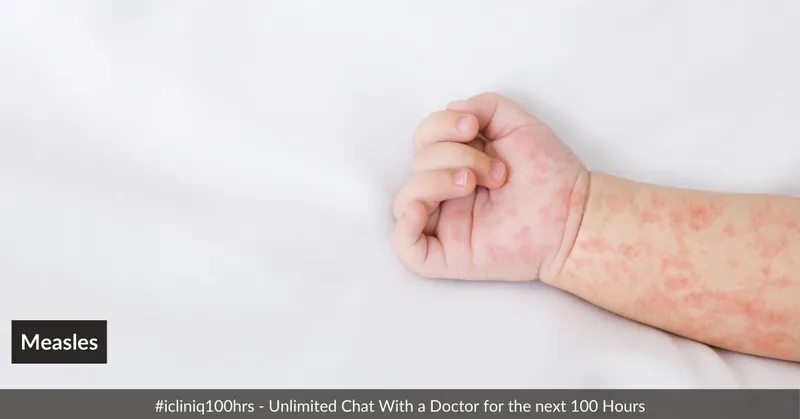
What Does Measles Look Like?
Measles has a characteristic appearance with the following features.
-
The rash is red or red-brown.
-
It starts at the face and descends.
-
Pimps out the entire body with colorful, blotchy zits.
-
It lasts for five to six days.
-
-
Koplik’s spots are small white spots on a red base with bluish-white centers.
-
Found on the lining of the cheeks within the mouth.
-
Two to three days before the rash appears.
-
Symptoms can also include conjunctivitis or red, wet eyes.
-
Fever - 40 to 41°C or degrees Celsius [104 to 105.8°F or degrees Fahrenheit].
-
Sore throat, runny nose, and cough.
-
Typically, after the initial flu-like symptoms, the rash will appear 10 to 14 days after exposure.
Causes of Measles:
Measles: The measles virus (MV), a highly infectious pathogen of the Morbillivirus genus of the Paramyxoviridae family, is responsible for measles. The primary means by which the virus spreads is via the respiratory system.
There are a few key points to know about what causes measles:
Viral Features:
-
Negative-strand RNA (ribonucleic acid) virus.
-
There are six circulating genotypes of the 24 known to exist.
Transfer:
-
And spread by infectious droplets generated from talking, sneezing, or coughing.
-
Droplets have an hour or so during which they can float in the air.
-
Can live for hours on surfaces.
Infectiousness: Very infectious, with an R0 (basic reproduction number) value of 15 to 20.
-
Breaking: Unvaccinated exposed people will be infected; estimates suggest about 90 percent will become infected.
-
Incubation Period and Communicability: Communicable for about four days before the rash appears and lasts until the rash is gone.
Symptoms of Measles:
-
Measles symptoms manifest unpredictably, around 10 or 14 days after viral exposure occurs, and suddenly in most cases.
-
Measles symptoms usually show up about 10 to 14 days after exposure to the virus. At first, you might have a high fever, sometimes reaching 105.8°F (41°C).
-
You will likely also have a dry cough, runny nose, and sore throat
-
Your eyes might get red and irritated (this is called conjunctivitis). A few days before the rash, you might notice tiny white spots with bluish-white centers inside the mouth, often on the cheek lining – these are called Koplik's spots.
-
Then comes the well-known measles rash. It starts as flat blotches on the face, spreads down the body, and can merge into larger patches. The rash usually lasts about a week.
-
People with measles also often feel completely exhausted and lose their appetite.
Role of Vaccination in Measles Prevention:
Vaccination provides excellent protection against measles, a highly contagious disease, and thus proves essential in fighting it effectively nowadays.
-
Vaccination is incredibly effective at preventing measles.
-
Measles vaccination programs are estimated to have prevented 60.3 million deaths globally between 2000 and 2023.
-
Two doses of the measles vaccine prevent about 97 percent of infections, offering strong protection.
-
In 2022, 83 percent of people worldwide received the first dose of a measles-containing vaccine.
As of 2023, measles elimination remains elusive in every WHO (World Health Organization) area despite significant advancements, underscoring the necessity of nationwide immunization efforts today.
What to Consider Before Traveling, Including Protection from Measles?
-
Verifying and updating MMR (measles, mumps, and rubella) vaccine history is crucial when preparing for travel, particularly regarding measles prevention.
-
Before any trip, ensure measles vaccination is verified as part of routine travel medicine consultations and general health examinations, as the disease has been on the rise lately.
-
Immunization requirements vary significantly across different age groups, mandating that age considerations be factored heavily into vaccination protocols.
-
One study found that 91.7 percent of infants aged between 6 and 12 months qualified for pre-travel MMR immunization remarkably.
-
Measles epidemics frequently erupt in all six WHO areas, and even regions overflowing with natural resources are often suddenly gripped by outbreaks.
-
If fever and rash symptoms appear after returning home, regardless of age or immunization status, be ready to rule out measles as a differential diagnosis.
Risk Factors of Measles:
-
Not getting the MMR vaccine, which protects against measles, mumps, and rubella, is one of the most significant risk factors.
-
Traveling to nations with poor vaccination rates or ongoing measles outbreaks significantly increases the risk of infection.
-
Individuals with significantly compromised immune systems, owing largely to HIV (human immunodeficiency virus) or undergoing intense cancer treatment, face a substantially elevated risk.
-
Infants under 12 months face heightened danger essentially because they are still too young for vaccinations.
-
Measles spreads extremely quickly through close contact with infected individuals by coughing, sneezing, and freely sharing air.
-
Exposure can be heightened by residing in frequently densely populated areas with cramped surroundings and squalid environments.
-
The scarcity of vaccinations and limited access to healthcare services nationwide may seriously impede early detection and measles treatment.
Complications of Measles:
-
Common side effects involve ear infections that potentially cause irreversible hearing loss, which are frequent in many patients.
-
Diarrhea occurs frequently, especially in youngsters.
-
Pneumonia is a serious complication and is the leading cause of death from measles.
-
Brain swelling, known as encephalitis, can result in convulsions, brain damage, or even death quite suddenly and unexpectedly sometimes.
-
Vitamin A deficiency often precipitates blindness, usually from severe infection.
-
Protracted illness or bad diarrhea can bring on severe dehydration very quickly and terribly, and measles death in rare cases.
-
Pregnant women face a heightened risk of miscarriage or premature birth compared with other susceptible populations under certain circumstances.
-
Infants and people with weakened immune systems face significantly higher risks of succumbing to dire, potentially fatal health consequences.
-
Subacute sclerosing panencephalitis (SSPE) manifests as an unusually lethal brain disease years after measles infection has ravaged bodily defenses rather badly.
Prevention of Measles:
The good news is that measles prevention is very possible, mainly thanks to vaccination and public health efforts. The key prevention strategy is getting vaccinated.
-
The MMR vaccine is incredibly effective at protecting you against measles, mumps, and rubella.
-
Administer the first dose roughly between the ages of 12 and 15 months. Administer the second dose roughly between four and six years later. Catch-up vaccinations are available for older kids and teens who have not received them previously or at a much later stage.
-
Ensure you are sufficiently immune beforehand, especially if venturing somewhere with a history of outbreaks occurring fairly regularly.
-
High immunization rates in a population safeguard neonates and individuals with compromised immune systems who cannot receive vaccinations.
-
Those with measles should stay home until at least four days after the rash emerges and avoid public places for several days afterward.
-
When around others in various public settings, cover sneezes and coughs thoroughly with a tissue or your elbow. Wash your hands with soap and warm water frequently, especially after using the bathroom or eating.
-
Outbreak responses involve swift case identification and quarantine placement in public health emergencies, usually with significant urgency and haste. Racing down leads rapidly stops the spread.
Conclusion
The measles outbreak in recent days is a real eye-opener. It shows how important it is to stay on top of vaccinations for ourselves and the whole community. When most people are vaccinated and have the correct information, it’s much harder for diseases like measles to spread. What makes a difference is making vaccines easy to get, having trusted local clinics to turn to, and sharing clear, honest information. When these things come together, we’re in a much better place to keep outbreaks from happening again.
Key Takeaway from iCliniq:
iCliniq points out that vaccines are our strongest defense against illnesses like measles. Experts say the best way to stop the spread is to reach more people with the measles-rubella (MR) vaccine. But to make that happen, we must fix the public’s trust and ensure everyone can get vaccinated, no matter where they live. iCliniq emphasizes that vaccines work and that we all have a part to play in protecting public health.

