Table of Contents
- 1What Is SAPHO Syndrome?
- 2Who Gets SAPHO Syndrome?
- 3What Are the Types of SAPHO Syndrome?
- 4What Causes SAPHO Syndrome?
- 5What Are the Signs and Symptoms of SAPHO Syndrome?
- 6What Are the Radiologic Findings of SAPHO?
- 7How Is SAPHO Syndrome Diagnosed?
- 8What Are the Treatment Strategies for SAPHO Syndrome?
- 9What Are the Complications of SAPHO Syndrome?
Introduction:
SAPHO syndrome is a disease that affects the skin, bone, and joints. It occurs in any age group but is more common among 30 to 50-year-olds. A rheumatologist named Chamot first investigated SAPHO syndrome in 1987. Some experts recommend that this condition be part of psoriatic arthritis or spondyloarthritis, whereas a few others consider it a separate condition. This article will help you understand what SAPHO syndrome is, the signs and symptoms, and how it is diagnosed and treated.
What Is SAPHO Syndrome?
SAPHO refers to -
1. Synovitis: It is characterized by pain, swelling, and stiffness of joints.
2. Acne: It occurs when dead skin cells are clogged within the hair follicles.
3. Pustulosis: These are large bubbles filled with pus, seen mainly on the palms and soles.
4. Hyperostosis: It indicates the excessive growth of bone.
5. Osteitis: This condition is characterized by inflammation of bones along with tenderness and pain.
Individuals with SAPHO syndrome can experience any of the above-mentioned signs in any combination.
How Common Is SAPHO Syndrome?
SAPHO syndrome is an uncommon condition, meaning it can occur in 1 in 10,000 individuals. So, the question arises: Is SAPHO syndrome rare? Yes, it is, but there are chances it might be counted less because of the wide range of symptoms and fewer diagnoses of the particular disease.
Who Gets SAPHO Syndrome?
This rare condition, known as SAPHO syndrome, is usually found in people aged between 30 and 50. However, it can occur in children and older adults as well. This disease is more common in women than in men, and it primarily affects middle-aged women.
What Are the Types of SAPHO Syndrome?
SAPHO syndrome is classified into two broader categories. They are -
Pustulo-Psoriatic Hyperostotic Spondyloarthritis (PPHS):
This type of SAPHO syndrome is more common and is usually seen in adults. Individuals affected by this condition may experience excessive bone growth, pustules on their palms and soles, and spine and surrounding joint inflammation.
Chronic Recurrent Multifocal Osteomyelitis (CRMO):
This type is considered to occur in children initially, but later it was found that it occurs in adults as well. This type is characterized by repeated episodes of bone pain and inflammation.
What Causes SAPHO Syndrome?
The causes of SAPHO syndrome are not known. However, experts believe this condition may result from immunological, genetic, or infectious causes. Let us discuss them in a brief below -
Infectious Agents:
Certain bacteria, like Propionibacterium acnes, increase inflammation and predispose to the condition.
Immune System Dysfunction:
Individuals with SAPHO syndrome have immune function abnormalities. To make it evident, serum IgG4, a subtype of immunoglobulin G, has been elevated in a few individuals with this syndrome.
Genetic Components:
Some studies show human leukocyte antigen (HLA) and genes on chromosome 18 can cause SAPHO syndrome.
What Are the Signs and Symptoms of SAPHO Syndrome?
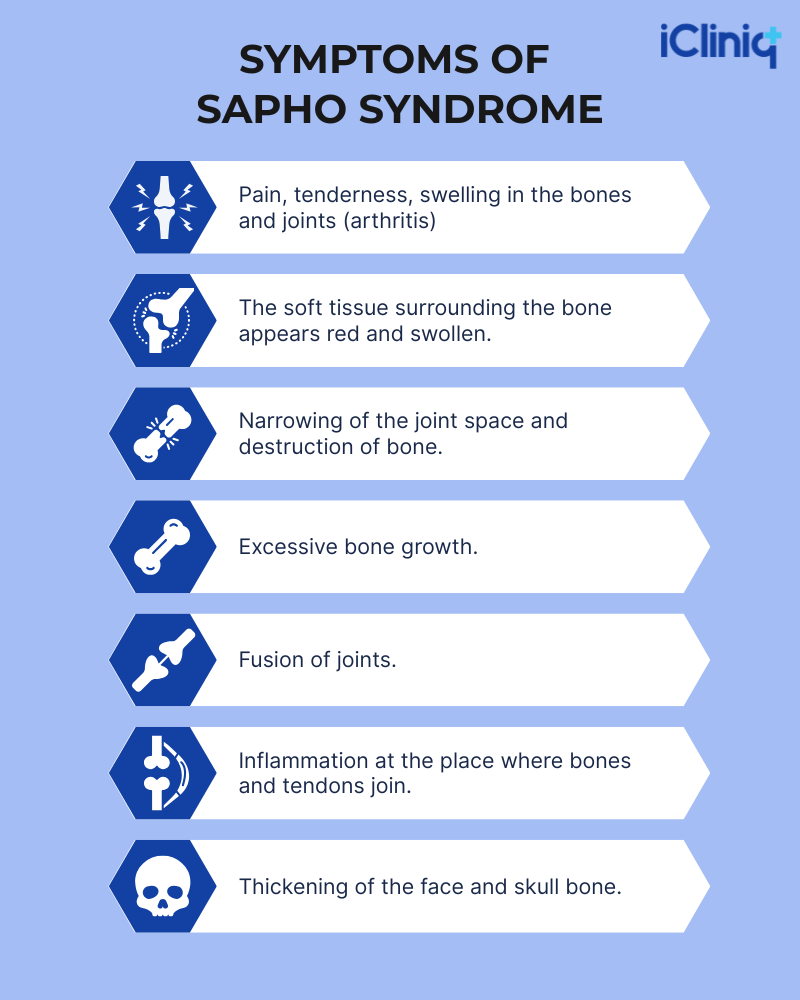
Individuals with SAPHO syndrome experience multiple symptoms, some of which are more common than others. However, as per GARD (Genetic and Rare Disease Information Center), most individuals (about 80 to 99 percent) with SAPHO syndrome will experience the symptoms mentioned below.
-
Pain, tenderness, swelling in the bones and joints (arthritis).
-
The soft tissue surrounding the bone appears red and swollen.
-
Narrowing of the joint space and destruction of bone.
-
Excessive bone growth.
-
Fusion of joints.
-
Inflammation at the place where bones and tendons join.
-
Thickening of the face and skull bone.
Furthermore, 30 to 79 percent of individuals with SAPHO syndrome would experience -
-
Sacroiliac joint inflammation.
-
Acne.
-
Arthritis.
-
Swelling.
-
Inflammation of the bones.
-
Thick blisters on the soles of the feet and palms of the hands.
-
A collection of skin disorders that resemble psoriasis.
A few others may experience other symptoms like -
-
Diarrhea.
-
Abdominal pain.
-
Recurring infections of the skin.
-
Skin irritation.
-
Oily stools.
-
Blood vessel inflammation.
-
A thrombosis (formation of a blood clot) in a vein.
Like we already discussed, the symptoms may occur in combination with any of these.
What Are the Radiologic Findings of SAPHO?
The X-rays of people affected with this condition generally show bone thickening and expansion. To better understand, different imaging methods are suggested to examine or study the condition and learn more about its extent.
Bone Scintigraphy:
This is very effective in detecting widespread lesions. Here, a radioactive agent is injected into the areas that have fractures or a tumor. And with the help of a tiny camera, the areas that are damaged are captured. It also helps to detect asymptomatic lesions in long bones, the spine, and the pelvis.
X-rays:
In early stages, this helps to detect bone resorption in affected bones. In chronic cases, this shows bone expansion, thickening of bones, and narrowing of joint space.
Magnetic Resonance Imaging (MRI):
It helps detect inflammation of the bone marrow and surrounding tissues. In addition, bony changes like an increase in the thickness of the outer surface of the bone and narrowing of the inner portion of the bone can be detected using MRI.
How Is SAPHO Syndrome Diagnosed?
It is challenging to diagnose SAPHO syndrome, as not all the characteristic skin and bone lesions coincide. However, there are specific examinations that help in the proper diagnosis of SAPHO syndrome, which include -
Physical Examination:
A clinical examination and a detailed medical history are essential. The examining doctor will inquire about back pain, joint pain, tenderness, or stiffness, which also helps determine any spine lesions.
Radiological Examination:
Normal radiographs or X-rays and magnetic resonance imaging of the whole body or particular region (hip joint, knee) can help rule out other bone disorders.
Histological Examination:
Bone biopsy and culture are done to identify the presence of bacteria causing skin and bone lesions in SAPHO syndrome. They also help differentiate other non-bacterial bone lesions.
What Are the Treatment Strategies for SAPHO Syndrome?
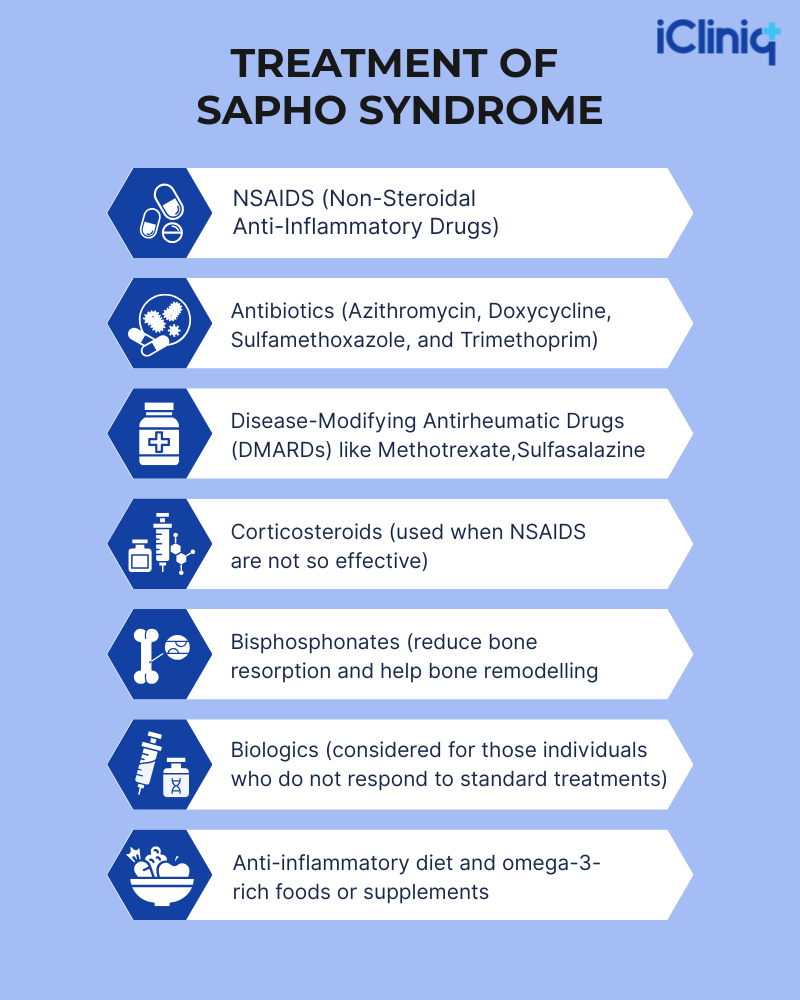
We should understand that SAPHO syndrome is not treated with one standard treatment approach; instead, it involves various medications or therapies that are customized to each individual, depending on the symptoms. Some of the SAPHO syndrome treatment strategies are prescribing a few medicines, like -
NSAIDS (Non-Steroidal Anti-Inflammatory Drugs):
They include drugs like Ibuprofen and Naproxen. These are the drugs often prescribed to relieve joint pain and inflammation.
Antibiotics:
Since bacteria like Propionibacterium acnes and SAPHO are related, antibiotics like Azithromycin, Doxycycline, Sulfamethoxazole, and Trimethoprim are used. Azithromycin acts as an anti-inflammatory and immunomodulatory drug.
Disease-Modifying Antirheumatic Drugs (DMARDs):
This includes drugs like Methotrexate, Sulfasalazine, and so on. These are used in individuals with musculoskeletal involvement.
Corticosteroids:
These are used when NSAIDS are not so effective. However, its long-term use can result in side effects.
Bisphosphonates:
These drugs reduce bone resorption and help bone remodelling. They also help reduce bone and joint pain.
Biologics:
Biologics are considered for those individuals who do not respond to standard treatments.
Other Therapies:
Surgery is considered a last option if all other treatments fail.
Diet:
An anti-inflammatory diet may also help individuals reduce inflammation in the body, along with other medications.
Omega-3s:
Taking omega-3-rich foods or supplements helps reduce inflammation and improve acne.
What Are the Complications of SAPHO Syndrome?
The complications of SAPHO syndrome are -
-
Severe bone and joint pain impairs mobility.
-
Spondyloarthritis (spine and joint inflammation)
-
Individuals with SAPHO syndrome, if not treated promptly, may experience thrombosis, meaning blood clot formation in major veins.
-
There is an increased possibility of getting various infections.
-
Severe acne.
Conclusion:
SAPHO syndrome is an uncommon disorder that presents with a wide range of symptoms affecting skin, bone, and joints. The treatment strategy is based on individual needs, and it includes medication like NSAIDs, corticosteroids, bisphosphonates, and biologics. Your life expectancy with SAPHO syndrome may not be affected, but chronic joint and bone pain may affect your quality of life. But keep in mind that with prompt diagnosis and following the doctor’s instructions, your quality of life is enhanced.
Key Takeaway From iCliniq:
-
SAPHO syndrome is a rare inflammatory disorder affecting skin and bone health.
-
Nearly 1000 SAPHO syndrome cases have been recorded globally so far.
-
SAPHO syndrome is often treated by rheumatologists and dermatologists since it affects your skin and bones.
-
Reach out to our rheumatologists online if you have any concerns about your bone health due to this syndrome.
-
Also, you can book a dermatologist consultation at iCliniq to treat acne and blisters associated with the syndrome.

