Table of Contents
- 1What Is a Heartburn?
- 2What Are the Signs and Symptoms of a Heartburn?
- 3What Is a Heart Attack?
- 4What Are the Other Causes of Chest Pain Apart From Heart Attack and Indigestion?
- 5How to Tell if a Person Has a Heart Attack or Another Condition?
- 6What Are the Warning Signs of a Heart Attack?
- 7How to Find the Difference Between Heartburn and Heart Attack?
- 8Who Is at High Risk of Developing a Heart Attack?
- 9What Best Thing That Can Be Done for Chest Pain With an Unknown Cause?
Introduction
While heart attack and heartburn are two very different conditions, it is quite possible to confuse one with the other. A heart attack is often accompanied by chest pain, shortness of breath, weakness, paleness, and sweating. So, when these symptoms present, and they do not subside with rest or the use of regular antacids, it is recommended to call for medical assistance first before opting for first-aid. The first aid for a heart attack would be chewing and swallowing a full-strength Aspirin (325 mg) unless the presence of any allergy.
What Is a Heartburn?
Heartburn is not a disease by itself. Instead, it is a burning sensation felt in the chest due to the regurgitation of stomach acid contents back into the food pipe (also known as the esophagus). It usually begins behind the breastbone and can last for a few minutes to hours. The effects of heartburn can be felt in the throat also.
What Are the Signs and Symptoms of a Heartburn?
-
A burning chest pain that starts after a meal and increases on lying down or bending over.
-
A feeling of food coming back up the throat.
-
A salty, sour, or bitter taste in the mouth.
-
Pain in the stomach area, especially in the upper abdomen.
-
Difficulty in swallowing.
-
A persistent cough.
Heartburn and other acid reflux symptoms can get triggered by hot, sour, and spicy foods, beverages like coffee, consumption of alcohol, and smoking, and often respond to various over-the-counter (OTC) antacids available on the market. It is recommended to consult a medical gastroenterologist if the acid reflux symptoms are severe and occur multiple times a week.
Antacids, proton pump inhibitors, and acid blockers are the commonly used drugs to lessen the acid production in the stomach and prevent heartburn. Patients are advised not to eat anything two hours before going to bed. In addition, it is also essential to quit smoking and avoid foods that influence acid reflux.
If heartburn is not addressed then and there, it can cause complications like laryngitis, esophageal cancer, esophagus ulcers, persistent cough, etc.
What Is a Heart Attack?
It is also known as myocardial infarction. A heart attack is a medical emergency. It happens when there is a complete blockage of an artery that supplies oxygen to a section of heart muscles. In short, a heart attack occurs when one of the heart's muscles does not get enough blood supply. It is experienced as discomfort, squeezing, or tightness of the chest.
What Are the Other Causes of Chest Pain Apart From Heart Attack and Indigestion?
The pressure in the chest, accompanied by a heart attack is thought to be confused with heartburn (acid indigestion, or acid reflux).
Other causes of chest pain include:
-
Angina can be observed when the blood supply to the heart muscle is restricted. The blood supply is not completely blocked.
-
Lung problems that include pneumonia (infection), or a blood clot (pulmonary embolism).
-
Pain in the muscle caused due to injury or inflammation in the chest wall.
-
Other digestive problems like inflammation or spasms in the pancreas, gallbladder, or esophagus.
-
The anxiety of high intensity or panic attack.
-
Tearing of blood vessels like aortic dissection.
How to Tell if a Person Has a Heart Attack or Another Condition?
Asking a few questions may help evaluate the reason for chest pain. These include:
-
Whether the pain feel relieved after changing position? If the answer is yes, then the different condition is responsible for the chest pain. If the pain is positional, it is caused due to other conditions.
-
If the pain feel improves fast with antacids intake, it is considered heartburn.
-
If the pressure or tightness of about the size of a closed fist may indicate a heart attack.
-
The period of chest pain is to be known. If the chest pain lasts for more than 15 minutes and is not relieved after the rest, immediate medical attention is to be given.
-
If the person has any other related issues, those may be the risk factors for heart attack. These include:
-
Increased blood pressure or hypertension.
-
Increased blood cholesterol.
-
Smoking history.
-
Heart conditions that are diagnosed earlier. These include diseases like coronary artery disease.
-
-
If the chest pain increases over a period means if the chest discomfort is noticed a few months back and if this pain increases, it is considered a heart-related condition that may need immediate medical attention.
What Are the Warning Signs of a Heart Attack?
-
Chest pain - A feeling of fullness, squeeze, or abnormal pressure can be experienced that comes and goes.
-
Radiating pain in the arms, jaw, neck, or upper back.
-
Shortness of breath.
-
Extreme fatigue.
-
Dizziness or lightheadedness.
-
Nausea or vomiting.
-
Fainting.
Eating a very heavy meal may not just trigger heartburn. It can cause a heart attack too, especially in people who already have coronary artery disease. Also, studies have shown that about half of the people who seek medical help for noncardiac chest pain end up being diagnosed with gastroesophageal reflux disease. Half of the people who did have a heart attack had no or very minimal symptoms, and that is the reason we must be able to differentiate between both.
People who suffered a heart attack can recover with cardiac rehabilitation (important for the ones who underwent surgery), physical activities like walking for a minimum of 30 minutes daily, and lifestyle changes like quitting smoking, following a healthy diet pattern, controlling stress effectively and taking the prescribed medicines on time.
How to Find the Difference Between Heartburn and Heart Attack?
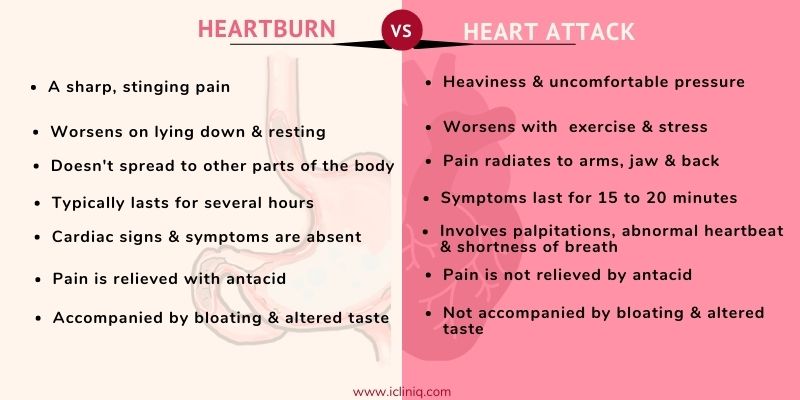
Since both conditions present with chest pain as the primary concern, it is tough to conclude the cause without confirmatory tests. But, understanding the distinguishing points is the key. Because ignoring or mistaking heart attack, symptoms can result in some undesirable conditions and situations. A few of the differences between heartburn and heart attack are,
-
Heartburn produces a sharp, stinging pain, while heart attack causes heaviness and an uncomfortable pressure as if someone is sitting on the chest.
-
Heartburn usually worsens on lying down and resting, while heart attack worsens with exercise and stress.
-
While chest pain due to a heart attack can radiate to the arms, jaw, and back, the one due to heartburn does not spread to other parts of the body.
-
Heartburn typically lasts for several hours, while heart attack symptoms last for 15 to 20 minutes.
-
A heart attack involves palpitations, abnormal heartbeat, and shortness of breath. In heartburn, these symptoms are absent.
-
Heartburn is accompanied by an altered taste, while this is not seen in the case of a heart attack.
-
Heartburn pain is relieved with an antacid, while in a heart attack, pain persists.
-
Heartburn is accompanied by bloating, which is not a sign of a heart attack.
Who Is at High Risk of Developing a Heart Attack?
A person can suspect a heart attack associated with chest pain if they have any of the following risk factors.
-
Pre-existing heart condition.
-
High blood pressure.
-
Stress.
-
An inactive lifestyle.
-
Diabetes.
-
Smoking.
-
Regular alcohol consumption.
-
High cholesterol levels.
-
A family history of heart disease.
-
Substance abuse.
-
Age factor (over 45 in men and over 55 in women).
Finally, if a person is still confused and unsure about what is causing chest pain, it is always safer to get themselves examined by a physician to avoid unnecessary panic.
What Best Thing That Can Be Done for Chest Pain With an Unknown Cause?
If the chest pain cannot be distinguished from heartburn, immediate medical help to be taken. The healthcare provider must be consulted if the unexplained chest pain is relieved after a few hours. Both heartburn and a developing heart attack exhibit symptoms that are relieved after a few hours. The pain need not last long to give a warning sign.
Conclusion:
Confusion between the signs of heartburn and heart attack is very common. However adverse effects associated with it are extremely undesirable. Lack of awareness and education is the leading cause. Therefore, it is important to know the difference between these two, and one should act accordingly.

