
Table of Contents
- 1What Is the Role of Vitamins, Minerals, and Supplements in Acid Reflux?
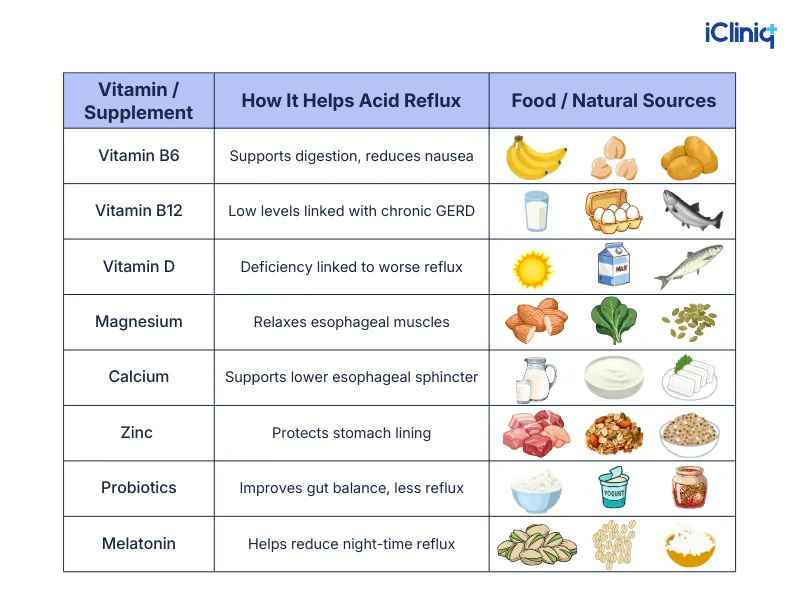
- 2Which Supplements and Nutrients Should You Consider for Acid Reflux?
- 3How Do Diet and Lifestyle Work Together With Supplements for Acid Reflux Relief?
- 4When Should You See a Doctor About Acid Reflux Despite Using Supplements?
- 5Conclusion
- 6Key Takeaways
What Is the Role of Vitamins, Minerals, and Supplements in Acid Reflux?
Nutritional supplementation can make a significant difference in controlling acid reflux. In fact, certain minerals and vitamins can help improve your digestive system by reducing inflammation and promoting the emptying of your stomach.
Additionally, supplements may also help correct nutrient deficiencies, especially iron, magnesium, and vitamin B12, which can occur if you have been taking acid-suppressive drugs for some time.
However, taking supplements for GERD (gastroesophageal reflux disease) alone is not enough. They work much better when combined with a balanced diet, simple lifestyle changes, and proper medical guidance.
Magnesium, probiotics, and melatonin supplements help in improving digestion by stimulating the stomach. Therefore, it can reduce your chance of acid re-entering the food pipe. Additionally, B vitamins and ginger extracts help enhance the body's natural digestive enzymes and reduce inflammation.
It is essential to understand the value of nutrients, identifying which ones are beneficial for your health and which ones can harm it. It is especially crucial in people who have both GERD and iron deficiency, because wrong supplements and too much acid reduction can worsen symptoms and also affect nutrition. The ultimate goal is to maintain proper body balance.
Which Supplements and Nutrients Should You Consider for Acid Reflux?
When dietary changes are not enough to control acid reflux, many patients look toward taking supplements for acid reflux. Some of these treatments can improve digestion, ease discomfort, and lower the number of reflux episodes, but they are not a cure. Below is an easy-to-understand overview of commonly used supplements and their potential benefits.
-
Probiotics:
When it comes to replenishing your gut flora, probiotics are truly amazing. They can greatly enhance digestion and significantly decrease bloating; in fact, they may even help keep your digestive system running properly and reduce your risk of acid reflux.
Some studies suggest that probiotics may help alleviate regurgitation and improve the quality of life for individuals with GERD. They can also help resolve dysbiosis (an imbalance of gut flora), especially for those who have been on proton pump inhibitors (PPIs) for a long time. The benefits actually differ depending on the specific strains you are using, and not everyone responds in the same manner.
-
Melatonin:
Melatonin, well known for regulating sleep, protects the esophageal mucosa as a result of enhanced gastrin secretion, which promotes the contractility of the lower esophageal sphincter, reduces the production of gastric acid, and increases the secretion of duodenal bicarbonate.
In clinical trials, Melatonin (3 mg or milligrams daily) has been shown to reduce GERD symptoms, including heartburn and epigastric discomfort, significantly. One trial demonstrated a complete alleviation of symptoms over an eight-week period. In one comparative study, all patients given heartburn supplements, such as melatonin and L-tryptophan, experienced complete symptom remission, compared to only 66 percent of patients taking Omeprazole, whose symptoms did not remit.
Melatonin has also been shown to reduce heartburn and chest pain caused by GERD, either alone or with Omeprazole; however, potential side effects like fatigue and dizziness must be weighed in this situation.
-
B-vitamins (B12, B6, folic acid):
The risk of vitamin B12 deficiency is greatly increased by long-term use of proton pump inhibitors; within two years of treatment, the risk increases by 65 percent. The risk is 63 percent higher even if a dose of fewer than 0.75 pills is maintained, whereas the risk is 95 percent higher for those who take more than 1.5 PPI tablets daily. This highlights the significance of taking B vitamin supplements because an untreated B12 deficiency can result in serious health issues like
-
Anemia.
-
Dementia.
-
Irreparable brain damage.
The human body's ability to properly absorb essential minerals, such as vitamin B12 and other B vitamins like folate and B6, is also compromised by the long-term use of PPIs and H2 blockers. To preserve their health, people who are vegetarians, lack certain vitamins, or have been taking certain drugs for a long time might consider taking acid reflux supplements.
-
Ginger and herbal extracts:
Preliminary studies reveal that ginger may help alleviate bloating, belching, and reflux-related discomfort. It is quite effective for nausea and indigestion, but high quantities can exacerbate heartburn.
Herbal combinations, such as Iberogast, which contains peppermint and chamomile, reduce reflux and functional dyspepsia by enhancing gastric motility and soothing the gastrointestinal tract. Due to its anti-inflammatory properties, ginger provides optimal benefits to the gastrointestinal system, while small doses accelerate stomach emptying, reducing the risk of acid reflux.
Studies show that it effectively treats symptoms such as nausea, heartburn, and early satiety (the feeling of fullness and satisfaction after eating). According to experts, no more than 0.14 ounces of ginger should be consumed daily, as higher doses can trigger reflux. Ginger can be consumed raw, as tea, in food, or as a supplement for gastric acid reflux.
-
Deglycyrrhizinated licorice (DGL)/licorice root:
Licorice root, particularly in the DGL (processed form of licorice root), forms a protective coating on the stomach lining and may stimulate mucus production to alleviate irritation. This action could help reduce heartburn and esophageal irritation.
DGL is preferred over whole licorice because the glycyrrhizin found in the licorice plant can increase blood pressure and lead to an electrolyte imbalance. DGL, therefore, presents a safer alternative for managing long-term reflux symptoms.
-
Magnesium:
Magnesium plays a crucial role in maintaining muscle relaxation, including that of the lower esophageal sphincter, and in modulating gastrointestinal motility. These functions are crucial in preventing acid backflow, which is the primary concern for patients with GERD. Studies suggest that a magnesium deficiency worsens acid reflux symptoms.
Long-term use of PPIs results in hypomagnesemia, or low levels of magnesium in the blood. Thus, supplementation with magnesium becomes highly relevant in patients on long-term PPI therapy. However, high doses of magnesium may result in diarrhea and gastrointestinal side effects; hence, magnesium supplementation should be given with caution, especially in patients with pre-existing kidney diseases due to the risk of complications related to higher levels of magnesium.
-
Betaine hydrochloride with pepsin:
When reflux is caused by low stomach acid instead of high acid levels, Betaine hydrochloride with pepsin is used. This pepsin supplement has been shown to enhance digestion and reduce bloating; however, it should only be taken under a doctor's supervision, as improper use may worsen symptoms.
The less usual problem of low stomach acid in GERD patients is specifically addressed by Betaine hydrochloride with pepsin. According to studies, it can reduce stomach pH from 5.2 to 0.6 in 30 minutes, or roughly 4.5 pH units. However, it usually takes over 6.3 minutes to drop below 3.
A practical approach to dosing, which begins with 350 to 750 mg of Betaine hydrochloride for acid reflux during meals high in protein, is typically advised by medical professionals. After that, the dose is slowly increased until slight discomfort is felt, showing the right acid level has been reached. The dose is then reduced a little.
-
Others:
Other supplements taken for reflux include digestive enzymes, which help in the digestion of food and reduce bloating; L-glutamine supports the integrity of the gut lining and may be of value in IBS or leaky gut; and antioxidants, including vitamins for GERD.
Studies suggest that vitamins A, C, and E can offer protection against the progression of GERD, and apple cider vinegar, used anecdotally to support digestion where stomach acid is low, although scientific evidence is generally weak. Iron supplements may also be required in patients with documented iron deficiency; however, taking iron tablets with acid reflux can be challenging because iron can irritate the stomach lining and worsen reflux symptoms if taken on an empty stomach or without medical guidance.
How Do Diet and Lifestyle Work Together With Supplements for Acid Reflux Relief?
Acid reflux is primarily corrected by modifying your diet and lifestyle, as well as by taking supplements. Eating foods like vegetables and oats and avoiding foods that can worsen your acid reflux, such as citrus fruits, coffee, and spicy foods, can help reduce your acid reflux symptoms.
Other lifestyle interventions include maintaining an ideal body weight, taking frequent small meals, avoiding a recumbent position (lying down) after meals, elevating the head of the bed, quitting smoking, and practicing stress control. Supplements that enhance gastrointestinal health and provide protection for the esophagus include probiotics, melatonin, magnesium, ginger, and DGL. All these form part of an overall approach aimed at long-term relief from acid reflux.
When Should You See a Doctor About Acid Reflux Despite Using Supplements?
Probiotics, melatonin, magnesium, ginger, and licorice are some supplements that may help alleviate acid reflux symptoms; however, a medical evaluation is essential if the symptoms worsen or persist. Reflux should be treated if symptoms occur more than twice a week, interfere with routine activities, or continue despite changes.
Alarm symptoms:
Warning signs to watch out for, as they may indicate serious diseases that require medical attention, include difficulty swallowing, nausea or vomiting that persists or is accompanied by blood, unexplained weight loss, a chronic cough, a sensation of choking, or a lump in the throat. Cardiac causes of chest pain that may feel like heartburn must be ruled out. More serious reflux may require medication or an assessment by a gastroenterologist.
Monitoring and follow-up:
It is also advisable to have regular follow-up for monitoring of reflux symptoms, especially if the symptoms have no warning signs. It will be necessary to consult a physician if the symptoms persist for several weeks or interfere with sleep and daily activities, or if over-the-counter medications are required frequently. These steps may help in preventing complications that arise later.
Follow-up care may include tests such as endoscopy and pH monitoring, and may require adjustments to the treatment plan being followed. A good rapport with health professionals to ensure proper use of supplements with medication therapy is essential for safe and effective management of reflux.
Conclusion
Supplements, vitamins, and minerals improve digestion, reduce inflammation, and correct deficiencies that contribute to acid reflux symptoms in persons on long-term acid-suppressive therapy. They are most effective when combined with a good diet, a healthy lifestyle, and medical supervision; they should not be used as the sole treatment. To effectively and safely treat reflux, it is essential to understand which nutrients are beneficial and which can exacerbate symptoms. If you have ongoing reflux or questions about which supplements are safe for you, you can always consult our gastro specialist online for guidance.
Key Takeaways
-
Certain vitamins, minerals, and supplements may aid digestion and alleviate symptoms of acid reflux.
-
Long-term use of acid-reducing drugs can result in deficiencies, making supplementation in this area important.
-
However, supplements are most effective when combined with healthy lifestyle practices, such as eating a balanced diet, consuming smaller meals, and maintaining a healthy weight.

