Table of Contents
- 1What Are the Health Implications Associated With Obesity?
- 2What Is the Impact of Obesity on the Upper Gastrointestinal Tract?
- 3What Is the Influence of Obesity on Liver Function?
- 4What Is the Impact of Obesity on the Gallbladder?
- 5What Is the Effect of Obesity on the Pancreas?
- 6Key Takeaway From iCliniq
What Are the Health Implications Associated With Obesity?
Obesity can influence an individual’s overall health and well-being. As obesity has a direct link to food and obesity, it is strongly associated with gastrointestinal (GI) health. Obesity affects gastrointestinal health significantly. Hence, it is important to manage GERD symptoms with obesity by changing diet, lifestyle, and using medicines.
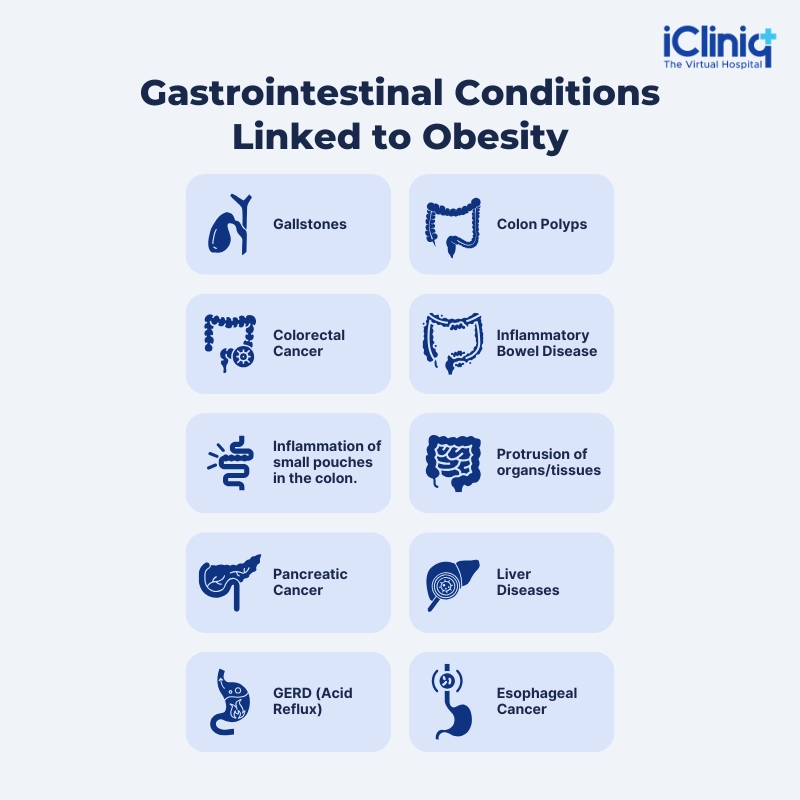
Individuals who are obese face a heightened risk of many gastrointestinal (GI) problems, including:
Gallstones (solid particles that form in the gallbladder).
Colon polyps (growths that occur in the lining of the colon).
Colorectal cancer, commonly referred to as colon cancer, is a malignant neoplasm that originates in the colon or rectum.
Inflammatory bowel disease (IBD) encompasses Crohn's disease and ulcerative colitis.
Diverticulitis (a medical condition characterized by the inflammation of small pouches).
Hernias are a medical condition characterized by an organ or tissue protrusion.
Liver cirrhosis, cancer, and diseases associated with the liver.
Pancreatic cancer (a malignant neoplasm that originates in the pancreas, a glandular organ located in the abdominal cavity).
Gastroesophageal reflux disease (GERD).
Esophageal cancer (a malignant neoplasm originating in the esophagus, the muscular tube connecting the throat to the stomach).
What Is the Impact of Obesity on the Upper Gastrointestinal Tract?
Excess accumulation of fat in the abdominal area can cause increased pressure. This increased pressure may lead to many upper gastrointestinal disorders. These include:
Hiatal hernia:
Hiatal hernia is an additional issue that occurs due to increased pressure in the abdomen. The diaphragm is a primary muscle that is responsible for respiration. It separates the chest from the abdomen and is placed below the rib cage. The diaphragm has a small opening through which the esophagus passes. In some individuals, this opening becomes wider. When this happens, the upper part of the stomach may slip into the chest cavity through the wider opening. This condition is known as a hiatal hernia.
Gastroesophageal reflux disease:
Symptoms such as heartburn, acid reflux, a persistent cough caused by throat irritation, bad breath, regurgitation, and chest pain can be observed in GERD. These symptoms can be controlled through diet, lifestyle changes, and medication. It is important to manage your GERD; otherwise, it may cause serious issues like Barrett’s esophagus and certain types of esophageal cancer.
Constipation:
Constipation means difficulty with infrequent bowel movements. This condition occurs when you consume processed foods, meat, and dairy products, and when your diet lacks fiber, whole grains, legumes, and vegetables. When you have constipation, you experience symptoms like hard and lumpy stools, difficulty in passing stool, and usually, you will have fewer than three bowel movements in a week. Some people may change their diet to lose weight, and hence, they reduce their intake of fiber and overall food. This may cause constipation.
Among obese individuals, increased pressure in the abdomen due to exertion caused by constipation can lead to hemorrhoids. This condition is characterized by swollen veins in the rectum and anus.
Treatment for your constipation or hemorrhoids includes:
Taking high fiber in the diet.
Drinking more water.
Regular exercise.
If these steps do not help with your constipation, then laxatives can be used. Many types of laxatives are available.
Hemorrhoids heal on their own. If symptoms persist, topical ointments and small or minor procedures can be the treatment options.
Diarrhea:
Gastrointestinal diarrhea means having frequent, watery, and loose bowel movements. Diarrhea may occur due to many reasons, such as:
Certain dietary choices: Excessive intake of food at once, especially when containing dietary fats, high fiber-containing fruits and vegetables, caffeine-containing beverages, and alcohol, may cause diarrhea.
Adverse effects of medicine: Certain GERD medications can cause diarrhea, as these contain magnesium.
Bariatric surgery: After bariatric surgery, the body may not absorb nutrients from food. This may lead to diarrhea, increased fat in the stool (steatorrhea), and loss of other nutrients in the stool.
Gastritis weight gain:
Gastritis causes bloating and abdominal swelling. During episodes of gastritis, one can also experience weight gain despite regular exercise and a balanced diet. This type of weight gain may be observed in both males and females. It may be due to lifestyle factors or underlying medical conditions.
Some causes for this kind of weight gain include:
Stress:
Stress can be responsible for your weight gain. Stress can have many effects on the whole body, including on the digestive system. It may lead to abdominal bloating, along with other symptoms. Individuals under stress may increase food intake and reduce physical activity, which may lead to weight gain.
Alcohol consumption:
Alcohol is an inflammatory substance that may affect the digestive system, along with many other parts of the body. It may cause abdominal discomfort, bloating, and gas. Though it has high calories, it does not contribute to nutritional value. Hence, increased alcohol consumption may lead to weight gain.
Medications:
Corticosteroids, oral contraceptives, and antibiotics may contribute to abdominal bloating and weight gain.
Ascites:
In this condition, fluid buildup in the abdomen can be observed. There is damage or scarring of the liver in this condition.
Cushing’s syndrome:
In this condition, increased cortisol, also known as a stress hormone, can be observed. Weight gain and the accumulation of fat around the abdomen can also be seen.
Hypothyroidism:
In this condition, the thyroid hormones are not secreted in sufficient amounts. This may lead to a slowdown in metabolism, which affects the digestive system and other bodily systems. It may also slow the movement of the intestine.
Other causes that occur in women include:
Premenstrual syndrome:
Premenstrual syndrome can begin 5 to 11 days before the period. Physical symptoms include bloating and weight gain. These may occur due to water retention and hormonal changes.
Pregnancy:
Bloating is an early sign of pregnancy. Unexpected weight gain is a symptom of pregnancy.
Polycystic ovarian syndrome:
This condition occurs due to increased levels of androgen hormones in females. Other potential side effects include weight gain. This may lead to a distended or bloated stomach.
Endometriosis:
In this condition, the lining of the uterus grows outside of the uterus in women. This grown tissue may lead to inflammation, pain, and bleeding between periods. It causes abdominal bloating due to the growth of tissue, which causes fluid retention and swelling. It may cause constipation and diarrhea.
What Is the Influence of Obesity on Liver Function?
Obesity can influence a person’s liver functions. These include:
Individuals who are obese may face a higher risk of the onset of non-alcoholic fatty liver disease (NAFLD). In this condition, fat gets accumulated in liver cells.
NAFLD does not cause symptoms, but it can progress to non-alcoholic steatohepatitis (NASH). In this condition, the liver becomes inflamed.
NASH may lead to irreversible fibrosis of the liver and may lead to cirrhosis. This condition is characterized by severe liver damage.
Early steps like healthy eating, regular exercise, and certain medicines can reduce the inflammation and amount of fat in the liver.
What Is the Impact of Obesity on the Gallbladder?
The gallbladder is a small organ that is responsible for storing bile.
Obesity can increase the risk of developing gallstones. This is more commonly observed among females.
During digestion, the gallbladder releases bile into the small intestine. This helps break down and absorb fat. The formation of gallstones can occur when there is an excessive amount of cholesterol present in bile.
Many individuals may have gallstones without exhibiting any symptoms. Gallstones can cause severe pain and discomfort. They obstruct the bile ducts. In such cases, surgery may be necessary, or for some, the issue may be resolved through medication.
Gallstones may be more common among individuals who lose weight rapidly.
What Is the Effect of Obesity on the Pancreas?
Pancreatitis is an inflammation of the pancreas.
Obesity can be responsible for various diseases such as diabetes, gallstones, and increased triglycerides. All these changes can cause pancreatitis.
Bariatric surgery, which is a treatment option for obesity, can increase the risk of pancreatitis.
Individuals with high body fat may experience symptoms earlier than those with a healthy body fat percentage.
Conclusion:
Obesity has a strong link with gastrointestinal diseases. Apart from this, obesity not only has a relation with GERD, but people who are obese experience more severe symptoms, and they may show reduced response to treatment. This may lead to poor health outcomes. Hence, it is crucial to manage weight, particularly in cases of GERD.
Key Takeaway From iCliniq
Obesity has a strong association with GERD.
Obesity can worsen GERD symptoms by increasing the pressure in the abdomen.
- For more information, you can consult a gastroenterologist at iCliniq.

