Table of Contents
- 1What Is Irritable Bowel Syndrome (IBS)?
- 2What Are the Types of IBS?
- 3What Are the Symptoms of Irritable Bowel Syndrome?
- 4What Are the Causes of Irritable Bowel Syndrome?
- 5How to Diagnose Irritable Bowel Syndrome?
- 6What Is the Treatment of Irritable Bowel Syndrome?
- 7What is the Dietary Guidance for Irritable Bowel Syndrome?
- 8What Are the Complications of Irritable Bowel Syndrome?
- 9When to Seek Help?
- 10A Key Takeaway From iCliniq:
What Is Irritable Bowel Syndrome (IBS)?
If you have been dealing with uncomfortable digestive issues, you might have irritable bowel syndrome. It is actually common and affects how your digestive system works. You will notice stomach pain and changes in your bowel habits. Even though IBS does not physically damage your digestive system, it can affect your daily life.
But IBS is manageable. Most people find relief by tweaking their daily habits and diet, taking the proper medications, or working with a therapist who specializes in this area. You are definitely not alone in this; around 10 to 15 percent of people worldwide deal with IBS.
The reality is, most people with IBS do not have super severe symptoms. Many people control things by watching what they eat, making lifestyle changes, and finding ways to manage stress. IBS is not curable. If your symptoms are more intense, some medicines can help, and talking with a counselor who understands IBS can make a real difference.
What Are the Types of IBS?
Doctors determine the type of IBS by examining bowel habits when symptoms are acting up. If you have IBS, you will probably have some totally normal days and then some not-so-normal days.
The three main types of IBS are as follows:
-
IBS With Constipation (IBS-C): When you are having a flare-up, you are mainly dealing with hard, lumpy stools that are tough to pass.
-
IBS With Diarrhea (IBS-D): The loose, watery bowel movements that send you running to the bathroom.
-
IBS With Mixed Bowel Habits (IBS-M): Some days it is hard and lumpy; other days it is loose and watery.
What Are the Symptoms of Irritable Bowel Syndrome?
If you have been dealing with the following signs and symptoms for at least three days every month over three months, that is typically IBS. You may experience a rough few weeks where symptoms flare up, followed by a sudden improvement for a while. At other times, it feels like the symptoms just won't go away.
The symptoms associated with IBS are as follows:
-
Uncomfortable belly pain that worsens after meals but feels better once you have had a bowel movement.
-
You may experience alternating episodes of diarrhea and constipation (sometimes both).
-
Bloating and gas.
-
Your stool might look different than usual, and you may notice some mucus as well.
-
If you find yourself less interested in food than usual, that is also common with IBS.
What Triggers Irritable Bowel Syndrome?
Sometimes, IBS flare-ups just happen without any reason. However, at other times, you can actually pinpoint what triggers them. Here are some common triggers:
-
Coffee.
-
Alcohol.
-
That glass of wine or beer.
-
Taking antibiotics too often
-
Certain foods, especially those that are spicy or high in fat, can be problematic.
-
When you are stressed out or feeling anxious.
What Are the Causes of Irritable Bowel Syndrome?
The possible causes of IBS are as follows:
-
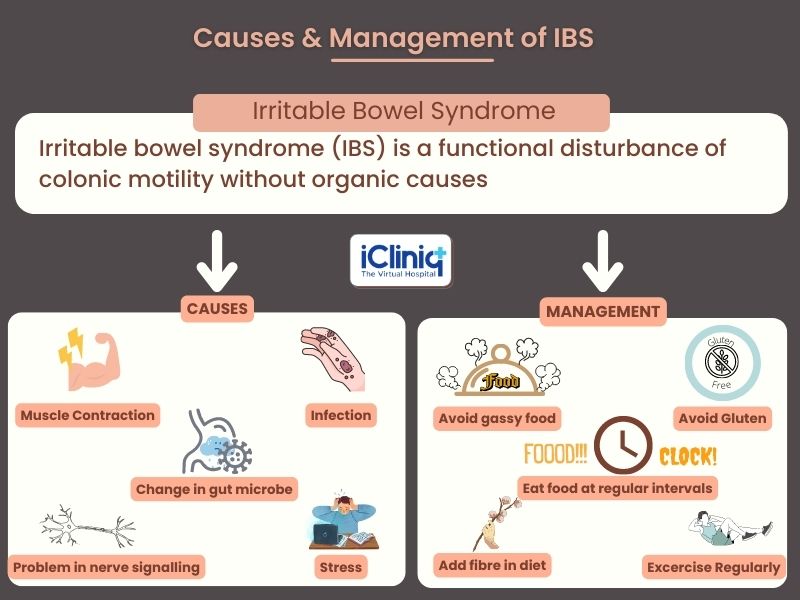
Muscle Contractions in Your Intestine: Your gut walls are composed of layers of muscles that contract and propel food along as it travels through your digestive system. When these contractions are too weak, everything slows down, and you end up with hard, dry stools. However, when they become too strong or persist for too long, you experience gas, bloating, and diarrhea.
-
Problems in the Nerve Signaling: Then there is the nerve connection between your brain and gut. Sometimes these signals get crossed. If the nerves in your digestive system are not working quite right, you might feel more discomfort when your belly fills with gas or stool. When your brain and intestines cannot communicate properly, your body tends to overreact to regular digestive changes, which can cause pain, diarrhea, or constipation.
-
Severe Infection: If you have had a case of gastroenteritis, your stomach can give you diarrhea. From bacteria or a virus, you might develop IBS afterward.
-
Stress: Stress also plays a significant role. If you have been through tough times, especially as a kid, you are more likely to develop IBS later on.
-
Change in Your Gut Microbes: The tiny organisms living in your gut matter more than you think. When the balance of bacteria, fungi, and viruses in your intestines changes, it can set the stage for IBS to develop.
What Are the Triggering Factors of Irritable Bowel Syndrome?
The risk factors of IBS are as follows:
-
It typically appears between your late teens and early 40s.
-
In the US, it is more common in women than in men. If you have had estrogen therapy (whether before or after menopause), that can increase your risk too.
-
Your family history matters as well. That might increase your chances of developing it.
-
If you have had a severe digestive infection that stayed around, or if you are dealing with ongoing pelvic pain, these can be risk factors, too.
How to Diagnose Irritable Bowel Syndrome?
When you visit your doctor, they will want to get a complete picture of your health, which includes asking about your bowel history and associated symptoms, physically examining you, and conducting tests to rule out other conditions, such as celiac disease or inflammatory bowel disease (IBD).
Rome Criteria: These guidelines are used by doctors to diagnose digestive issues. They will ask if you have had belly pain or discomfort at least once a week for the past three months. They will check if you have noticed at least two things: pain associated with bowel movements, changes in how often you need to go, or changes in the appearance of your stool.
Lab Tests You Might Need:
-
Blood Test: This helps your doctor determine whether you have a digestive disease or something else causing your symptoms.
-
Stool Test: This test checks for infections or gut inflammation that might be linked to digestive problems.
-
Breath Test: A simple breath test can actually tell you if there is too much bacteria growing in your small intestine. Bacterial overgrowth tends to occur more frequently in individuals who have undergone bowel surgery. It is also fairly standard if you have diabetes or another condition that slows down your digestion.
Imaging Tests That Might Help:
-
Colonoscopy: This procedure allows you to examine your bowel for potential issues, such as IBD (inflammatory bowel disease) or cancer. They will use a thin, flexible tube with a camera to examine your colon.
-
Upper Endoscopy: This one checks out the upper part of your digestive system. The doctor uses a scope to examine the inside of your esophagus, stomach, and the beginning of your small intestine. It is beneficial for spotting celiac disease or other gastrointestinal problems.
What Is the Treatment of Irritable Bowel Syndrome?
When you are dealing with these symptoms, the primary goal is to help you feel better. Your doctor will start by adjusting your diet and modifying your daily habits. Sometimes, medication can also make a significant difference.
Medications: Your doctor might suggest some medicines to help ease what you are going through:
-
Antidepressants can help if you are having depression or anxiety.
-
Laxatives work well for constipation issues.
-
Anticholinergic medicines (such as Dicyclomine, Propantheline, Belladonna, and Hyoscyamine) are taken about 30 minutes before meals to calm intestinal muscle spasms.
-
Probiotics are great for gut health.
-
Tricyclic antidepressants can tackle that intestinal pain.
-
Lubiprostone (Amitiza) and Bisacodyl specifically help with IBS-C.
-
Alosetron and Loperamide work for IBS-D.
Therapy: To manage stress, anxiety, and depression, your doctor will give you therapy like cognitive behavioral therapy (CBT).
What is the Dietary Guidance for Irritable Bowel Syndrome?
The dietary recommendations are as follows:
-
Take more fiber in the diet with whole grains, fruits, and vegetables over time.
-
Avoid taking foods that trigger IBS.
-
If you have diarrhea, you can try to eat small, frequent meals, which can make you feel better. But if you have constipation, consuming large amounts of high-fiber foods may help move food through the intestines. Do not skip meals, and try to eat at the same time each day to regulate bowel function.
-
Limit dairy products, like cheese and milk.
-
Avoid gluten.
-
Drink plenty of water.
-
Exercise regularly for about 30 minutes daily.
-
Do yoga, meditation, and stress-relaxation techniques.
What Are the Complications of Irritable Bowel Syndrome?
The complications of IBS are as follows:
-
Poor quality of life.
-
Depression.
-
Anxiety.
-
Prolonged diarrhea or constipation may lead to hemorrhoids (inflammation in the anal area).
What Can You Expect If You Have IBS?
Living with IBS can feel incredibly frustrating, especially when it interferes with things you want to do. But treatment of IBS can improve your associated symptoms. Your symptoms will not completely go away. It will take a few weeks or months to alleviate these symptoms.
When to Seek Help?
Contact your doctor if you are dealing with IBS symptoms, or if you have noticed your bowel habits have changed and just won't go back to normal.
When you need to make that call:
-
You have a fever and vomiting.
-
You are losing weight, but you can not figure out why.
-
Your diarrhea is so bad that it is waking you up in the middle of the night.
-
You are having bad stomach pain (especially the kind that does not get better after you pass stool or pass gas).
Conclusion:
IBS is a frustrating condition that affects your large intestine. You might experience uncomfortable cramping, belly pain that just won't quit, bloating, gas, diarrhea, or constipation, and sometimes both. Most people experience relatively mild symptoms. If you are one of them, you may find relief simply by adjusting your diet, making some lifestyle changes, and managing your stress levels. If you are experiencing more intense symptoms, your doctor can prescribe medications that actually work, and counseling can be surprisingly practical, too.
A Key Takeaway From iCliniq:
-
IBS is a condition that affects your gut. You may have belly pain, gas, bloating, diarrhea, constipation, and sometimes both.
-
In some people, these may cause mild symptoms, but in others, they cause severe symptoms. This can be managed by medicines, exercise, and dietary changes.
-
If you are having stomach or bowel issues, you can contact our gastroenterologist.