Table of Contents
What Is Gabapentin?
Gabapentin is a prescription medicine known as a gamma-aminobutyric acid (GABA) analogue. Gabapentin inhibits the excitatory activity of neurons in the brain and affects the activity of chemicals called neurotransmitters, which are used to send messages between nerve cells.
Gabapentin Dosage Forms
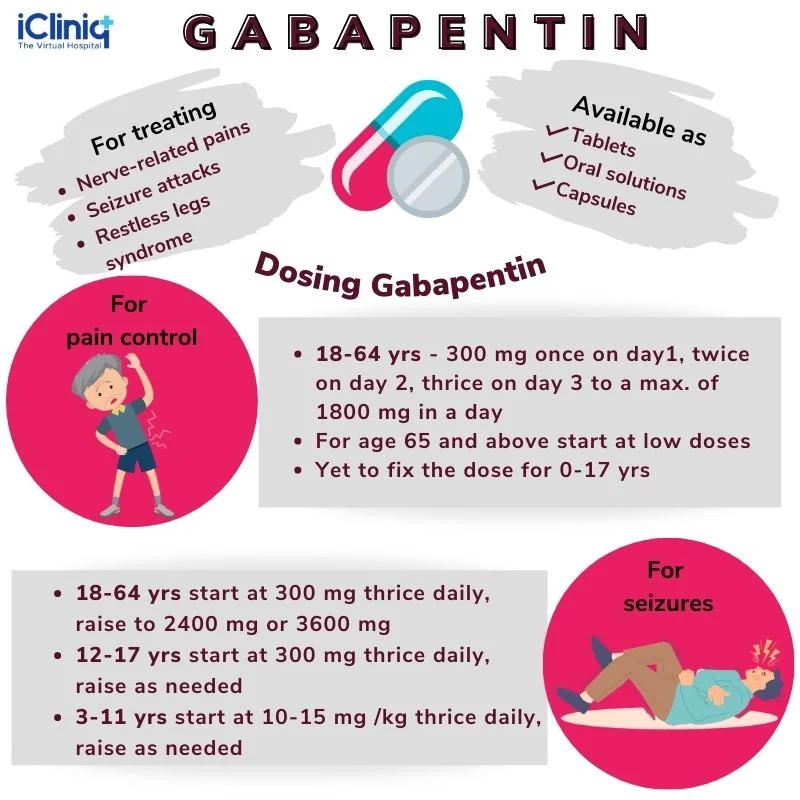
Gabapentin is available in the market with a brand name and as a generic product. It is available in tablet, capsule, and oral solution forms. The dosage strength of Gabapentin in different forms is:
-
Gabapentin tablets: It is available as 300- and 600-milligram tablets and 600- and 800-milligram tablets. It is also available as extended-release 300- and 600-milligram tablets like Gabapentin enacarbil. These are mainly used for adults who require higher doses.
-
Gabapentin oral solution: The oral solution of Gabapentin includes 250 milligrams of Gabapentin per five milliliters. These are used mainly in children, the elderly, and those who have difficulty in swallowing. These are also preferred when small, accurate dose titration is required.
-
Gabapentin capsules: Gabapentin is available in capsules as 100, 300, or 400 milligrams. These are used widely for titration (slowly increasing the dose of the medicine over days or weeks to find out which dose is effective).
How to Take Gabapentin?
It’s very important to take your medicine exactly the way your doctor tells you! Here’s how to take different types of Gabapentin:
-
Tablets should be taken with your evening meal. You should swallow the tablet with a glass of water without crushing, breaking, or chewing it. Horizontal tablets should also be taken with food. Some tablets can be broken in half, and the second half can be taken as your next dose. However, do not use the half tablet beyond 28 days.
-
Oral solutions should be measured carefully with a measuring cup.
-
If you are taking an antacid (those which contain aluminum or magnesium), wait for 2 hours before taking Gabapentin.
-
If you miss a dose, take it as soon as you remember. If there are just a few hours left until your next dose, take only one, never more than that.
Mechanism of action:
The exact mechanism of action is not known, but researchers do know that it can easily pass the blood-brain barrier (BBB) and affect the neurotransmitters. It is similar to GABA but does not bind to the GABA receptors. Instead, it binds to voltage-gated calcium channels present in the brain, especially the α-2-δ-1 subunit. By doing this, it reduces the release of excitatory neurotransmitters in the presynaptic area, which helps prevent seizures.
What Is Gabapentin Used For?
Gabapentin is used for:
-
Partial seizures (sudden and uncontrolled electrical disturbance in the brain) in patients who are three or older.
-
Neuropathic pain, including post-herpetic neuralgic pain (a type of pain that persists for months after the treatment of viral infection, herpes zoster).
-
Restless legs syndrome (irresistible urge to move the legs).
Off-label uses (prescribing for conditions that the FDA has not approved):
-
Painful diabetic neuropathy (nerve damage that is caused by diabetes).
-
Hot flashes in women undergoing menopause or breast cancer treatment.
-
Bipolar disorder.
-
Anxiety disorders.
-
Mood disorders.
-
Social phobia.
-
Migraine prophylaxis.
-
Alcohol withdrawal.
-
Pruritus.
-
Insomnia.
-
Refractory chronic cough.
-
Posttraumatic stress disorder (PTSD).
-
Interstitial cystitis.
-
Postoperative analgesia.
-
Irritable bowel syndrome.
How Does Gabapentin Work?
Gabapentin works by binding to the voltage-gated calcium channels (particularly the α-2-δ-1 subunit) present in the brain. This binding inhibits the calcium entry and reduces the release of excitatory neurotransmitters, therefore calming the nerves.
What Are the Side Effects of Gabapentin?
Every drug has side effects, and the following can be seen with Gabapentin:
1. Common side effects:
-
Fever.
-
Viral infection.
-
Difficulty in speaking.
-
Presence of jerky movements.
-
Nausea.
-
Vomiting.
-
Tiredness or weakness.
-
Headache.
-
Uncontrollable shaking of a body part.
-
Double or blurred vision.
-
Unsteadiness.
-
Anxiety.
-
Memory problems.
-
Heartburn.
-
Diarrhea.
-
Dry mouth.
-
Increased appetite.
-
Weight gain.
-
Allergic reactions.
2. Critical side effects:
It can bring changes in the mood or cause anxiety, which can present as:
-
Suicidal thoughts.
-
Anxiety.
-
Crankiness.
-
Panic attacks.
-
Severe fatigue.
-
Difficulty sleeping.
-
Anger.
-
Hyperactivity or talking a lot.
-
Violent behavior.
-
Liver problems like yellowing of skin, dark urine, or unusual bleeding.
-
Kidney issues like trouble urinating, blood in the urine, or weight gain.
-
Change in color (bluish) of skin.
If given to children from one to three years of age, symptoms can be:
-
Aggression.
-
Concentration difficulty.
-
Hyperactivity.
-
Changes in performance.
Some life-threatening allergic reactions can also occur, which can cause:
-
-
Skin rashes.
-
Fever.
-
Hives.
-
Swollen lymph nodes.
-
Swollen lips and tongue.
-
Unusual bruising.
-
Bleeding.
-
Muscle pain.
-
Increased frequency of infections.
-
What Are the Interactions and Precautions for Gabapentin?
Interactions of Gabapentin are: This medicine can interact with various other drugs. Some can be beneficial, and others can be harmful. The following are the drugs that can cause interactions:
-
Painkillers or analgesics can increase the side effects of Gabapentin.
-
Antacids can make Gabapentin less effective.
-
Alcohol (can cause increased sleepiness).
-
Antihistamine drugs (used for allergies).
-
Medicines for depression, such as Amitriptyline and Fluoxetine.
-
Medicines for seizures, such as Phenobarbitone.
-
Medication for stomach problems (like antacids containing aluminum or magnesium).
-
General anesthetics or local anesthetics.
-
Muscle relaxants.
-
Narcotic pain medicines.
Precautions for Gabapentin are: If the patient experiences any of the following symptoms, they should consult the doctor immediately:
-
If there are any issues with the kidneys in older age, or if people are on hemodialysis.
-
A patient can feel drowsy as this drug can cause slowing down of thinking and motor skills. Hence, do not drive while taking it.
-
It can cause suicidal thoughts.
-
Allergic reactions.
-
Taking alcohol with this medicine can make a person tired or sleepy.
-
Epileptic patients should not stop taking it abruptly.
-
Avoid taking it during pregnancy or breastfeeding.
When to Consult a Doctor?
You need to consult the doctor in these situations, such as:
-
Severe allergic reactions, such as difficulty breathing, rashes, or swelling.
-
Worsening seizures.
-
Loss of consciousness.
-
Thoughts of self-harm.
-
Chest pain.
-
Severe weakness.
-
Trouble breathing.
-
Hallucinations.
-
Severe stomach issues.
-
Vision changes.
-
Hand tremors.
Consult your doctor in these situations too:
-
Before discontinuing suddenly (because it can cause withdrawal symptoms).
-
If you miss multiple doses.
-
If you start new medicines.
-
If you are breastfeeding or pregnant, always consult your doctor before taking Gabapentin.
-
If you take Gabapentin for a long time, your doctor may need to check your kidneys regularly.
Conclusion
Gabapentin is a common drug prescribed to patients with nerve pain and seizures. Hence, it is advisable to have information about it before taking it. Moreover, the patient should consult the doctor before taking this drug, as it can cause serious side effects.
Key takeaways from iCliniq
-
Gabapentin is a medicine that belongs to a group called anticonvulsants. It is mainly used to treat nerve issues and partial seizures.
-
Gabapentin reduces extra signals in the brain that make nerves too active. This helps you feel better and more relaxed.
-
If you have nerve problems or need m