
Introduction
Teplizumab is a novel medication for type 1 diabetes mellitus (T1DM), providing a preventative measure to postpone the beginning of this inflammatory disease. Teplizumab targets the underlying immunological response that causes the death of insulin-producing beta cells in the pancreas, in contrast to conventional treatments for type 1 diabetes that concentrate on controlling blood glucose levels after the illness has completely progressed. Teplizumab is a monoclonal antibody that suppresses the autoimmune attack on pancreatic cells while maintaining immunological function. It targets CD3 on T cells.
This novel treatment has been approved especially for people who have a high risk of developing type 1 diabetes, as demonstrated by the presence of autoantibodies and early indicators of poor glucose regulation. A major breakthrough in diabetes treatment has been made when clinical trials have shown that a single 14-day course of Teplizumab can postpone the clinical onset of T1DM by an average of two to three years.
What Is Teplizumab?
Teplizumab is a drug that helps people who are at high risk of type 1 diabetes (T1D) postpone the start of the condition. When the immune system unintentionally targets the insulin-producing cells in the pancreas, type 1 diabetes results. The body cannot control blood sugar levels without insulin, which can result in major health issues.
Teplizumab functions by suppressing the immune system's attack-causing component. In particular, it stops T cells, a subset of immune cells, from attacking the pancreas. By doing this, Teplizumab protects the cells that produce insulin, extending their lifespan.
Teplizumab FDA Approval
On November 17, 2022, the Food and Drug Administration (FDA) authorized Teplizumab as the first immunotherapy to postpone the onset of type 1 diabetes (T1D) in at-risk patients.
Approval Highlights From the FDA:
-
Indication: People 8 years of age and older who are at high risk of developing type 1 diabetes may use Teplizumab. These patients are classified as being in the early stages of the disease (stage 2 type 1 diabetes) because they have impaired glucose metabolism and numerous islet autoantibodies.
-
Teplizumab's mechanism of action involves a monoclonal antibody targeting CD3 on T cells. Modifying the immune response lessens the autoimmune assault on the pancreatic beta cells that produce insulin, delaying the onset of clinical diabetes.
-
Basis for Approval: A major clinical trial found that a 14-day course of treatment with Teplizumab postponed the onset of insulin-dependent type 1 diabetes by a median of two years compared to a placebo.
How Do You Take Teplizumab?
Teplizumab for diabetes is delivered as an intravenous (IV) infusion, which entails a drip that goes straight into a vein. The treatment is administered at a healthcare facility, such as a hospital or clinic, under the guidance of medical specialists.
Administration and Dosage:
Teplizumab is administered once every day for 14 days in a row.
-
Infusion Time: Depending on tolerance and personal circumstances, each infusion takes roughly 30 to 60 minutes.
-
Dosage Schedule: The dose is progressively increased over the first five days based on body weight to reduce possible side effects, such as infusion-related responses. The remaining days are then treated with the entire dosage.
-
Preparation: Before beginning Teplizumab, the patient will undergo assessments, including blood testing, to verify eligibility and ensure no contraindications.
-
Monitoring: Medical professionals monitor the patient carefully during the infusion to look for any adverse effects, such as flu-like symptoms, such as headache, exhaustion, and fever.
-
Skin rash, nausea, and responses to infusion.
-
Aftercare: Unless the doctor specifies otherwise for future treatment considerations, no further dosages are needed after the 14-day course. To keep an eye on immunological function and blood sugar levels, routine follow-up is advised.
-
In at-risk patients, this 14-day course of medication is intended to slow the autoimmune attack on pancreatic beta cells and postpone the onset of type 1 diabetes.
What Are the Side Effects of Teplizumab?
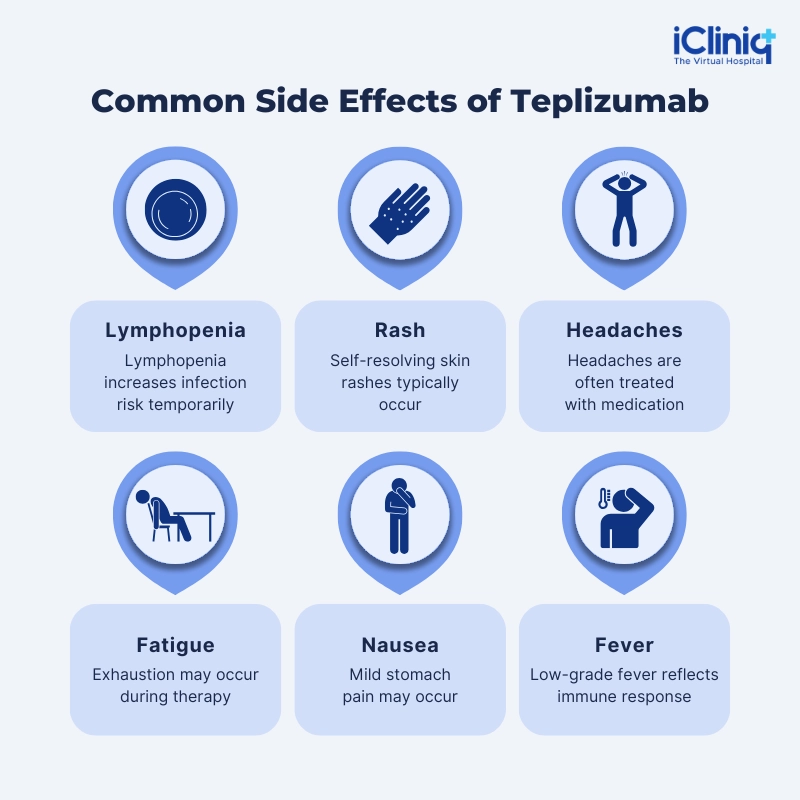
Although Teplizumab is usually well tolerated, adverse effects are possible with any medicine. These usually happen during or after the infusion and range in severity from mild to moderate. Although they are less frequent, serious adverse effects are still possible.
Typical adverse effects include responses linked to infusion:
-
Chills and a fever.
-
Weariness and nausea.
-
Joint or muscle pain rash.
-
During treatment, a mild to moderate skin rash could appear.
-
Lymphopenia, or low white blood cell count.
-
A transient reduction in lymphocytes, which blood tests track.
-
Liver enzyme levels may rise slightly in certain people, although this disappears typically following treatment.
What Are the Common Risks of Taking Teplizumab?
When taken as prescribed, Teplizumab is usually regarded as safe. However, because of its immune-modulating properties, specific hazards are involved. Before beginning therapy, a thorough discussion of these risks should be had with a healthcare professional.
Possible Dangers of Teplizumab:
1. Infection Risk and Immune Suppression
-
Teplizumab can momentarily weaken the immune system, making people more vulnerable to illnesses such as infections of the upper respiratory tract.
-
UTIs, or urinary tract infections.
-
Additional minor bacterial or viral illnesses.
-
Rarely, it could result in more serious infections.
2. Syndrome of Cytokine Release (CRS)
An immunological response brought on by Teplizumab. Symptoms could consist of:
-
A fever.
-
Weariness.
-
Feeling queasy.
- Increased enzymes in the liver.
-
Temporary liver stress may be indicated by small, transitory elevations in liver enzyme levels in certain people.
3. Reactions to Allergies
There have been isolated reports of severe allergic reactions known as anaphylaxis or hypersensitivity.
Symptoms may consist of:
-
Breathing difficulties.
-
Facial or throat swelling.
-
Severe hives or rash.
4. Potential for Latent Infections to Reactivate
Teplizumab for diabetes patients may cause dormant illnesses (such as hepatitis or tuberculosis) to reawaken in patients. Screening for these diseases before treatment is essential.
5. Unknown Long-Term Risks
Since Teplizumab is a relatively new medication, its long-term effects on the immune system and general health are unknown.
Conclusion
Teplizumab, which targets the underlying autoimmune process, represents a significant advancement in preventing and treating type 1 diabetes (T1D). Being the first FDA-approved treatment to postpone the onset of clinical type 1 diabetes, it gives at-risk individuals a critical window of opportunity by extending the amount of time before they need to rely on insulin therapy. Teplizumab has significant advantages in slowing the course of the disease, but it also has drawbacks, such as immune suppression, infection, and responses connected to infusion. Nonetheless, these hazards can be successfully controlled with cautious patient selection, pre-treatment assessments, and continuing observation.

