- 1What Is Ondansetron?
- 2What Is Ondansetron Used For?
- 3How Does Ondansetron Work?
- 4How to Use Ondansetron?
- 5What Is the Dosage of Ondansetron?
- 6What Are Precautions to Be Taken When Using Ondansetron?
- 7Does Ondansetron Affect Serotonin Levels?
- 8What Are the Interactions of Ondansetron?
- 9What Information Should a Person Share With the Healthcare Team Before Starting This Medication?
What Is Ondansetron?
Ondansetron is a serotonin receptor antagonist medication used to prevent and treat nausea and vomiting. The antiemetic is considered effective and safe against nausea and vomiting of various etiologies. The drug is FDA-approved and appears on the World Health Organization’s (WHO) List of Essential Medicines with other antiemetics, like Dexamethasone and Metoclopramide.
What Is Ondansetron Used For?
Typically, Ondansetron is used to prevent chemotherapy-induced and radiation-induced nausea and vomiting. The antiemetic is also recommended for the prevention of postoperative nausea and vomiting. Doctors may prescribe Ondansetron to avoid nausea and vomiting associated with pregnancy. Ondansetron may be used to treat cyclic vomiting syndrome in children acutely. Ondansetron is considered first-line therapy for the treatment of chemotherapy-induced and radiation-induced nausea and vomiting.
How Does Ondansetron Work?
Ondansetron is a selective 5-HT3 serotonin-receptor antagonist that acts centrally and peripherally to prevent and treat nausea and vomiting. The antagonist prevents the binding of serotonin released from the intestinal enterochromaffin cells to 5-HT3 receptors on the adjacent vagal afferent nerves. The onset of action is 30 minutes, with peak plasma concentration between 60 and 120 minutes. The effect of Ondansetron may last for up to 12 hours. Ondansetron is metabolized in the liver with hydroxylation and is exerted primarily in the urine.
How to Use Ondansetron?
Ondansetron is a rapidly disintegrating tablet and an oral solution to take by mouth. The drug may be taken with or without food.
Chemotherapy - The first dose of Ondansetron is usually taken 30 minutes before the start of chemotherapy. Additional doses may be given after the end of treatment.
Radiation Therapy - The antiemetic is given one to two hours before the start of radiation therapy. It may be required to continue Ondansetron for a few more days.
Surgery - Ondansetron is usually given one hour before the surgery to prevent postoperative nausea and vomiting. The rapidly disintegrating tablets should be allowed to dissolve in the mouth and be swallowed. The liquid medicine should be measured with a dosing spoon or syringe. If you miss a dose, you should take it as soon as you remember. Do not take double doses, as it may cause adverse effects. Ondansetron should be stored at room temperature, away from heat, light, and moisture.
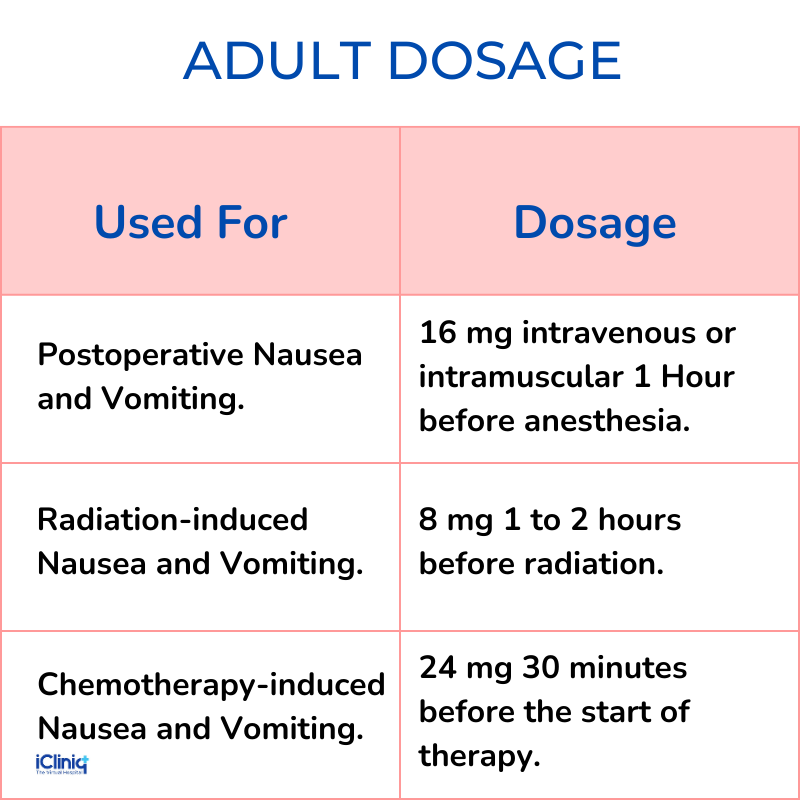
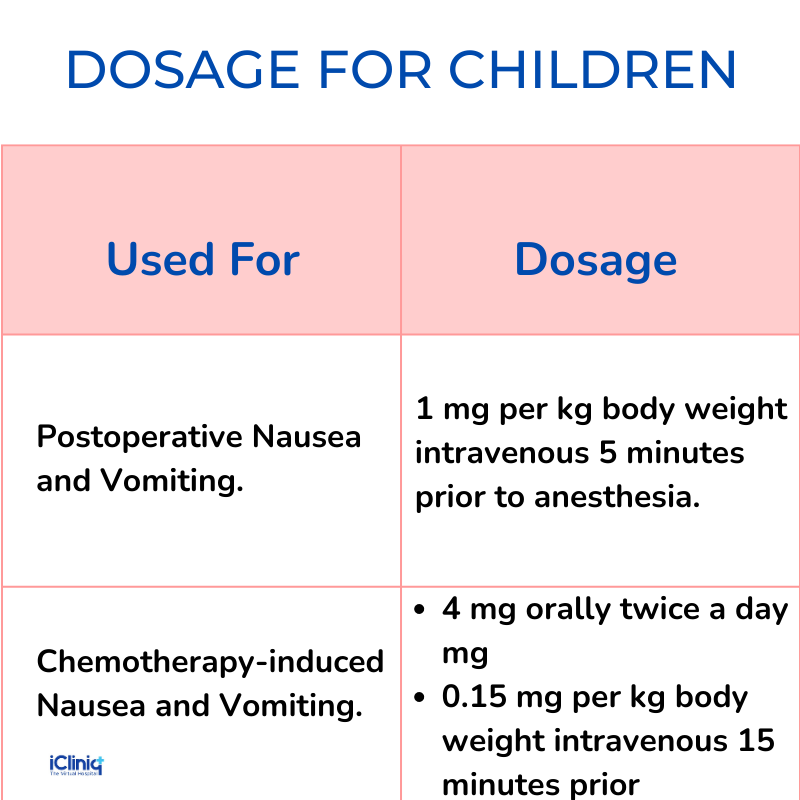
What Is the Dosage of Ondansetron?
ADULT DOSAGE
DOSAGE FOR CHILDREN
What Are Precautions to Be Taken When Using Ondansetron?
Allergy - Ondansetron should be avoided by people who have had allergic reactions to it or any of its components. The drug should not be used if you are allergic to similar medicines such as Dolasetron, Granisetron, or Palonosetron.
Pregnancy and Breastfeeding—Ondansetron should be used with caution during pregnancy, especially during the first trimester, as there is an increased risk of cleft lip and palate. Breastfeeding mothers should avoid taking Ondansetron as it may harm the baby.
Liver Disease—Ondansetron is extensively metabolized by the liver. In patients with impaired hepatic function, plasma clearance of ondansetron may be decreased.
Heart Failure - The use of Ondansetron in patients with heart failure can increase the risk of arrhythmias.
Geriatrics - People over 65 years have decreased metabolism, leading to delayed drug excretion. This can increase the risk of side effects.
Alcohol - Taking alcohol with Ondansetron may worsen the side effects, such as drowsiness or dizziness.
Long QT Syndrome—Ondansetron should be avoided in patients with congenital long QT syndrome. ECG monitoring and potassium and magnesium monitoring are recommendedin patients with electrolyte abnormalities or bradyarrhythmias.
Children - Ondansetron should not be used in children younger than four.
Mind Alertness - Ondansetron may impair thinking and reactions and should be avoided when driving or handling machinery.
Does Ondansetron Affect Serotonin Levels?
The use of Ondansetron can increase serotonin levels in the body. This can cause a life-threatening condition called serotonin syndrome. A high level of serotonin can cause agitation, delirium, and hallucinations. It can also cause sweating, rapid heartbeat, muscle stiffness, tremors, seizures, jerky muscle movements, and coma. Serotonin syndrome can occur using Ondansetron alone or with another drug that affects serotonin levels.
What Are the Side Effects of Ondansetron?
Some of the side effects of Ondansetron may include,
- Headaches.
- Fatigue.
- Constipation.
- Drowsiness.
- Diarrhea.
- Dizziness.
- Fever and chills.
- Anxiety.
- Serious side effects include
- Tingling or numbness.
- Temporary vision loss.
- Yellowing of the skin.
- Fast and pounding heartbeats.
- Hallucinations.
- Trouble breathing.
- Loss of coordination.
- Slow heart rate.
- Palpitations.
Severe allergic reactions may cause symptoms like flushing, tongue and throat swelling, dizziness, trouble breathing, or coughing.
What Are the Interactions of Ondansetron?
This medicine may be taken with food or a glass of milk or water to reduce stomach upset. Do not take this medication with any of the following: apomorphine, certain antifungal medications such as fluconazole, itraconazole, ketoconazole, posaconazole, voriconazole, cisapride, dronedarone, pimozide, and thioridazine.
Carbamazepine; certain medications for depression, anxiety, or psychotic disorders; fentanyl; linezolid; MAOIs (including Carbex, Eldepryl, Marplan, Nardil, Parnate), methylene blue (injected); drugs that may prolong the QT interval (such as dofetilide, ziprasidone), phenytoin, rifampicin, and tramadol.
This is not a list of all possible drug interactions. It's therefore important to provide your healthcare provider with an updated list of all medications, herbs, over-the-counter drugs, and supplements you take. Be sure to mention if you smoke, drink alcohol, or use illegal drugs since these can also affect how your medication works.
What Information Should a Person Share With the Healthcare Team Before Starting This Medication?
Tell the health care professional if they have any of the following conditions: heart disease, a history of irregular heartbeat, liver disease, or low levels of magnesium or potassium in the blood. Be sure to tell them if they have had unusual or allergic reactions to ondansetron, granisetron, other medicines, foods, dyes, or preservatives. If the person thinks they may be pregnant, may become pregnant, or are breastfeeding, let the doctor know.
Conclusion:
Ondansetron may be used alone or with other medications to prevent nausea and vomiting caused by chemotherapy or radiation therapy or may be given to treat nausea and vomiting after surgery. It works by blocking serotonin in the brain, which causes vomiting.