Table of Contents
- 1How Does Lopinavir - Ritonavir Work?
- 2Why Is This Combination Effective?
- 3Why Are Both Drugs Used Together?
- 4What Are the Uses of Lopinavir and Ritonavir Therapy?
- 5For Patients:
- 6What to Inform the Doctor Before Taking Lopinavir and Ritonavir Combination Therapy?
- 7How to Take Lopinavir and Ritonavir Combination Therapy?
- 8What Are Some of the Possible Side Effects of Lopinavir and Ritonavir Combination Therapy?
- 9For Doctors
- 10Effect of Food on the Oral Absorption of Lopinavir and Ritonavir
- 11Overdosage:
- 12Dosage Forms and Strength:
- 13Warnings and Precautions:
- 14Drug Interaction Studies
- 15Use in Specific Populations
How Does Lopinavir - Ritonavir Work?
-
HIV needs an enzyme called protease to grow and multiply.
-
Protease helps cut large viral proteins into smaller, usable parts.
-
Lopinavir and Ritonavir block (inhibit) this protease enzyme.
-
The drugs bind to the active site of the protease and stop it from working.
-
Because of this, viral proteins are not cut properly. Functional viral proteins are not formed. The virus cannot mature correctly.
-
As a result, Immature viral particles are produced. These immature viruses cannot survive or cause infection.
Why Is This Combination Effective?
-
Lopinavir and Ritonavir belong to a group of medications called protease inhibitors.
-
They block the final step of the HIV life cycle (viral maturation).
-
This prevents proper virion assembly.
-
Studies show this combination is highly effective against HIV.
-
It helps reduce viral load and protects the immune system.
Why Are Both Drugs Used Together?
-
Lopinavir alone has low bioavailability due to rapid breakdown by liver enzymes (CYP3A4).
-
Ritonavir: Slows the breakdown of Lopinavir. Increases Lopinavir levels in the blood.
-
Because of this, Lopinavir must be given with Ritonavir. The combination is called a boosted protease inhibitor.
What Are the Uses of Lopinavir and Ritonavir Therapy?
-
Lopinavir and Ritonavir, when used together, lower the amount of HIV in the body.
-
Ritonavir can boost the effect of Lopinavir. It is done by increasing the blood levels.
-
This boosting action allows Lopinavir to work more effectively.
Dosage and Administration:
Lopinavir and Ritonavir tablets can be taken with or without food. The patient must swallow the whole tablet without crushing, chewing, or breaking it. However, Lopinavir and Ritonavir oral solutions must be taken with food.
Adult Patients:
-
Lopinavir and Ritonavir tablets 400/100 mg (administered as two 200/25 mg tablets) are to be taken twice daily.
-
Lopinavir and Ritonavir oral solution 400/100 mg (5 mL) is to be taken twice daily.
-
Lopinavir and Ritonavir tablets 800/200 mg must be given once daily in patients exhibiting less than three Lopinavir-resistance-associated substitutions.
-
Lopinavir oral solution 800/200 mg (10 mL) is given once daily in patients exhibiting less than three Lopinavir-resistance-associated substitutions.
Note: Lopinavir and Ritonavir tablets and oral solution should not be administered as a once-daily regimen, along with other drugs like Efavirenz, Nelfinavir, and Nevirapine.
-
An increase in the dosage is recommended for all patients who use Lopinavir and Ritonavir tablets. The recommended dosage of this combination therapy is 500 mg and 125 mg twice daily in combination with Efavirenz, Nelfinavir, and Nevirapine.
-
The rule mentioned above applies to the Lopinavir and Ritonavir oral solution. The recommended dosage of this combination therapy is 533 mg and 133 mg (6.5 mL) twice daily, administered in combination with Efavirenz, Nelfinavir, and Nevirapine.
Tablets for Pediatric Population:
-
Lopinavir and Ritonavir tablets are usually given once daily in children under 18 years of age.
-
The oral solution should not be used in newborns until they reach 42 weeks and a postnatal age of 14 days.
-
Doctors must be very careful with dosing when prescribing the oral solution.
-
Extra care is needed while writing, dispensing, and giving the medicine to prevent overdose.
-
Special caution is required when giving this medicine to infants aged 14 days to six months.
-
The total amount of propylene glycol and alcohol in the oral solution must be carefully calculated for infants and young children.
-
The oral solution must be administered only using a calibrated dosing syringe.
-
The doctor must assess the child's ability to swallow the tablets before administering them.
-
Lopinavir and Ritonavir oral solution must be administered if the child cannot swallow the tablets.
14 Days to Six Months:
-
The recommended dosage of Lopinavir and Ritonavir oral solution for children 14 to six months old is 16/4 mg/kg or 300/75 mg/m2 twice daily.
-
However, this combination therapy must not be administered to children below six months along with other drugs like Efavirenz, Nevirapine, or Nelfinavir.
For Children Six Months to 18 Years of Age:
Oral Solution Dosage:
-
The recommended dosage of the oral solution of Lopinavir and Ritonavir is 230/57.5 mg per m2 twice daily.
-
However, it must not exceed the recommended adult dosage of 400/100 mg twice daily. Based on the weight, the recommended oral solution dosage for patients weighing below 15 kg is 12/3 mg per kg twice daily.
-
In contrast, the dosage for patients above 15 kg to 40 kg is 10/2.5 mg per kg twice daily.
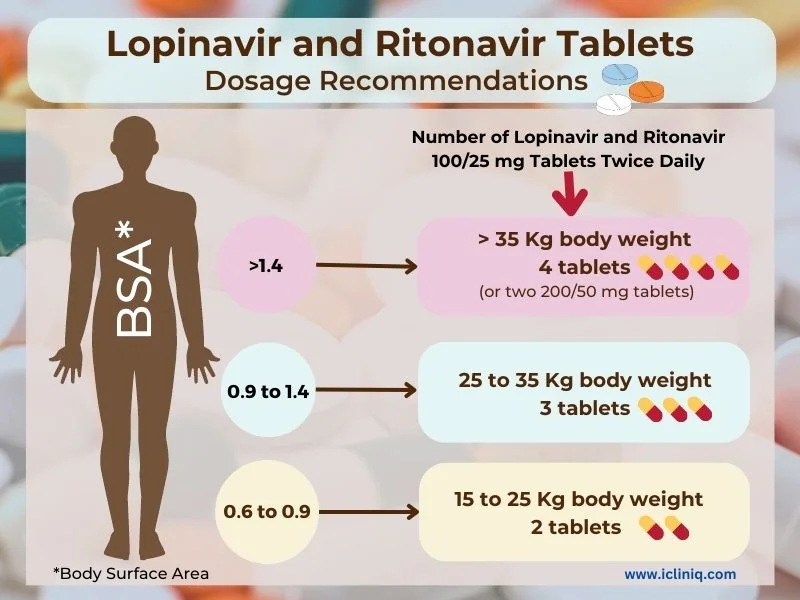
The table below describes the dosage recommendations for children:
The table below describes the dosage recommendations for children six months to 18 years of age based on their body surface area or body weight:
For Patients:
What to Inform the Doctor Before Taking Lopinavir and Ritonavir Combination Therapy?
Before taking the combination therapy, the patient must inform the doctor if they have the following:
-
Heart problems, including congenital long QT syndrome.
-
Pancreatic diseases.
-
Liver diseases, including hepatitis B or C.
-
Hemophilia. The patients taking Lopinavir and Ritonavir combination therapy might have increased bleeding.
-
Low potassium levels.
-
Conceived or planning to become pregnant in the long run. However, no information is available on the effects of Lopinavir and Ritonavir on the unborn baby.
-
Taking or planning to take prescription, over-the-counter drugs, vitamins, and herbal supplements.
There is a risk of drug interaction, so the patient must be careful and inform the doctor if they take the following:
-
Medications to manage HIV.
-
Estrogen-based birth control pills. Lopinavir and Ritonavir reduce the efficacy of estrogen-based contraceptive pills, so the patient must use an alternative form of birth control.
-
Medications that prevent organ transplant rejection.
-
Anticancer drugs.
-
Amiodarone.
-
Sildenafil.
-
Atorvastatin.
-
Avanafil.
-
Tadalafil.
-
Bepridil.
-
Budesonide.
-
Carbamazepine.
-
Clarithromycin.
-
Fentanyl.
-
Disulfiram.
-
Dexamethasone.
-
Itraconazole.
-
Fluticasone.
-
Lidocaine.
-
Metronidazole.
-
Quinidine.
-
Salmeterol.
-
Trazodone.
-
Valproate.
-
Warfarin.
The patient must keep a list of all their medications and submit it to the doctor to avoid complications.
For Patients Planning to Become Pregnant:
The patients planning to conceive and take antiretroviral medications must participate in the pregnancy registry. This registry aims to gather information about the baby's and the patient's health.
For Lactating Females:
It is unknown whether the drug can pass from the mother's milk to the baby. However, HIV-1-infected mothers must avoid breastfeeding to prevent the transmission of infection.
How to Take Lopinavir and Ritonavir Combination Therapy?
-
The patient must take combination therapy daily as prescribed.
-
You can set up a dosing schedule and follow it regularly.
-
Swallow the Lopinavir and Ritonavir tablets whole. Do not crush, break, or chew them.
If the patient is taking Didanosine, Lopinavir, and Ritonavir simultaneously:
-
Didanosine can be taken with the Lopinavir and Ritonavir tablets without food.
-
Didanosine must be taken one or two hours later if the patient takes Lopinavir and Ritonavir oral solution.
-
Do not miss the drug dose, making the virus difficult to treat. The patient can take the missed dose immediately if he forgets. Follow the schedule properly to avoid any confusion regarding the drug dose.
-
The patient must visit the emergency room if he takes an extra drug dose.
-
If the child has been recommended to take Lopinavir and Ritonavir, inform the doctor about his weight changes.
-
Avoid taking Metronidazole or Disulfiram with Lopinavir and Ritonavir.
What Are Some of the Possible Side Effects of Lopinavir and Ritonavir Combination Therapy?
-
Pancreatitis: This means swelling of the pancreas. People taking Lopinavir and Ritonavir may have a higher risk, especially if they have had pancreatitis before. Tell the doctor immediately if there is severe stomach pain, nausea, or vomiting, as these can be warning signs.
-
Liver (Hepatic) Problems: Liver issues can occur with this medicine. Before starting treatment, the doctor may check for hepatitis B or C and do blood and liver function tests to make sure the liver is healthy.
The patient must inform the doctor if they experience the following symptoms:
-
Loss of appetite.
-
Yellowish discoloration of the skin and the whites of the eyes.
-
Dark urine.
-
Pale-colored stools.
-
Abdominal pain.
-
Itchy skin.
Some of the other common side effects of Lopinavir and Ritonavir combination therapy are listed below:
-
Skin rashes.
-
Increased bleeding time in hemophiliacs.
-
Diarrhea.
-
Nausea.
-
Elevated fat levels in the blood.
-
Vomiting.
Storage of Lopinavir and Ritonavir Tablets:
-
The tablets must be stored at room temperature between 59 and 86 degrees Fahrenheit.
-
Do not keep the tablets outside the container for more than two weeks, especially in a humid environment. Make sure the lid of the container is tightly closed.
Storage of Lopinavir and Ritonavir Oral Solution:
-
The oral solution must always be stored in a refrigerator between 36 and 46 degrees Fahrenheit. Make sure the oral solution is used only until the expiry date mentioned on the label.
-
The oral solution must be used within two months if stored at room temperature.
-
The drug solution must be kept away from high heat.
-
Discard outdated medications immediately.
For Doctors
Description:
Lopinavir and Ritonavir are used in combination to treat HIV infection. The main action of Lopinavir is to inhibit HIV-1 protease. Ritonavir does not allow the CYP3A-induced metabolism of Lopinavir, resulting in increased plasma levels of Lopinavir.
Indications and Usage:
Lopinavir and Ritonavir combination therapy is used with other drugs to treat HIV-1 infection in adults and children.
Contraindications:
-
Lopinavir and Ritonavir should not be used in people who are allergic to any of their ingredients.
-
Stop the medicine immediately and seek help if symptoms occur.
-
Lopinavir and Ritonavir combination must not be taken with medicines that depend on the CYP3A pathway for clearance.
-
Lopinavir and Ritonavir should also not be used with strong CYP3A inducers. They reduce the drug's effect and increase the risk of drug resistance and interactions.
Clinical Pharmacology:
Mechanism of Action:
Lopinavir is a potent inhibitor of HIV-1 protease that blocks the cleavage of the Gag-Pol polyprotein, resulting in the production of non-infectious and immature viral particles.
Pharmacokinetics:
-
The drug behavior in the body has been studied in healthy people and people with HIV.
-
No major differences were found between these two groups.
-
Lopinavir is fully broken down by the liver enzyme CYP3A.
-
Ritonavir blocks this enzyme, which increases Lopinavir levels in the blood.
-
Taking Lopinavir/Ritonavir 400 mg/100 mg twice daily results in Lopinavir blood levels 15 to 20 times higher than Ritonavir in HIV patients.
Absorption
-
After repeated doses, the highest blood level of the drug was about 9.8 µg/mL.
-
The steady (pre-dose) blood level before the morning dose was about 7.1 µg/mL.
Effect of Food on the Oral Absorption of Lopinavir and Ritonavir
Lopinavir and Ritonavir Tablets:
The tablets can be taken with or without food because the patients did not demonstrate any clinically significant changes related to the maximum concentration of the drug.
Lopinavir and Ritonavir Oral Solution:
-
The maximum concentration increased by 54 % for patients who took the oral solution under fasting conditions.
-
When the oral solution was taken with a high-fat meal, the maximum concentration of Lopinavir increased by 56 %.
-
Hence, the oral solution must be taken with food to enhance bioavailability and minimize the risk of pharmacokinetic variations.
Distribution:
-
Lopinavir is 98 to 99 % bound to the plasma proteins at a steady state. It binds to albumin and alpha-1-acid glycoprotein (AAG).
-
However, the drug has a higher affinity for AAG. Lopinavir binding concentration remains constant when administered twice daily in healthy volunteers and HIV-1-positive patients.
Metabolism:
In vitro studies with human liver and microsomes indicate that Lopinavir mainly undergoes oxidative metabolism. It is metabolized by the hepatic cytochrome P450 and exclusively by the CYP3A isozymes.
Elimination:
2.5 % of the administered dose of Lopinavir can be observed in the urine and feces after eight days of administering the drug.
However, after the drug has been administered multiple times, less than 3 % of it is excreted unchanged in the urine. Hence, the observed oral clearance of Lopinavir is 5.98 +/- 5.75 L/hour.
Effects on the Electrocardiogram:
A randomized and placebo-controlled trial was done to evaluate the effect of Lopinavir and Ritonavir on the QTcF interval. The mean time differences in the QTcF intervals between placebo and Lopinavir were 5.3 and 15.2 milliseconds, respectively, compared to Lopinavir and Ritonavir 400/100 mg and 800/200 mg.
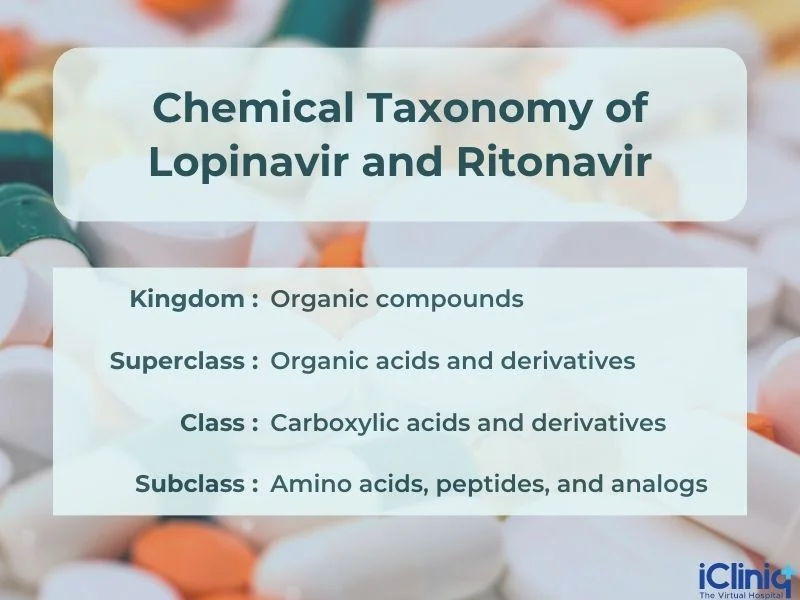
Chemical Taxonomy:
Overdosage:
Incidents of overdosage have been reported with Lopinavir and Ritonavir combination therapy. For example, a 2.1 kg infant administered Lopinavir and Ritonavir 6.5 mL suffered from a fatal cardiogenic shock.
In addition, the following events have been observed due to the drug overdose:
-
Complete AV (atrioventricular) block.
-
Lactic acidosis.
-
Acute kidney failure.
Only supportive measures, including monitoring the patient's vitals and observing the patient's clinical status, are available to manage Lopinavir and Ritonavir overdose. Unfortunately, there is no specific antidote available to treat a drug overdose.
Non-clinical Toxicology:
Carcinogenesis, Mutagenesis, and Impairment of Fertility:
Carcinogenesis:
The carcinogenic potential of Lopinavir was evaluated during the animal studies by oral gavage administration for 104 weeks.
The results demonstrated an increase in the benign hepatocellular adenomas and carcinomas at doses 1.6 to 2.2 times higher than the human exposure.
However, no information is available regarding the carcinogenic potential of Ritonavir from animal studies.
Mutagenesis:
Neither Lopinavir nor Ritonavir demonstrated clastogenic or mutagenic effects during the in vitro and in vivo assays, including the Ames bacterial reverse mutation test, mouse micronucleus test, and chromosomal aberration tests in human lymphocytes.
Impairment of Fertility:
No significant effects on fertility were noted when Lopinavir and Ritonavir were used in a 2:1 ratio during animal studies.
Dosage Forms and Strength:
-
Lopinavir 200 mg/ Ritonavir 50 mg Tablets - They are yellow, ovoid, and film-coated tablets embossed with "a" logo on one side and code KA on one side.
-
Lopinavir 100 mg/ Ritonavir 25 mg Tablets - They are pale yellow colored ovoid tablets embossed with "a" logo and code KC on one side.
-
Lopinavir and Ritonavir Oral Solution - The solution is light yellow or orange colored and contains 400 mg Lopinavir/ 100 mg Ritonavir per 5 mL.
Warnings and Precautions:
Risk in Preterm Infants -
-
The oral solution contains alcohol and propylene glycol.
-
Preterm babies cannot break down these substances properly.
-
This can cause toxic buildup and serious side effects.
-
The oral solution must not be used in preterm newborns.
-
Doctors should carefully weigh risks and benefits in emergencies.
Pancreatitis -
-
Inflammation of the pancreas has been reported with this therapy.
-
Some patients also showed high triglyceride levels.
-
Severe cases, including deaths, have occurred.
-
Treatment should be stopped and evaluated if pancreatitis is suspected.
Liver Toxicity (Hepatotoxicity)
-
Patients with hepatitis B or C are at higher risk.
-
Liver problems may appear soon after starting treatment.
-
Blood and liver function tests must be done before therapy.
Heart Rhythm Problem (QT Prolongation)
-
This medicine can affect the heart rhythm.
-
Patients with long QT syndrome should not use it.
High Blood Sugar (Hyperglycemia)
-
May worsen existing diabetes or cause new diabetes.
-
Some patients may need dose changes or diabetes medicines.
Immune Reconstitution Syndrome
-
As immunity improves, hidden infections may flare up.
-
These patients may need additional evaluation and treatment.
High Lipid Levels
-
Can raise cholesterol and triglycerides.
-
Lipid tests should be done before and during treatment.
Drug Interaction Studies
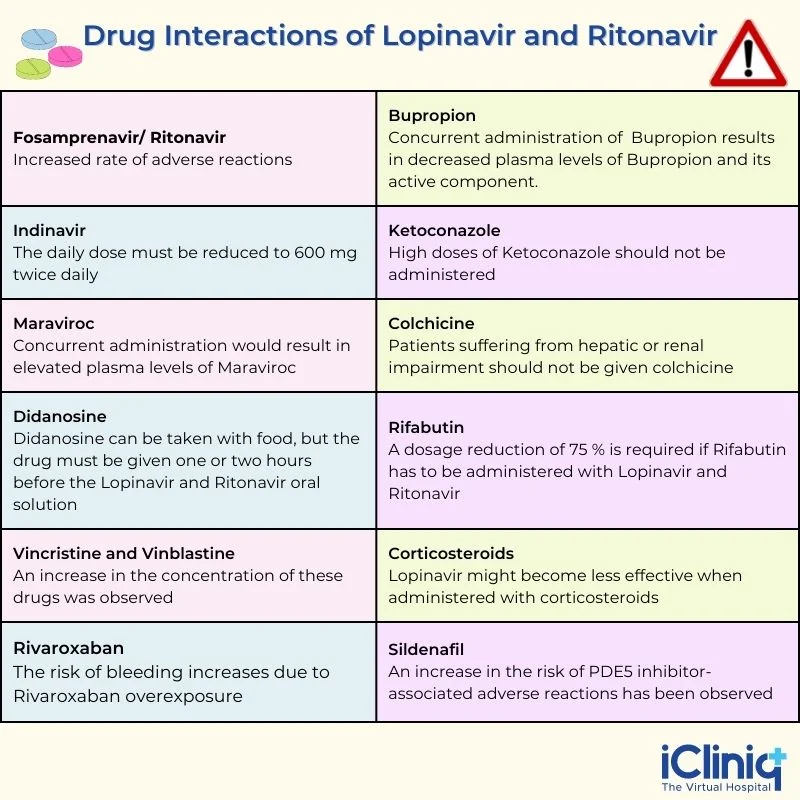
The table below describes the established and other potentially significant drug interactions of Lopinavir and Ritonavir:
Drug Interactions
Use in Specific Populations
Pregnancy -
-
This drug belongs to pregnancy category C.
-
There are no well-controlled studies in pregnant women.
-
It should be used only if the benefits are greater than the risks.
Lactation (Breastfeeding)
-
The Centers for Disease Control and Prevention (CDC) advises HIV-infected mothers not to breastfeed to prevent HIV transmission.
-
It is not known if Lopinavir and Ritonavir pass into breast milk.
Pediatric Use
-
Safety and effectiveness have not been established in babies under 14 days old.
-
Studies show the drug is safe and effective in children aged 6 months to 18 years.
Geriatric Use -
-
Limited data are available for patients over 65 years of age.
-
The drug should be used with caution in elderly patients.
-
Monitoring for liver problems and side effects is important.
Hepatic (Liver) Impairment
-
These medicines are mainly broken down by the liver.
-
Patients with liver disease may have higher drug levels in the blood.
-
Careful use and monitoring are required in such patients.
Clinical Trial Studies:
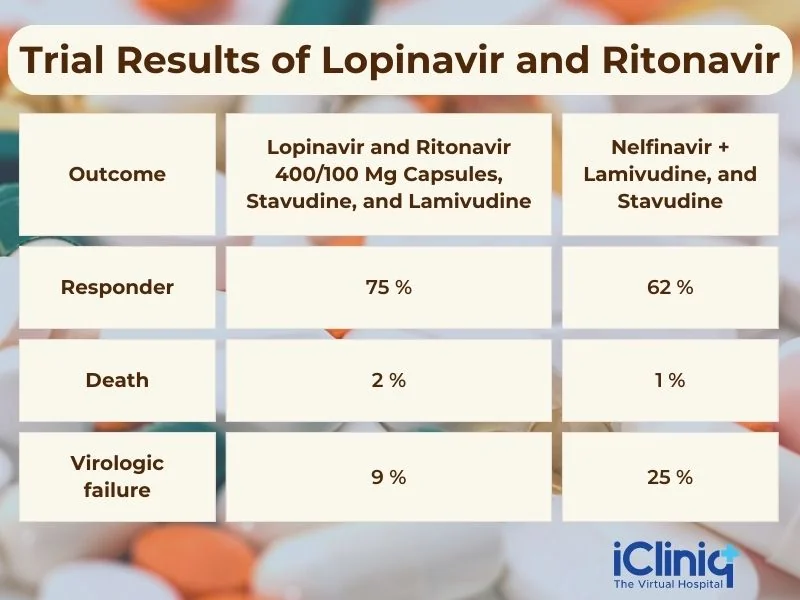
A randomized, double-blind, and multicenter trial was done to compare the treatment with Lopinavir and Ritonavir 400/100 mg capsules, Stavudine, and Lamivudine versus Nelfinavir thrice daily + Lamivudine and Stavudine. This trial was done on 653 patients with a mean age of 38.
Trial Results: