Table of Contents
- 1Purpose of Weight Loss Drugs in Combating Obesity
- 2Exploring the Benefits of Weight-Loss Pills
- 3The Limitations of Weight-Loss Pills
- 43 Key Mechanisms of Weight Loss Drugs
- 57 Weight Loss Pills and Their Secrets
- 6Importance of Lifestyle Changes Alongside Medication
- 7Medications vs. Healthy Habits: Are We Neglecting Natural Wellness?
Introduction
Obesity is the largest and fastest-growing public health concern. It primarily stems from a lack of balance between calorie intake and usage. It is a diverse condition with different causes that vary among individuals. Around 70 percent of American adults are impacted by obesity. If left unmanaged, obesity can lead to critical health issues such as hypertension, diabetes, myocardial infarction, osteoarthritis, etc. Weight loss drugs or anti-obesity medicines are prescribed to individuals who are overweight or obese due to various conditions. However, it is always recommended to consult an expert healthcare professional before taking them.
Purpose of Weight Loss Drugs in Combating Obesity
Body Mass Index (BMI) is the standard measure for obesity detection; it is calculated based on the individual’s height and weight. Weight loss pills are recommended for:
-
People who have failed to achieve significant weight loss after approximately six months of lifestyle modifications.
-
Individuals with a BMI of over 30 kg/sq.m (kilograms per square meter).
Medical management for obesity has recently attracted attention globally from patients' and healthcare professionals’ perspectives; however, the amount of extra weight loss can be attributed to approximately less than five kilograms (11 pounds) in one year. Nevertheless, this weight loss has also contributed to improvements in glycemic control, hypertension, insulin sensitivity, and dyslipidemia in obese patients. The main aim of weight management is to prevent cardiovascular risks and reduce obesity-related morbidity and mortality, and these weight-loss drugs are shown to possess certain additional benefits.
The United States Food and Drug Administration (US FDA) has approved several weight loss pills. These drugs, when combined with lifestyle and behavior modifications, can help lose excess weight and maintain appropriate weight.
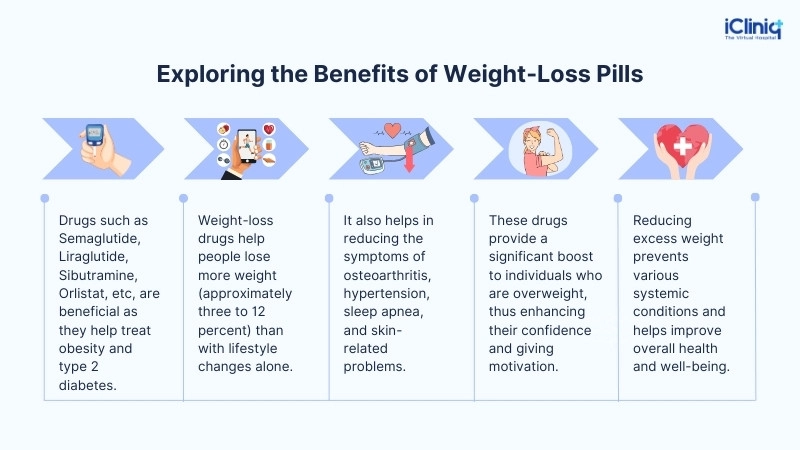
Exploring the Benefits of Weight-Loss Pills
-
Drugs such as Semaglutide, Liraglutide, Sibutramine, Orlistat, etc, are beneficial as they help treat obesity and type 2 diabetes.
-
Weight-loss drugs help people lose more weight (approximately three to 12 percent) than with lifestyle changes alone.
-
It also helps in reducing the symptoms of osteoarthritis, hypertension, sleep apnea, and skin-related problems.
-
These drugs provide a significant boost to individuals who are overweight, thus enhancing their confidence and giving motivation.
-
Reducing excess weight prevents various systemic conditions and helps improve overall health and well-being.
The Limitations of Weight-Loss Pills
-
Weight loss drugs can be rapid and beneficial only for a short time in many people, and hence, maintaining an ideal weight can be challenging in the long term. Most of the people gain back weight after discontinuing these drugs.
-
Most weight loss drugs can be effective only when used with regular physical activity and dietary changes.
-
Weight-loss drugs may not be suitable for all and can be associated with side effects such as constipation (difficulty passing stools), nausea, vomiting, headache, fatigue, diarrhea, mood changes, palpitations (irregular heartbeat), etc.
-
These drugs can be expensive as most of them are not included under insurance and hence may not be affordable or can cause financial burdens to many people.
-
Weight-loss drugs can be addictive or habit-forming as they affect the mood and suppress the appetite.
-
Weight loss drugs are not recommended for pregnant and lactating women.
-
The long-term effects of these weight-loss drugs are not entirely understood.
3 Key Mechanisms of Weight Loss Drugs
Depending on the mechanism of action, anti-obesity drugs are classified into three groups: drugs that interfere with fat absorption, lower food intake, increase energy expenditure, and increase thermogenesis (heat production in the body).
1. Drugs That Interfere With Fat Absorption:
Orlistat is a medication approved for the long-term management of obesity. It is a reversible gastrointestinal lipase inhibitor that inactivates the hydrolyzation of dietary fat, thus preventing its absorption by about 30 percent and decreasing the patient’s calorie intake. A randomized controlled trial was conducted in obese adolescents aged 12 to 16 years for 54 weeks to assess the effect of Orlistat on body composition and weight. At the end of the study, it was observed that the BMI (body mass index) was reduced from the baseline by 0.55 with Orlistat, but in placebo, it was increased by 0.31. Therefore, Orlistat combined with exercise, diet, and behavioral modification demonstrated statistically significant improvement in weight management. In the adolescent population, the use of Orlistat for up to one year is considered safe.
A recent randomized, placebo-controlled, double-blinded study in adolescents revealed that Orlistat did not significantly affect weight loss at six months. Hence, more research is necessary to determine the safety and efficacy of Orlistat in adolescents. Some common side effects of Orlistat include bloating sensations, abdominal pain, flatulence, dyspepsia, and diarrhea. It may be due to unabsorbed fat present in the intestine. Vitamin supplementation is recommended in long-term treatment with Orlistat patients because reduced fat absorption can lead to a deficiency of fat-soluble vitamins such as vitamins A, D, E, and K.
2. Drugs That Lower Food Intake:
These drugs reduce food intake by acting on neurotransmitters. They include serotonergic, noradrenergic, serotonergic and adrenergic drugs, cannabinoid receptors, and specific peptides that lower appetite or induce satiety.
Noradrenergic Drugs:
-
Amphetamine, Phentermine, and Diethylpropion release norepinephrine and block its uptake, affecting food intake.
-
Phentermine: With lifestyle changes, it can lead to a mean weight loss of 3.6 kg (7.9 lbs) in six months. It has more significant weight loss effects and lowers heart rate and blood pressure than Diethylpropion.
-
Diethylpropion: Results in a 3 kg (6.6 lbs) weight loss in six months.
-
Both drugs have side effects like irritability, insomnia, headache, nervousness, and palpitations and are restricted to short-term use (less than 12 weeks).
Serotonergic Drugs:
-
Fenfluramine and Dexfenfluramine: Release serotonin, creating satiety, especially for fats, but were withdrawn by the US FDA due to heart valve damage and primary pulmonary hypertension.
Serotonergic and Adrenergic Drug:
-
Sibutramine: Inhibits serotonin and norepinephrine reuptake, suppressing appetite and increasing thermogenesis. Effective for long-term obesity management in patients with a BMI over 25 kg/m², leading to an average weight loss of 4.45 kg (9.8 lbs) in 12 months. However, weight regain occurs after stopping the treatment. It also lowers triglycerides, total cholesterol, HDL and LDL cholesterol, and insulin levels.
3. Drugs That Increase Energy Expenditure and Thermogenesis:
This category includes drugs such as Ephedrine and Caffeine. A long-term, placebo-controlled study showed that combining Caffeine and Ephedrine greatly affected weight loss compared to using them alone. However, the US FDA has not approved this combination for weight-reducing treatment.
7 Weight Loss Pills and Their Secrets
Weight loss pills are available as oral tablets and injections that can be self-administered. They work in different ways to treat obesity and overweight, depending on the group to which they belong. Current pharmacotherapy for obesity mainly targets neurohormonal dysregulations that are responsible for weight gain and also prevent sustained weight loss and its complications. Different weight loss pills include:
-
Tirzepatide: It is a recent weight loss drug and is administered subcutaneously once a week. Studies (SURMONT-1) have demonstrated that participants lost up to 21 percent of their body weight using the 15 mg (milligram) dose once a week.
-
Orlistat: It is approved for adult and adolescent obesity and works by blocking certain enzymes such as gastrointestinal lipases, reducing the amount of fat absorption from the food consumed, thus promoting weight loss. In the United States, a lower dose of 60 mg three times daily is approved for over-the-counter use. However, clinical studies have shown that participants lost significant weight during the first year of treatment with Orlistat but regained half as much weight during the second year. The drug has been demonstrated to lower serum glucose levels and improve insulin sensitivity. It also reduces low-density lipoprotein, total cholesterol, and hemoglobin A1c (HbA1c - glycosylated hemoglobin).
-
Phentermine-Topiramate: Phentermine is a central nervous system (CNS) stimulant and Topiramate is an anticonvulsant drug. This combination therapy was approved by the US FDA in 2012 for long-term treatment of obesity in adults with a BMI of 30 kg/sq m or a BMI of more than 27 kg/sq m with at least one weight-related disorder. It increases the release of norepinephrine and decreases its uptake in hypothalamic nuclei, thus resulting in decreased food intake. It functions as an adrenergic agonist, activating the sympathetic nervous system to enhance energy expenditure. The drug lowers the appetite, reduces hunger, and creates a feeling of fullness.
-
Semaglutide: This drug is used for individuals with obesity and rare inherited disorders. It mimics a hormone known as glucagon-like peptide (GLP-1) and targets the area of the brain that regulates food intake and appetite. The FDA approves it under different names and dosages, and it also helps treat type 2 diabetes. It is also known to reduce the risk of cardiovascular events in obese individuals. A once-a-week dose of Semaglutide has demonstrated an average of 15 percent weight loss in adults and about 16 percent reduction in BMI in children above 12 years.
-
Setmelanotide: It acts by activating melanocortin receptors, reduces the appetite and calorie intake, and causes a feeling of fullness. It also increases metabolism, thus helping with weight loss. However, it does not treat genetic defects.
-
Liraglutide: It mimics GLP-1 and targets the brain sites that regulate appetite and food intake. It has also been approved by the US FDA and helps treat type 2 diabetes.
-
Naltrexone-Bupropion: Naltrexone is used in the treatment of opioid and alcohol addiction, and Bupropion helps to treat depression. This combination therapy is very effective as it reduces hunger, boosts metabolism, and develops a sensation of fullness sooner during food intake.
Importance of Lifestyle Changes Alongside Medication
Lifestyle modifications provide cognitive and behavioral strategies that help individuals to regulate their energy intake. This also strengthens the highly integrated gut-brain neuroendocrine system, facilitating energy homeostasis and preventing body mass loss.
Lifestyle medicine focuses on healthy eating, increased physical activity, stress management, avoiding substance abuse, adequate sleep, and good social behavior, which, in turn, can prevent diabetes and heart diseases. Before undertaking substantial modifications, it is advisable to seek advice from a healthcare provider or a registered dietitian, as it may lead to severe fatigue, headache, or nutritional deficiencies. Traditional lifestyle modification begins by monitoring food intake and physical activity, which are necessary for maintaining an energy balance.
1. Dietary Modifications:
Many individuals are surprised by the high-calorie content of morning juices, lunch meals, beverages, and evening snacks or fast foods, which is just compensated by a 30-minute daily walk. Therefore, healthcare professionals emphasize reducing portion sizes, fat, and sugar intake and avoiding junk foods, which may reduce intake by approximately 500 to 750 kcal/day (kilocalories per day).
A personalized balanced diet is also recommended based on the individual's BMI. Roughly 15 percent of energy must be obtained from proteins, 20 to 35 percent from fats, and the remaining from carbohydrates is preferred, or it can be slightly modified (25 percent from proteins) to meet the individual diet preferences.
Strategies such as shopping only for the specific food products required, checking nutritional value before consumption, eating home-cooked meals, and storing foods out of sight can be beneficial in reducing the daily calorie intake. Starting physical activities such as aerobics or walking initially for around 150 minutes per week and gradually increasing up to 250 minutes; monitoring the weight at least weekly; and adjusting the eating patterns and physical activity based on the weight change is suggested for weight-loss maintenance.
2. Exercise:
Staying physically active or incorporating a daily exercise routine can improve brain and heart health and help people lose weight. As per the Physical Activity Guidelines for Americans, approximately 150 minutes of moderate physical activities like aerobics, brisk walking, dancing, etc, in a week could aid in combating obesity and maintaining body weight within the healthy range. Studies have also shown that exercise can increase the absorption of certain medications due to improved blood circulation to the tissues.
Many doctors initially recommend diet changes, regular exercise, and weight loss to lower blood pressure and cholesterol and prevent obesity. When these measures are ineffective, medicines are prescribed. However, continuing a healthy diet and engaging in physical activity with medications is necessary to achieve better results.
Medications vs. Healthy Habits: Are We Neglecting Natural Wellness?
Preference for medications and lifestyle modifications are considered significant factors in managing chronic diseases. Researchers have gathered data regarding smoking, alcohol use, physical activity, and body weight among 40,000 adults with no history of cardiovascular diseases and compared people who were prescribed medicines for high cholesterol and high blood pressure and those who were under medication. This study demonstrated that people taking medicines tend to exercise less and gain more weight. Around 82 percent were more likely to be obese compared to people who were not using any medications. This can be because many assume that after starting medications, they no longer need to exercise or eat healthy food. However, medications also have certain limitations and side effects, whereas healthy lifestyle habits can improve overall well-being and help the medicines to be more effective.
Conclusion
A blend of lifestyle adjustments and therapeutic interventions can address obesity. Lifestyle changes are a more natural method and are considered an integral component in weight loss management. The new generation treatment has the potential to manage obesity along with lifestyle modifications. These drugs help not only in weight reduction but also improve the cholesterol profile, insulin resistance, and blood pressure. However, these changes must be personalized depending on the BMI and health condition of the individuals to strengthen their implementation and long-term compliance.