Introduction:
A hairy tongue is a benign (non-cancerous) and non-infectious condition characterized by the enlarged and coated surface of the tongue. The coating mostly looks white, brown, or black. Despite its name, hairy tongue does not involve actual hair growth on the tongue. However, there are tiny projections on the tongue surface. It is found to affect 13 percent of the population, mostly older adults. Men are more affected than women. It is also referred to as a black, hairy tongue and lingua villosa nigra. The condition is not harmless. It resolved on its own with proper treatment interventions and improved oral hygiene.
What Is a Hairy Tongue?
Typically, the front or upper surface of the tongue is covered by tiny projections (filiform papillae), which give a rough texture to the tongue and aid in chewing food. The papillae consist of a protein called keratin. When there is an excess build-up of keratin, the surface (dorsum) of the tongue looks thickened and enlarged. Thus, giving a hairy appearance to the tongue.
What Causes a Hairy Tongue or Black Tongue?
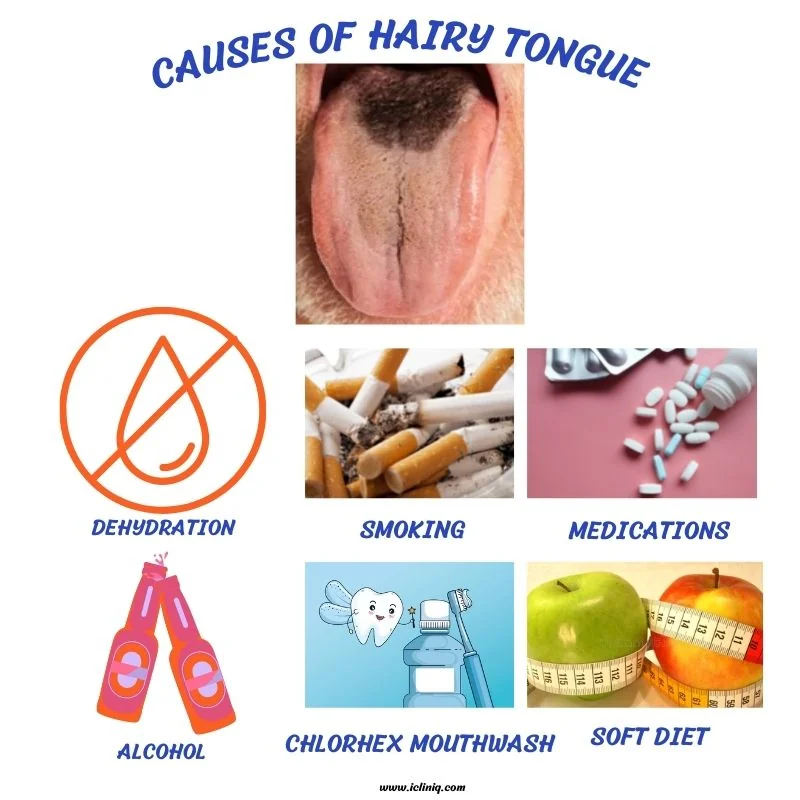
The components responsible for causing a hairy tongue are listed below:
-
Dehydration is a condition characterized by a lack of enough water content in the body. Due to this, the saliva becomes thick, sticky, and less watery, leading to dry mouth or xerostomia. The keratin on the papillae also sticks to the tongue rather than shedding.
-
Consuming a soft diet does not allow the shedding of dead cells, as they do not rub over the surface of the tongue. People who are old, ill, or have changed appetites usually consume a soft diet.
-
Tobacco use.
-
Medications like antibiotics, antacids, or cancer drugs taken for a long time can initiate papillae growth on the tongue.
-
Poor oral hygiene results in the accumulation of food substances and bacteria over the tongue's surface, leading to the thickening of the papillae.
-
Alcohol, when taken excessively.
-
Radiation therapy on the head and neck can cause dry mouth and thus predispose to a hairy tongue.
-
On long-term use, Mouthwash containing Chlorhexidine or Peroxidase can predispose to the hairy tongue.
What Are the Symptoms of a Hairy Tongue?
The hairy tongue does not cause any pain. Its appearance looks gross and discolored due to the accumulation of food, bacteria, and other colored substances.
The features possessed by the hairy tongue are given below:
-
Discoloration of the tongue's surface to black, brown, yellow, or white.
-
Burning sensation on the tongue.
-
Abnormal or metallic taste in the mouth.
-
Tickling sensation on the roof of the mouth.
-
Gagging sense is due to the overgrowth of the papillae.
-
Presence of black spots on the tongue.
-
Bad breath or halitosis.
-
Nausea.
How to Diagnose a Hairy Tongue?
The hairy tongue is mainly diagnosed by its appearance. However, the following tests are performed for a definitive diagnosis:
-
Swabs or scrapings are collected from the tongue's surface and stained with Gram or periodic acid-Schiff stains. It helps in detecting fungal infections of the tongue.
-
Latex agglutination-based card test is a laboratory procedure to detect candida organisms, if present.
-
Widefield optical fluorescence is a newer modality used in visualizing the enlarged filiform papillae and build-up of keratin. It is painless, accurate, non-invasive, and requires no staining.
-
A tongue biopsy is rarely done to diagnose hairy tongue. This method involves removing a small piece of tissue from the tongue. The tissue is stained to detect the presence of Epstein-Barr virus, which causes a different condition of the tongue called hairy leukoplakia.
What Is the Differential Diagnosis of Hairy Tongue?
The diseases that are often misinterpreted as having hairy tongues are as follows:
-
A white-folded and furry tongue appearance characterizes oral hairy leukoplakia. It occurs in people with weakened immunity, especially those infected with Epstein-Barr virus or human immunodeficiency virus. It is diagnosed with the help of a biopsy.
-
Oral candidiasis is a fungal tongue infection caused by an overgrowth of candida albicans. Creamy white lesions are found on the tongue, inner cheeks, and other mouthparts. It causes a burning sensation, and the lesions are scrapable. People with a weak immune system and those on long-term use of steroids are commonly affected.
How to Get Rid of a Hairy Tongue?
The treatment measures to correct a hairy tongue are as follows:
-
Mechanical debridement of the enlarged papillae using a tongue scraper or toothbrush.
-
Avoid long-term dehydrating mouthwash containing hydrogen and sodium peroxidase.
-
Maintaining good oral hygiene prevents the accumulation of food debris and bacteria on the tongue.
-
Treating the conditions restricting food consumption, like temporomandibular jaw disorders, etc.
-
Quit smoking and alcohol drinking, as it triggers hairy tongue and other systemic disorders.
-
Discontinuing the use of drugs that are found to cause hairy tongue.
-
Avoid excessive intake of tea and other beverages.
-
Irritation of the tongue due to candidal infection is treated with topical antifungal agents like candid mouth paint (one percent Clotrimazole), or tablets are suggested for two weeks.
-
Topical or oral Retinoids and Vitamin B complex are effective in treating hairy tongue.
-
Probiotic supplements are also suggested.
-
Surgical Management: Electrodesiccation is a procedure of using electrical needles to generate heat and destroy the papillae that are resistant to other treatments. Carbon Dioxide Lasers remove the enlarged filiform papillae, and faster recovery occurs with laser treatment.
How to Prevent a Hairy Tongue?
Certain lifestyle modifications that an individual should follow to prevent a hairy tongue are as follows:
-
Keep the body hydrated by drinking plenty of water and eating fresh fruits and vegetables.
-
Practice brushing twice a day or after every meal. Proper teeth cleaning using an appropriate toothbrush and fluoridated toothpaste prevents the accumulation of food debris.
-
Clean the tongue while brushing with a tongue scraper.
-
It is recommended that you have a regular dental checkup every six months to get advice on oral hygiene and early interventions for oral disorders.
Conclusion:
In conclusion, the hairy tongue is a non-cancerous condition that provides an abnormal tongue appearance. A hairy tongue resolves soon with appropriate treatment but may recur. Therefore, educating the patient about oral hygiene maintenance, the harmful effects of tobacco and alcohol, and a regular dental checkup is essential in eradicating such kinds of oral conditions. If an individual is concerned about changes in tongue appearance, they should consult a healthcare professional for proper evaluation and guidance.