Table of Contents
- 1What Is Gastroesophageal Reflux Disease?
- 2What Are the Symptoms of GERD?
- 3What Are the Risk Factors for GERD?
- 4What Is Dental Erosion?
- 5How Is Tooth Erosion Related to GERD?
- 6How Is Tooth Erosion in GERD Diagnosed?
- 7How Is GERD Managed?
- 8What Are the Tips to Prevent Teeth Erosion?
- 9Key Takeaway From iCliniq
What Is Gastroesophageal Reflux Disease?
GERD, also known as gastroesophageal reflux disease, occurs when stomach acid flows back into the esophagus. Here, the mechanism that helps to contain gastric acid inside our stomach does not work properly. As a result, the acid goes up into our food pipe, passing the lower esophageal sphincter.
In chronic GERD, such events happen regularly, and such cases are more common if you are more than 40 years old. Also, if you are living an unhealthy life or are overweight, it can affect you. GERD complications can damage our immune, oral, and general systemic health.
What Are the Symptoms of GERD?
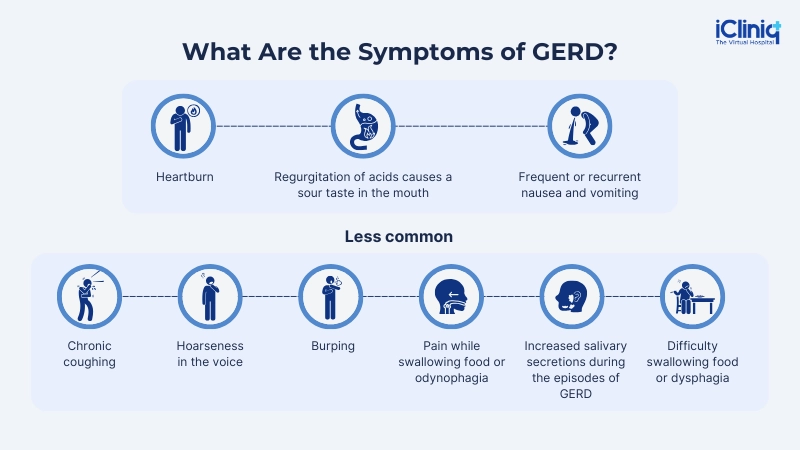
If you have acid reflux-related problems or GERD, you can feel the following changes,
A burning sensation around your chest or throat is the most common feeling.
You will feel difficulty in swallowing.
Sensations like something is stuck inside your throat are common.
In the night or in the morning, you can sense sourness or bitterness inside your mouth.
Continuous burping is a sign of chronic GERD.
You can feel a change in your voice due to hoarseness.
What Are the Risk Factors for GERD?
In today's world, the number of patients with GERD is increasing. In the Western world alone, around 20 percent of people suffer from GERD. Factors that can cause such problems are:
Bad habits like smoking or drinking alcohol can cause severe acidity and GERD.
Excessive body fat is another risk factor for such a problem.
Bad food habits, such as consuming excessive amounts of soft drinks, junk food, and spicy foods, can contribute to this problem. Additionally, consuming food at the wrong time can trigger GERD.
If you drink too much coffee, tea, or drinks containing caffeine, you can face acidity issues.
GERD can develop after your pregnancy.
What Is Dental Erosion?
Tooth erosion, also known as dental erosion, is a condition caused not only by acid attacks on the tooth surface but also by other factors. This causes severe damage to the outermost (enamel) layer of your teeth. Also, the outer layer of our tooth root (cementum) and the middle layer of teeth (dentin) are damaged by acids. However, the acid attack in our body can be triggered by several factors. These are;
Intrinsic factors:
Sometimes diseases within your body cause damage to your teeth. These diseases are GERD, hunger issues, and stress-related issues.
Extrinsic factors:
These are factors from outside that damage our teeth. Soft drinks, acidic foods, and drinks with high acidic content (acidic beverages) fall into this category.
Acid erosion on teeth is more prevalent and visible during routine dental examinations, and in the case of gastroesophageal reflux disease, it is particularly noticeable on the palatal and lingual surfaces of the affected teeth. Apart from tooth erosion, halitosis (bad breath), and oral mucositis (inflammation of the soft tissues of the oral cavity), these conditions would be common. Such conditions are often known as GERD teeth.
How Is Tooth Erosion Related to GERD?
In recent times, researchers have established that acid reflux and tooth erosion are closely related, which ultimately leads to tooth decay. Dentists can easily see how GERD negatively impacts the hard enamel compared to the more subtle but still concerning effects it has on the throat, esophagus, and even the lungs.
Children affected by GERD are at an even higher risk, as the enamel in children is more prone to bacterial colonization and a faster rate of decay, and has a higher risk of developing carious lesions than healthy children.
As mentioned earlier, GERD remains an intrinsic cause of dental erosion. So the process of erosion is because of the lowering of the critical pH of the saliva, which can dissolve the strong hydroxyapatite crystals of the tooth enamel (the critical pH level is 5.5, and in this case, it is lowered below this range to almost below 2.0).
In mild cases, tooth erosion is often associated with sleep disturbances. Sleeping on the stomach can lead to issues with gastroesophageal reflux, which can cause stomach acid to move up and harm the tooth enamel. This acid can push saliva away from the teeth, leaving them more vulnerable, as it also displaces protective layers, such as the dental pellicle.
Also, many individuals with gastroesophageal reflux, ranging from 40 to 90 percent, experience vomiting during non-REM sleep or at night. These reflux episodes can last between 15 and 20 minutes, which is significantly longer than the 1 to 2 minutes of vomiting that occurs while awake. Additionally, sleep-related GERD can lead to acid exposure in the esophagus, dropping the pH below 4.0, which may result in both psychological and gastric issues for the patient.
How Is Tooth Erosion in GERD Diagnosed?
Your dentist can identify acid reflux issues by examining the inside of your mouth. The dentist can spot the following changes if you have GERD;
Dryness in the mouth and loss of the roughness in the tongue. Sometimes, the tongue appears smooth or cracked.
Loss of tooth structure can be visible. These losses are common on the back side of your teeth. In severe cases, the tooth appears to be small.
Your tooth appears blackish or brownish due to decay. Cavities are mostly seen in the front portion of the upper and lower teeth.
Sometimes, chalky white spots appear in the outer portion of your teeth.
You may experience issues with hot and cold foods due to sensitivity.
Spicy foods can cause a burning sensation in your mouth.
Due to the dryness in your mouth, you may feel thirsty.
How Is GERD Managed?
Systemic management:
Doctors can give over-the-counter antacids, proton pump inhibitor drugs, lifestyle changes, and H2 blocker drugs to treat GERD chest pain. However, in case of severe and recurrent symptoms impacting systemic and general health and lifestyle, laparoscopic fundoplication surgery and bariatric surgery are surgical options effective in the long-term management of this condition.
Dental management:
Dental management primarily encompasses restorative treatments for severely eroded teeth and endodontic procedures, including root canal therapy. Additionally, lifestyle changes, such as brushing your teeth regularly and avoiding acidic foods and drinks, are also necessary. Additionally, promoting salivary flow secretions (through salivary-stimulating supplements or mouthwashes for xerostomia, or dry mouth) is important, as it acts as a protective barrier for tooth enamel and prevents further erosive lesions. Maintaining oral hygiene and undergoing regular dental check-ups, including prophylactic and restorative treatments, can benefit patients with GERD.
What Are the Tips to Prevent Teeth Erosion?
Patients with GERD can follow the following tips to prevent tooth erosion:
Stop consuming spicy and acidic food.
Habits like smoking and alcohol are very harmful and can be more damaging.
Regular dental check-ups, along with oral cleaning, are necessary.
For better dental and oral health, the right type of brushing and flossing is necessary.
Fluoride toothpaste, mouthwashes, and saliva supplements can save your damaged teeth.
Conclusion
GERD changes the condition inside our mouth. Lifestyle changes and treatment of underlying causes can halt the progression of this condition and protect your teeth. A dentist can identify changes in your teeth caused by acid attacks. That is why a regular dental check-up can not only save your teeth but also help you to fight acid reflux issues.
Key Takeaway From iCliniq
Acid reflux and teeth are closely related.
If you have issues like indigestion, heartburn, or burping, you might suffer from GERD. In such cases, your gastric acid will damage your teeth. That is why regular dental check-ups can save your teeth.
If you ever need help or have questions, you can always consult our iCliniq gastroenterologist for guidance.