What Are Canker Sores?
Canker sores, or aphthous ulcers, are red, small, painful, and shallow lesions on the mucous lining of the mouth and gums. Multiple such lesions in the mouth make eating and talking difficult and painful. Most of these lesions get better on their own in a couple of weeks. But, if you get these ulcers frequently and do not heal in time, consult a dentist immediately. It predominantly affects women and teenagers, runs in families, and is not contagious. You should not confuse it with cold sores, blister-like lesions on the lips, the roof of the mouth, and sometimes on the gums and are caused by the herpes simplex virus.
Recurrent aphthous stomatitis (RAS) is a condition that causes multiple and recurrent episodes of oral ulcers in otherwise healthy individuals. Such frequent episodes of oral ulcers can also be seen in systemic conditions like fever with adenitis or pharyngitis, Crohn’s disease, celiac disease, HIV or AIDS, and cyclic neutropenia.
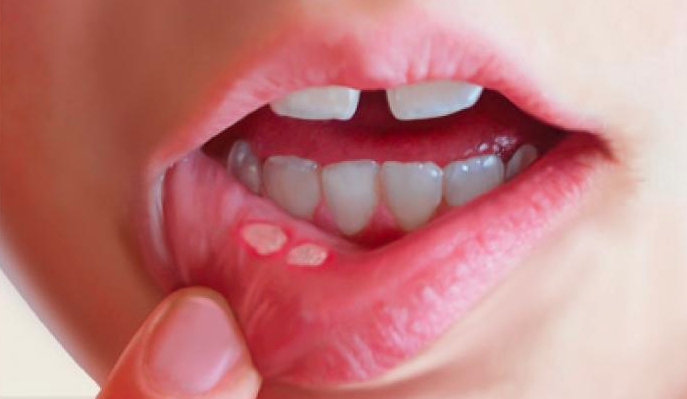
image-source - the Nemours foundation
What Are the Symptoms Associated with Canker Sores?
The common characteristics of a canker sore are that it is round or oval, red in color, with a white or yellow center. They commonly develop under the tongue, inside of your cheeks or lips, gums, and the roof of the mouth. A canker sore in the throat can be painful and appear as a sore throat. Most of the time, the place feels tingly a day before the sore appears.
Many types of canker sores exist depending on their shape and other features.
The common ones include:
Minor Canker Sores - These are the most common type. They are -
- Small.
- Oval in shape.
- Have a red edge.
- Heal in a couple of weeks without a scar.
Major Canker Sores - These are rare. They are -
- Larger in size and deeper.
- Round with well-defined borders.
- Extremely painful.
- It takes about six weeks to heal and leave a scar behind.
Herpetiform Canker Sores - These are uncommon and should not be confused with herpetic lesions or cold sores, as these mouth ulcers are not caused by herpes virus infection. They are -
- Pinpoint in size.
- Occur in clusters of 10 to 100, which can merge and form a larger ulcer.
- The edges are irregular.
- Heal in 1 to 2 weeks without scarring.
Canker Sore Versus Cancer
Canker sores are often confused with cancerous lesions. But canker sores are not cancer. Canker sore and oral cancer vary in symptoms. Canker sore has an ulcer with yellow or white stuff with a reddish area around the ulcer and is harmless. At the same time, mouth cancer is not painful and tends to bleed on touch.
When to Consult a Doctor for a Canker Sore?
Canker sores usually heal on its own in about one to two weeks. But in the following conditions, consult a doctor immediately:
-
If the sore is unusually large.
-
If new sores keep developing before the previous ones heal.
-
If you have excruciating pain.
-
In case of high fever.
-
If the sores last for more than a couple of weeks.
-
If the sore extends to the corner of the mouth or lips.
What Causes Canker Sores?
Canker sores are believed to be caused by a combination of factors and triggers, but the exact cause is not known.
Some of the common triggers include:
-
Mouth injury from brushing, sports, accident, and dental procedures.
-
Helicobacter pylori infection.
-
Lack of sleep.
-
Sodium lauryl sulfate is present in mouthwashes and toothpaste.
-
The acidic content in food like oranges, strawberries, and pineapples.
-
Hormonal changes or imbalance.
-
Food items like chocolate and coffee.
-
Vitamin and mineral deficiencies like vitamin B12 deficiency or deficiency of zinc and iron.
-
Irritation caused by braces.
-
Infections.
Sometimes, mouth ulcers are a sign of some severe medical conditions like:
-
Celiac disease (gluten intolerance).
-
Inflammatory bowel disease.
-
Diabetes.
-
Autoimmune diseases.
-
HIV or AIDS.
-
Behcet’s disease (results in inflammation in the entire body).
How Are Canker Sores Diagnosed?
There is no specific test to diagnose canker sores. Your dentist will be able to identify them with a visual examination. If the sore is not healing or you get such sores frequently, the dentist might ask you to perform some tests to rule out conditions that can cause similar symptoms.
How Are Canker Sores Treated?

Minor canker sores do not need treatment, as they usually clear out independently in a week or so. Treatment might be required for larger and more painful sores. The treatment options include:
1) Mouthwashes - To reduce severe pain and inflammation, mouthwashes containing Dexamethasone or lidocaine are prescribed.
2) Topical Creams or Gels—To relieve pain and speed healing, your dentist might give you a topical gel or cream to apply to the sore. These ointments usually contain Benzocaine, Fluocinonide, or Hydrogen peroxide.
3) Oral Medicines—Oral medicines are prescribed if the sore does not respond to topical creams. Oral steroids are very rarely prescribed and used only when all other treatment options have failed.
4) Cautery - An electrical instrument or a chemical is used to burn the ulcer. The chemicals used are Debacterol and Silver nitrate.
5) Nutritional Supplements - To treat folic acid, vitamin B12, iron, or zinc deficiency.
If the ulcers are due to an underlying health condition, then the underlying condition has to be treated.
Home Remedies:
-
Rinsing the mouth with salt water or one teaspoon of baking soda in half a cup of lukewarm water.
-
Avoid acidic or spicy foods.
-
Eat ice chips.
-
Brush your teeth gently.
-
Drink warm chamomile tea.
Preventive Measures:
-
Avoid overly spicy food that can tear or irritate your oral mucosa.
-
Eat healthily.
-
Brush using a soft bristle brush.
-
Cover the sharp edges of braces with orthodontic waxes.
-
Manage stress.
How To Get Rid of a Canker Sore In 24 Hours?
Rinsing the mouth with antibacterial mouth rinses or using a salt water mouth rinse helps to resolve canker sore within 24 to 48 hours.
Conclusion
Canker sores can be managed efficiently by understanding the symptoms and treatment options. By maintaining good oral hygiene and managing stress can help to combat triggers. Prompt ruling out of canker sores and timely intervention helps to improve clinical outcomes and improve quality of life of patients.