Table of Contents
- 1What Are MCH and MCHC?
- 2When Are MCH and MCHC Blood Tests Done?
- 3High and Low MCH and MCHC Levels: What are the Causes and Symptoms?
- 4What Will Be Your Next Steps After Finding Abnormal Blood Results (MCH, MCHC)?
- 5How Can Food and Healthy Habits Help Improve MCH or MCHC?
- 6When To Consult a Doctor?
- 7Key Takeaways
What Are MCH and MCHC?
Understanding your blood test results can be confusing, especially with terms like MCH and MCHC. These are two of the many values that are included in a test report when you get your complete blood count (CBC) profile done. These two values are crucial for evaluating your red blood cells and can help your doctor detect conditions like anemia, vitamin deficiencies, and other blood-related disorders.
Let’s break it down simply so you know what these values mean, what abnormal results might suggest, and what to do next.
MCH in a Blood Test: What Is It?
MCH stands for mean corpuscular hemoglobin. This test tells you how much hemoglobin is present in one red blood cell on average. Hemoglobin is a special part of your blood that carries oxygen (O2) from your lungs to the rest of the body, helping you stay strong and full of energy.
MCHC in a Blood Test: What Is it?
MCHC stands for mean corpuscular hemoglobin concentration. It determines the concentration of hemoglobin in a given volume of red blood cells, showing how "filled" your cells are with hemoglobin.
When Are MCH and MCHC Blood Tests Done?
MCH and MCHC are part of a simple blood test called CBC (complete blood count).
Your doctor may ask for this test to:
- Find out why you feel tired or weak.
- See if you’re missing important vitamins like iron.
- Check on long-term health problems like kidney disease or infections.
- Make sure your blood is healthy before a check-up or surgery.
- If you're often tired or feel short of breath even after mild activity, your doctor may suggest this test to better understand your red blood cell health.
High and Low MCH and MCHC Levels: What are the Causes and Symptoms?
If your MCH or MCHC numbers are not normal, it might mean something is wrong with your nutrition, your genes, or a long-term illness. So, what might be happening? Let’s find out!
1. Low MCH
Symptoms of Low MCH:
- Pale skin.
- Fatigue or weakness.
- Dizziness.
- Cold hands and feet.
- Shortness of breath.
Causes of Low MCH:
If your MCH is low, your red blood cells contain less hemoglobin than normal. This usually suggests a condition like:
- Iron deficiency anemia.
- Chronic blood loss (e.g., due to ulcers or heavy periods).
- Thalassemia.
- Lead poisoning.

2. High MCH
Causes of High MCH:
High MCH (mean corpuscular hemoglobin) signifies more hemoglobin in each red blood cell than the normal. This can be caused by:
- Hepatic or liver disease.
- Vitamin B12 deficiency.
- Deficiency of folate, also known as vitamin B9.
- Overactive thyroid.
Symptoms of High MCH:
When MCH is high, you might experience:
- Rapid heartbeat or palpitations.
- Weakness.
- Yellow or pale skin.
- Shortness of breath.
- Dizziness or trouble concentrating.
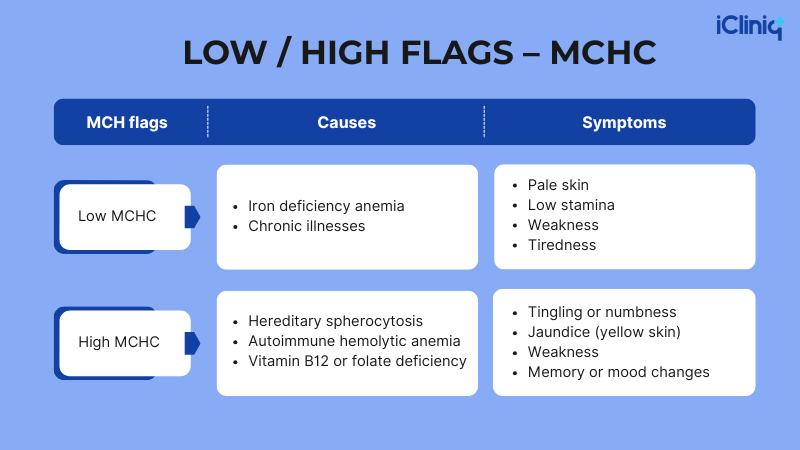
3. Low MCHC
A low MCHC means your red blood cells have less hemoglobin than normal. This condition is called hypochromia, where the cells look paler and don’t carry oxygen effectively.
Causes of Low MCHC:
- Chronic illnesses (kidney disease, inflammation).
- Iron deficiency anemia.
Symptoms of Low MCHC:
- Low stamina.
- Weakness.
- Pale skin.
- Tiredness.
4. High MCHC
Symptoms of High MCHC:
- Tingling or numbness.
- Jaundice (yellowish skin).
- Weakness.
- Memory or mood changes (if due to B12 deficiency).
Causes of High MCHC:
A high MCHC result is less common but may be seen in conditions such as:
- Hereditary Spherocytosis: A genetic disorder where red blood cells are sphere-shaped.
- Autoimmune Hemolytic Anemia: A type of anaemia where the body destroys its own red blood cells.
- Vitamin B12 or folate deficiency.
What Will Be Your Next Steps After Finding Abnormal Blood Results (MCH, MCHC)?
Further Tests Might Be Done:
Abnormal MCH or MCHC results often lead to more targeted testing. Your doctor might order:
- MCV (Mean Corpuscular Volume): Tells the size of your red blood cells.
- Serum Iron and Ferritin Levels: Check how much iron is in your body.
- Vitamin B12 and Folate Levels: A blood test will help to detect them.
- Reticulocyte Count: Shows how many new red blood cells your body is making.
- Peripheral Smear: Looks at your cells under a microscope for signs of shape or color changes.
These additional tests help identify what’s causing the problem and how to treat it properly.
How Can Food and Healthy Habits Help Improve MCH or MCHC?
Diet plays a big role in blood health. If your MCH or MCHC levels are off due to nutritional deficiencies, small changes can help correct them.
- Boost Iron: Eat foods like red meat, chicken, fish, spinach, lentils, and special cereals with extra iron. Don’t drink tea or coffee with your meals, as they can make it harder for your body to use iron.
- Increase Folate: Include leafy greens, beans, nuts, and whole grains
- Improve Vitamin B12: Eat eggs, dairy, meat, and seafood. Vegans may need B12 supplements
- Don’t forget Vitamin C: It helps your body absorb iron better, get it from oranges, kiwis, strawberries, and bell peppers
Talk to your doctor or a dietitian before making any major dietary changes.
When To Consult a Doctor?
It’s important not to ignore symptoms or abnormal blood test results. See a doctor if you experience:
- Feeling tired or weak all the time.
- Looking very pale or yellowish.
- Getting short of breath during daily tasks.
- Feeling dizzy or fainting sometimes.
- Bruising or bleeding more easily than usual.
Final thoughts:
MCH and MCHC values in your blood test determine how well your blood carries oxygen. If the MCH or MCHC values are flagged off, and if you feel tired often, get help through our hematologist online consultation. Our doctors will help you feel better and stay strong! Eating healthy foods and getting good sleep can help your blood stay healthy.
Key Takeaways
- MCH (mean corpuscular hemoglobin) and MCHC (mean corpuscular hemoglobin concentration) show how much oxygen your red blood cells can carry.
- The normal value for MCH is 27–33 pg, and the normal value for MCHC is 32–36 g/dL
- Low numbers may mean low iron. High numbers may mean you need more B12 or folate. Always check with the doctor if you feel weak or tired.
- Here at iCliniq, our blood specialist doctor online consultation can help explain your blood test results and guide you toward better health with simple steps.